







Sleep disorders affect millions of people worldwide, with consequences ranging from reduced cognitive performance to serious health complications. As researchers explore innovative solutions beyond traditional sleep aids, peptides have emerged as a promising frontier in sleep science. These short chains of amino acids influence various biological processes, including the complex mechanisms that govern our sleep-wake cycles. Understanding how peptides for sleep function can open new pathways for individuals seeking natural, effective approaches to improving rest quality without the dependency risks associated with conventional sleeping medications.
The Science Behind Sleep-Regulating Peptides
Sleep regulation involves intricate interactions between neurotransmitters, hormones, and specialized peptides that signal when to wake and when to rest. The body produces several endogenous peptides that directly influence sleep architecture and quality.
How Peptides Influence Sleep Cycles
Peptides communicate with specific receptors throughout the central nervous system, modulating neuronal activity related to sleep onset, maintenance, and depth. Some peptides promote wakefulness by activating arousal systems, while others facilitate the transition into sleep states by dampening excitatory signals.
Key mechanisms include:
- Receptor binding that modulates neurotransmitter release
- Regulation of circadian rhythm genes
- Influence on melatonin production pathways
- Modulation of stress response systems that interfere with rest
The Delta-sleep-inducing peptide represents one of the earliest discoveries in this field, identified in the 1970s as a naturally occurring nonapeptide with sleep-promoting properties. While its exact mechanisms continue to be studied, DSIP appears to interact with multiple neurotransmitter systems to facilitate deeper sleep stages.

Orexin System and Peptide Antagonists
The orexin system plays a crucial role in maintaining wakefulness and arousal. Orexins, also known as hypocretins, are neuropeptides produced in the hypothalamus that promote alertness. Consequently, blocking orexin receptors has become a targeted approach for treating insomnia.
Several pharmaceutical peptides have been developed to antagonize orexin receptors. Suvorexant, a dual orexin receptor antagonist, demonstrates efficacy in helping patients fall asleep faster and stay asleep longer. Clinical trials evaluating suvorexant have shown significant improvements in sleep onset latency and wake after sleep onset compared to placebo.
Similarly, daridorexant represents a newer generation of orexin receptor antagonists approved for treating insomnia. These peptide-based therapeutics offer a mechanistically distinct approach from traditional sedative-hypnotics, potentially reducing risks of cognitive impairment and dependency.
Natural Food-Derived Peptides for Sleep Enhancement
Beyond pharmaceutical applications, researchers have identified bioactive peptides in common dietary proteins that exhibit sleep-promoting properties. These naturally occurring compounds represent an exciting frontier for nutritional approaches to better rest.
Casein-Derived Sleep Peptides
Milk proteins, particularly caseins, contain sequences that release bioactive peptides during digestion. Recent research has identified sleep-promoting peptides from bovine casein that demonstrate measurable effects on sleep parameters in both laboratory and animal studies.
These casein-derived peptides appear to work through multiple pathways:
- GABA receptor modulation – Enhancing inhibitory neurotransmission
- Anxiolytic effects – Reducing stress-related sleep disruption
- Antioxidant properties – Protecting neural tissues from oxidative stress
- Calcium binding – Supporting neurotransmitter function
Studies on goat milk casein have revealed specific peptides with notable sleep-enhancing characteristics, opening possibilities for functional foods designed to support healthy sleep patterns.
| Peptide Source | Primary Mechanism | Research Stage | Potential Benefits |
|---|---|---|---|
| Bovine Casein | GABA modulation | In vivo studies | Faster sleep onset, extended duration |
| Goat Milk Casein | Anxiolytic activity | Preclinical | Reduced sleep latency, calming effects |
| Rice Protein | Multiple pathways | Clinical trials | Improved sleep quality, no dependency |
| Whey Protein | Tryptophan delivery | Preliminary | Enhanced melatonin production |
AI-Discovered Peptide Innovations
Artificial intelligence has accelerated the discovery of novel bioactive peptides with sleep-supporting properties. PeptiSleep, an AI-discovered peptide from rice protein, represents a breakthrough in computational peptide discovery for sleep applications.
This innovation demonstrates how technology can identify peptide sequences within food proteins that might otherwise remain undiscovered through traditional screening methods. Early evidence suggests PeptiSleep improves both sleep onset and overall quality without creating dependency issues common with conventional sleep medications.
Neuropeptides and Sleep-Wake Balance
The brain produces numerous neuropeptides that fine-tune sleep-wake transitions throughout the day. Understanding these endogenous signaling molecules provides insight into how therapeutic peptides might restore healthy sleep patterns.
Galanin and Sleep Promotion
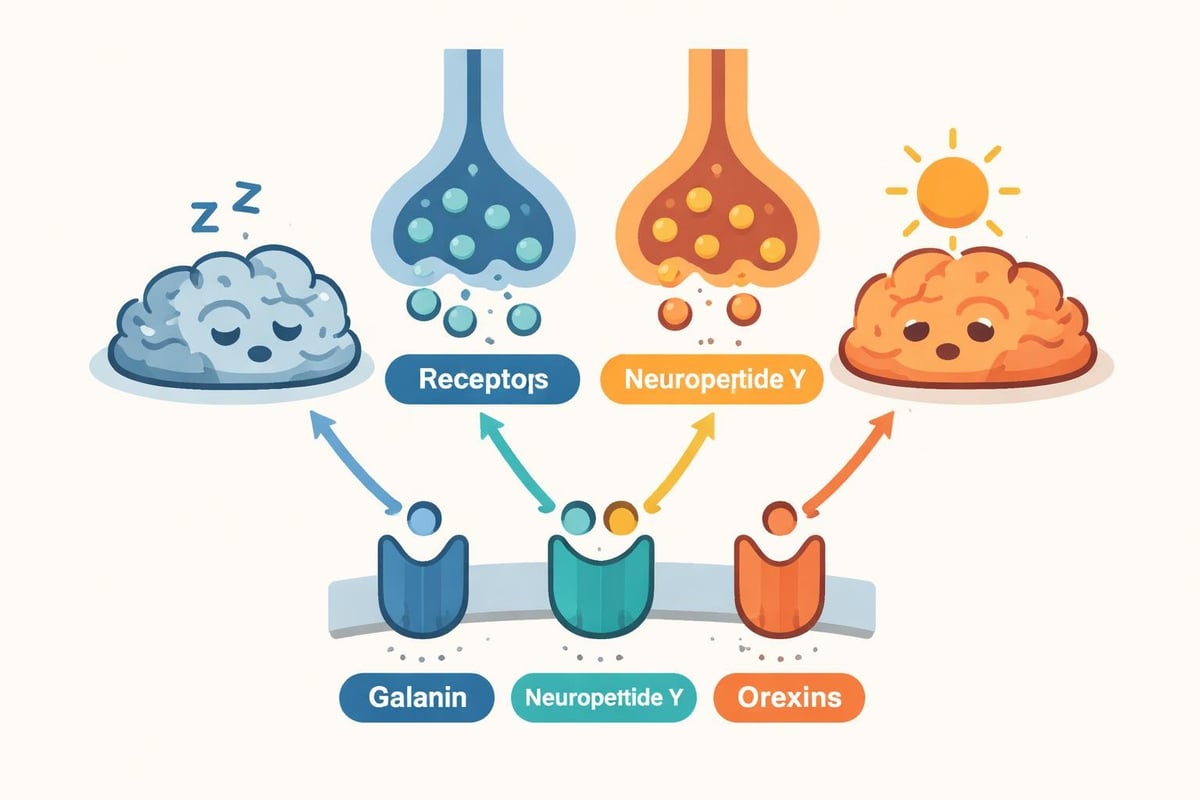
Galanin is a neuropeptide distributed throughout the central and peripheral nervous systems, with particular concentrations in brain regions governing sleep. Research indicates galanin promotes non-REM sleep and may help consolidate sleep periods.
Galanin functions include:
- Inhibiting arousal-promoting neurons in the tuberomammillary nucleus
- Modulating cholinergic systems involved in REM sleep
- Interacting with the circadian timing system
- Reducing stress-induced sleep disruption
Neuropeptide Y's Complex Role
Neuropeptide Y (NPY) demonstrates complex effects on sleep-wake regulation, with actions varying based on receptor subtypes and brain regions. Exploration of NPY’s role reveals it can both promote and suppress sleep depending on context and dosing.
In the hypothalamus, NPY interacts with orexin neurons to influence arousal states. At certain concentrations, NPY may facilitate sleep onset by reducing excitatory signaling, while in other contexts it supports wakefulness through metabolic regulation.
Clinical Applications and Therapeutic Potential
The translation of peptide research into practical sleep solutions continues to advance, with several promising applications emerging for clinical use.
Targeting Specific Sleep Disorders
Different peptides may address distinct sleep pathologies. For individuals with sleep onset insomnia, peptides that facilitate the transition to sleep prove most beneficial. Those experiencing frequent nighttime awakenings might benefit from peptides that enhance sleep consolidation and reduce arousal sensitivity.
Disorder-specific applications include:
- Circadian rhythm disorders – Peptides that strengthen circadian signals
- Stress-related insomnia – Anxiolytic peptides that reduce hyperarousal
- Age-related sleep decline – Peptides that restore neurotransmitter balance
- Sleep maintenance issues – Compounds that deepen sleep stages
Research into peptides for sleep continues to identify compounds with increasingly specific mechanisms, allowing for more personalized approaches to sleep medicine.
Safety and Efficacy Considerations
Peptide-based sleep interventions generally demonstrate favorable safety profiles compared to traditional sedative-hypnotics. Because many sleep peptides work through natural regulatory pathways rather than forcing sedation, they typically produce fewer cognitive side effects and reduced dependency risk.
| Safety Factor | Traditional Sleep Aids | Peptide Approaches |
|---|---|---|
| Dependency Risk | Moderate to High | Low |
| Morning Grogginess | Common | Minimal |
| Cognitive Impairment | Documented | Rare |
| Tolerance Development | Frequent | Uncommon |
| Natural Mechanism | No | Yes |
However, proper sourcing and purity remain critical considerations. Pure Peptide ensures advanced purification methods and stringent quality control to deliver peptides that meet the highest efficacy and safety standards.
Optimizing Peptide Use for Better Sleep
Maximizing the benefits of peptides for sleep requires understanding optimal timing, dosing, and complementary lifestyle factors that enhance their effectiveness.
Timing and Dosing Strategies
Sleep-promoting peptides typically work best when administered at specific times relative to desired sleep onset. Most research suggests taking sleep peptides 30 to 60 minutes before bedtime allows adequate time for absorption and receptor binding.
Dosing varies considerably based on the specific peptide and individual factors. Starting with lower doses and gradually increasing helps identify the minimum effective dose while minimizing any potential side effects.
Optimization strategies include:
- Consistent timing aligned with sleep schedule
- Administration on an empty stomach for better absorption
- Cycling protocols to prevent potential receptor desensitization
- Combining with sleep hygiene practices for synergistic effects

Complementary Approaches
Peptides for sleep work most effectively as part of a comprehensive approach to rest optimization. Environmental factors, behavioral habits, and nutritional support all influence how well sleep peptides function.
Creating an optimal sleep environment involves controlling light exposure, maintaining cool temperatures, and minimizing noise disruption. These factors support the body's natural circadian rhythms, allowing sleep peptides to work more efficiently.
Supporting practices include:
- Blue light reduction in evening hours
- Regular exercise timed earlier in the day
- Stress management techniques
- Consistent sleep-wake schedules
- Magnesium and vitamin D optimization
Emerging Research and Future Directions
The field of sleep peptides continues to evolve rapidly, with new discoveries expanding our understanding of how these compounds can address sleep challenges.
Personalized Peptide Protocols
Advances in genetic testing and biomarker analysis are paving the way for personalized peptide recommendations based on individual sleep architecture and neurotransmitter profiles. Some people may respond better to orexin antagonists, while others benefit more from GABA-modulating peptides.
Future applications may include combination peptide formulations that address multiple sleep pathways simultaneously, providing more comprehensive support for complex sleep disorders.
Novel Peptide Discoveries
Computational biology and high-throughput screening continue to identify new peptide candidates with sleep-promoting properties. Beyond food proteins, researchers are exploring peptides from diverse sources including marine organisms, plants, and synthetic design.
Seltorexant, currently under investigation, represents another selective orexin receptor antagonist that may offer advantages in both sleep improvement and mood regulation for individuals with comorbid conditions.
Practical Considerations for Peptide Selection
Choosing appropriate peptides for sleep support requires evaluating several factors including mechanism of action, research backing, quality standards, and individual health status.
Quality and Purity Standards
The effectiveness and safety of peptides for sleep depend heavily on manufacturing quality. Contamination, incorrect sequences, or degradation can render peptides ineffective or potentially problematic.
High-quality peptide suppliers implement rigorous testing protocols:
- High-performance liquid chromatography (HPLC) verification
- Mass spectrometry for sequence confirmation
- Purity testing exceeding 98%
- Sterility assurance for injectable formulations
- Third-party laboratory verification
For those seeking premium peptides, exploring options at Pure Peptide’s shop provides access to rigorously tested compounds meeting the highest purity standards.
Understanding Individual Needs
Sleep challenges vary considerably between individuals. Some experience difficulty falling asleep despite feeling tired, while others fall asleep easily but wake frequently throughout the night. Still others achieve sufficient sleep duration but wake feeling unrefreshed.
Matching peptide mechanisms to specific sleep issues improves outcomes. Those with overactive minds at bedtime may benefit from anxiolytic peptides, while individuals with disrupted sleep architecture might need compounds that enhance slow-wave sleep.
Consulting with healthcare providers familiar with peptide therapies helps ensure appropriate selection and monitoring. Additional resources can be found through Pure Peptide’s FAQ section for common questions about peptide use.
Integration with Overall Health Optimization
Sleep peptides often complement other health goals, creating synergistic benefits across multiple systems. Many individuals using peptides for weight management, muscle recovery, or anti-aging find that addressing sleep quality amplifies results in these other areas.
Sleep's Role in Recovery and Performance
Quality sleep directly impacts recovery from exercise, cognitive performance, metabolic health, and immune function. By improving sleep through targeted peptide use, individuals often experience enhanced benefits from other optimization strategies.
Athletes using peptides for muscle growth and recovery frequently report that adding sleep-promoting peptides accelerates progress. The deep restorative sleep facilitated by certain peptides enhances growth hormone secretion and tissue repair processes that occur predominantly during sleep.
Similarly, those focused on anti-aging protocols recognize sleep as fundamental to cellular repair mechanisms. Peptides like Epitalon support both sleep quality and longevity pathways, offering comprehensive age-management benefits.
Comprehensive Wellness Strategies
Modern health optimization increasingly recognizes the interconnected nature of physiological systems. Peptides for sleep fit naturally into protocols addressing multiple aspects of wellness simultaneously.
For individuals exploring cutting-edge compounds for metabolic health, options like Retatrutide can be complemented with sleep peptides to support the recovery and hormonal balance essential for optimal body composition.
Reading experiences shared in customer reviews provides valuable insights into how others have successfully integrated sleep peptides into broader health optimization strategies.
Understanding peptides for sleep reveals sophisticated mechanisms through which these compounds support natural rest processes without the drawbacks of conventional sleep medications. From orexin antagonists to food-derived bioactive sequences, multiple peptide options address various aspects of sleep quality and duration. Whether you're seeking to improve sleep onset, enhance sleep depth, or address circadian disruptions, exploring premium quality options can make a meaningful difference. Pure Peptide offers rigorously tested compounds with verified purity to support your sleep optimization goals alongside comprehensive health and performance objectives.