


Building muscle tissue requires more than consistent training and proper nutrition. Advanced athletes and fitness enthusiasts increasingly turn to peptide therapy to optimize their muscle development potential. Peptides are short chains of amino acids that signal specific biological processes, including growth hormone production, protein synthesis, and tissue repair. Understanding which peptides deliver the most significant results can help you make informed decisions about your supplementation strategy.
Understanding Peptide Mechanisms for Muscle Development
Peptides work through distinct biological pathways that influence muscle growth at the cellular level. These compounds interact with receptors throughout your body to trigger hormonal responses, enhance nutrient delivery, and accelerate recovery processes.
Growth hormone secretagogues (GHS) represent one major category of muscle-building peptides. These compounds stimulate your pituitary gland to release natural growth hormone, which subsequently increases insulin-like growth factor 1 (IGF-1) levels. Higher IGF-1 concentrations promote protein synthesis and cellular proliferation within muscle tissue.
Recovery-focused peptides address inflammation and tissue damage through different mechanisms. They activate healing cascades, improve blood flow to damaged areas, and reduce inflammatory markers that can impair muscle growth. When examining the best peptides for muscle growth, understanding these fundamental mechanisms helps you select compounds aligned with your specific goals.

Primary Categories of Muscle-Building Peptides
The peptide landscape includes several distinct categories, each offering unique advantages:
- Growth Hormone Releasing Peptides (GHRPs): Directly stimulate GH pulse amplitude
- Growth Hormone Releasing Hormones (GHRHs): Amplify natural GH release patterns
- Recovery and Repair Peptides: Accelerate healing and reduce inflammation
- Myostatin Inhibitors: Remove genetic limits on muscle development
- IGF-1 Variants: Directly stimulate muscle cell proliferation
Different peptides often work synergistically when combined. Many advanced protocols stack a GHRP with a GHRH to maximize growth hormone output through complementary pathways.
CJC-1295: Sustained Growth Hormone Elevation
CJC-1295 stands among the most researched compounds for muscle development. This synthetic analog of growth hormone-releasing hormone extends the duration of GH pulses throughout your system.
The peptide exists in two primary forms: CJC-1295 with DAC (Drug Affinity Complex) and CJC-1295 without DAC. The DAC version provides extended half-life, maintaining elevated growth hormone levels for up to seven days after a single injection. This sustained elevation supports continuous protein synthesis and recovery.
Research indicates CJC-1295 increases IGF-1 levels by 200-300% when administered consistently. This dramatic elevation translates to enhanced nitrogen retention, improved sleep quality, and accelerated fat metabolism alongside muscle gains. Athletes report noticeable improvements in recovery time and training capacity within 2-3 weeks of consistent use.
| Property | CJC-1295 with DAC | CJC-1295 without DAC |
|---|---|---|
| Half-life | 6-8 days | 30 minutes |
| Dosing frequency | Weekly | 2-3x daily |
| GH pulse pattern | Steady elevation | Mimics natural pulses |
| Best for | Convenience, sustained levels | Natural rhythms, stacking |
When discussing peptides for muscle growth and development, CJC-1295 consistently ranks among the top choices due to its proven efficacy and convenience.
Ipamorelin: Selective Growth Hormone Stimulation
Ipamorelin delivers targeted growth hormone stimulation without affecting cortisol or prolactin levels. This selectivity makes it one of the cleanest options available for muscle development.
Unlike older GHRPs, Ipamorelin binds specifically to ghrelin receptors responsible for GH release. This precision avoids the appetite stimulation and hormonal side effects associated with compounds like GHRP-6. Users experience pure growth hormone benefits: enhanced recovery, improved body composition, and increased lean mass.
Optimal Ipamorelin Protocols
Effective Ipamorelin administration requires attention to timing and dosage:
- Morning dose: Take upon waking to capitalize on natural GH rhythm
- Post-workout dose: Maximize recovery and protein synthesis
- Evening dose: Enhance overnight repair and deep sleep quality
- Timing: Administer on empty stomach, 30 minutes before meals
Typical dosing ranges from 200-300 mcg per injection, administered 2-3 times daily. This frequency maintains consistent GH elevation throughout your 24-hour cycle. The compound demonstrates minimal desensitization even with extended use, making it suitable for 12-16 week cycles.
Many athletes stack Ipamorelin with CJC-1295 to leverage synergistic effects. The GHRH amplifies the GHRP's signaling, resulting in GH levels that exceed either compound alone. This combination represents one of the most powerful legal approaches to optimizing natural hormone production.
BPC-157: Accelerated Recovery and Tissue Repair
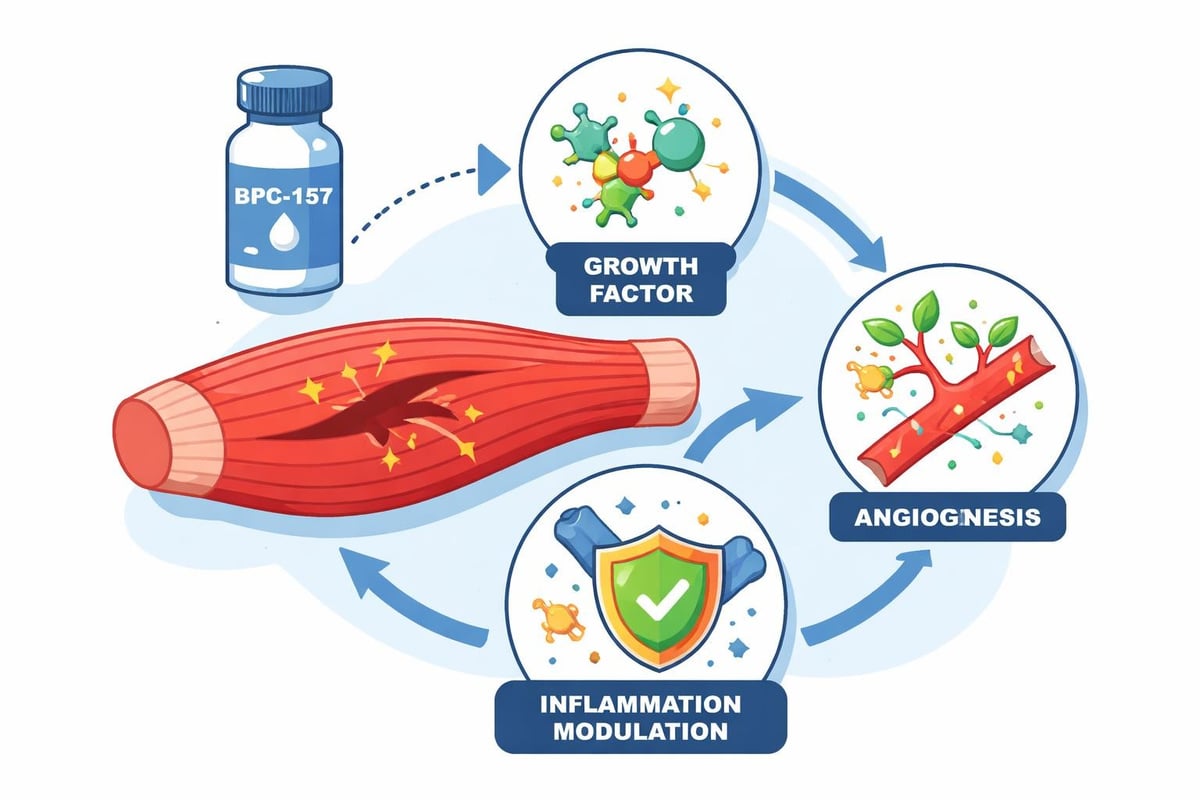
Body Protection Compound 157 (BPC-157) addresses the recovery side of muscle development. While not a traditional growth peptide, its regenerative properties make it invaluable for serious athletes pushing training limits.
BPC-157 demonstrates remarkable healing capabilities across multiple tissue types. It accelerates tendon-to-bone healing, reduces inflammation in damaged muscle fibers, and protects against various forms of cellular stress. These properties translate to faster recovery between intense training sessions and reduced injury risk during heavy loading phases.
The peptide works through several mechanisms:
- Enhances growth factor synthesis at injury sites
- Improves blood vessel formation (angiogenesis)
- Stabilizes cellular structures and prevents breakdown
- Modulates inflammatory response for optimal healing
Athletes using BPC-157 report significant reductions in nagging injuries and chronic inflammation. This allows more consistent training without forced breaks for recovery. Understanding the regenerative properties of recovery peptides helps contextualize why compounds like BPC-157 belong in comprehensive muscle-building protocols.
TB-500: Systemic Healing and Flexibility
TB-500, a synthetic fraction of Thymosin Beta-4, offers systemic healing benefits that extend throughout your entire body. Unlike BPC-157's localized action, TB-500 circulates broadly to address multiple areas simultaneously.
This peptide shines for athletes dealing with multiple minor injuries or overall training wear. It promotes cell migration to damaged areas, reduces inflammation systemically, and enhances tissue flexibility. Many users experience improved range of motion and reduced stiffness alongside accelerated recovery.
TB-500 dosing typically follows a loading phase followed by maintenance. Initial protocols use 2-2.5mg twice weekly for 4-6 weeks, then reduce to once weekly for maintenance. Effects accumulate over time, with most athletes noticing substantial improvements after 3-4 weeks.
IGF-1 LR3: Direct Muscle Cell Stimulation
Insulin-like Growth Factor 1 Long R3 represents the most potent direct muscle growth stimulus available. This modified version of natural IGF-1 resists binding to inhibitory proteins, allowing it to remain active in your system for extended periods.
IGF-1 LR3 works differently than growth hormone secretagogues. Rather than stimulating natural production, it provides exogenous growth factors that directly signal muscle cells to proliferate and grow. This mechanism produces rapid, noticeable gains in muscle fullness and size.
The compound delivers these results through multiple pathways:
- Direct activation of protein synthesis machinery
- Enhanced glucose and amino acid uptake into muscle cells
- Satellite cell activation for actual hyperplasia
- Reduced protein breakdown (anti-catabolic effect)
Research on top peptides like IGF-1 LR3 demonstrates its exceptional potency for muscle development. However, this power demands respect and proper protocol adherence.
IGF-1 LR3 Administration Guidelines
| Factor | Recommendation | Rationale |
|---|---|---|
| Dosage | 40-80 mcg daily | Minimizes receptor desensitization |
| Timing | Post-workout | Capitalizes on nutrient uptake window |
| Cycle length | 4-6 weeks | Prevents receptor downregulation |
| Off-cycle | Equal to cycle length | Allows receptor sensitivity recovery |
IGF-1 LR3 produces noticeable results within the first week, with muscle fullness and pump quality improving dramatically. Total cycle gains of 6-12 pounds of lean tissue are common when combined with appropriate training and nutrition.
Follistatin: Myostatin Inhibition for Enhanced Growth
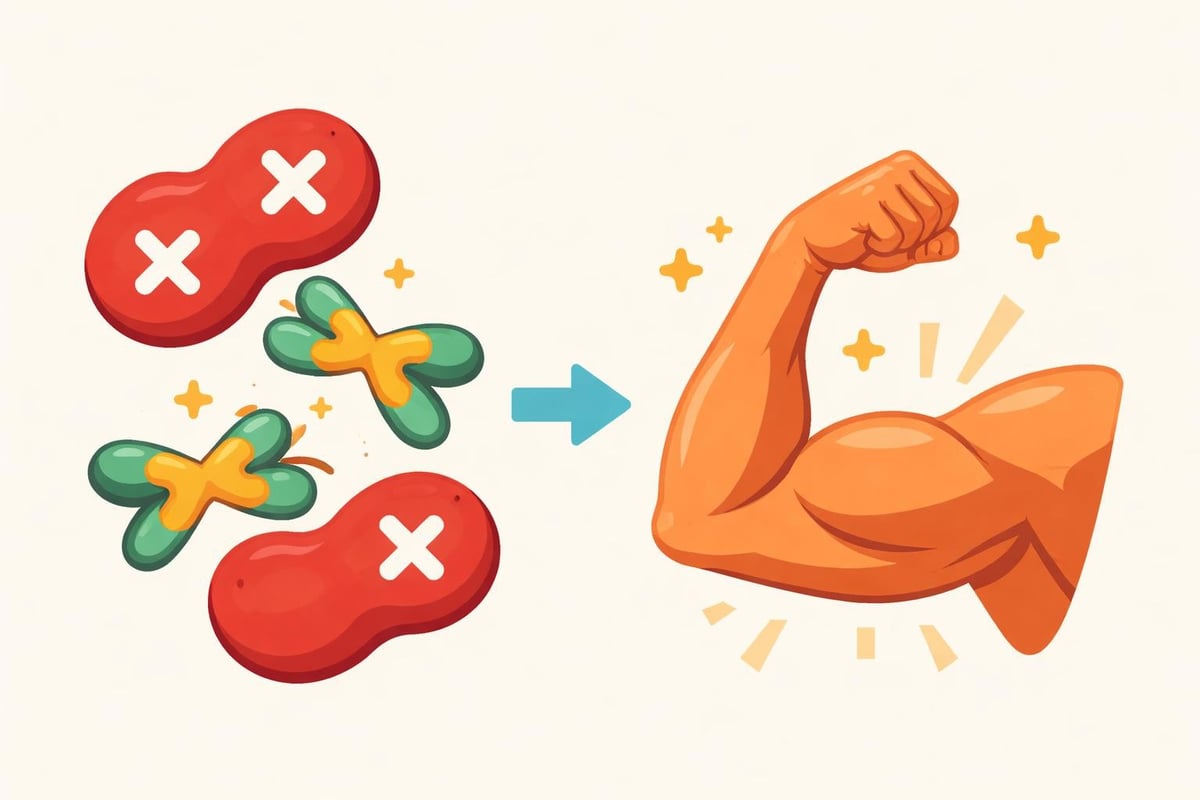
Follistatin operates through a unique mechanism: blocking myostatin, the protein that limits muscle growth. Your body produces myostatin as a regulatory brake on muscle development. By inhibiting this signal, Follistatin removes genetic constraints on muscle mass accumulation.
This peptide binds directly to myostatin molecules, preventing them from interacting with muscle tissue receptors. The result is enhanced growth potential beyond normal physiological limits. Animals lacking myostatin genes display dramatically increased muscle mass, and Follistatin mimics this effect pharmacologically.
Follistatin protocols typically involve doses of 100-300 mcg administered daily or every other day. Cycles run 2-4 weeks due to the compound's potency and cost considerations. Many athletes reserve Follistatin for specific growth phases or breaking through plateaus.
The compound works particularly well when stacked with traditional muscle-building peptides. While growth hormone secretagogues and IGF-1 stimulate growth processes, Follistatin removes the biological ceiling that would otherwise limit results. This combination creates an exceptionally anabolic environment.
Hexarelin: Powerful but Complex GHRP
Hexarelin delivers the strongest growth hormone release among all GHRPs, but this potency comes with important considerations. Single doses can increase GH levels 10-15 times above baseline, creating a powerful anabolic signal.
However, Hexarelin also stimulates cortisol and prolactin release alongside growth hormone. These additional hormonal effects require careful monitoring and appropriate cycle planning. The compound also demonstrates significant desensitization after 2-3 weeks of daily use, limiting long-term application.
Despite these limitations, Hexarelin remains valuable for specific applications. Short, intensive cycles can break through plateaus when used strategically. Dosing ranges from 100-200 mcg 1-2 times daily, typically limited to 2-week cycles with extended breaks between.
Athletes often use Hexarelin for brief intensification phases rather than baseline protocols. The comprehensive guide on nine peptides including Hexarelin provides detailed context for strategic application.
Tesamorelin: Targeted Fat Loss and Lean Mass
Tesamorelin offers unique advantages for body recomposition. Originally developed to address lipodystrophy, this growth hormone-releasing hormone demonstrates exceptional ability to reduce visceral fat while supporting lean mass development.
The peptide's effects on body composition occur through multiple mechanisms. It increases lipolysis (fat breakdown) particularly in stubborn adipose deposits around internal organs. Simultaneously, elevated growth hormone levels support muscle protein synthesis and recovery.
Tesamorelin protocols typically involve daily injections of 1-2mg, administered subcutaneously before bed. This timing capitalizes on overnight GH secretion patterns for optimal results. Users report noticeable improvements in abdominal definition within 4-6 weeks, with continued fat loss throughout 12-16 week cycles.
The compound produces these results without significant side effects in most users. Injection site reactions represent the most common complaint, typically resolving with proper rotation techniques detailed in guides on safe peptide injection practices.
Selecting the Best Peptides for Your Goals
Choosing among the best peptides for muscle growth requires honest assessment of your priorities and experience level. Different compounds suit different objectives and user profiles.
Beginners typically achieve excellent results with conservative approaches. A CJC-1295 and Ipamorelin stack provides robust growth hormone elevation without complexity or harsh side effects. This combination delivers measurable muscle gains, improved recovery, and enhanced sleep quality with minimal risk.
Intermediate users might add BPC-157 or TB-500 to address specific recovery needs. These compounds allow more aggressive training by accelerating healing processes. The enhanced recovery capacity translates to greater training volume and faster progress.
Advanced athletes sometimes incorporate more powerful options like IGF-1 LR3 or Follistatin. These compounds demand greater knowledge, stricter protocols, and careful health monitoring. However, they produce results that exceed what standard approaches can deliver.
Peptide Selection Matrix
Primary Goal: Maximum Muscle Growth
- IGF-1 LR3 (primary driver)
- CJC-1295/Ipamorelin stack (hormonal support)
- Follistatin (remove limits)
Primary Goal: Enhanced Recovery
- BPC-157 (localized healing)
- TB-500 (systemic repair)
- Ipamorelin (GH support)
Primary Goal: Body Recomposition
- Tesamorelin (fat loss)
- CJC-1295 (lean mass support)
- Ipamorelin (metabolism optimization)
Research from evidence-based peptide rankings supports these combinations as the most effective for their respective goals.
Maximizing Results Through Proper Protocol Design
Even the best peptides for muscle growth require proper implementation to deliver optimal results. Protocol design encompasses dosing, timing, cycle length, and supportive measures.
Dosing precision matters significantly with peptides. These compounds work through receptor-mediated mechanisms that respond to specific concentration ranges. Too little produces suboptimal stimulation; too much can cause desensitization or side effects. Using accurate measurement tools and following established protocols prevents these issues.
Timing your doses strategically amplifies effectiveness. Growth hormone secretagogues work best on empty stomachs, typically 30 minutes before meals or 2 hours after. This timing prevents nutrient interference with receptor binding. Post-workout administration capitalizes on heightened muscle sensitivity to growth signals.
Cycle length requires balancing results against receptor sensitivity. Most peptides maintain effectiveness for 8-16 weeks before requiring breaks. Some compounds like Hexarelin desensitize much faster, necessitating shorter cycles. Planning appropriate off-periods allows receptor recovery and sustained long-term responsiveness.
Essential Supporting Elements
- Protein intake: Minimum 1 gram per pound bodyweight daily
- Training stimulus: Progressive overload with adequate volume
- Sleep quality: 7-9 hours nightly for optimal recovery
- Hydration: 1 gallon minimum to support metabolic processes
- Micronutrients: Comprehensive vitamin and mineral intake
Quality peptide sourcing represents perhaps the most critical factor. Inferior products contain impurities, incorrect dosing, or degraded compounds that fail to deliver results. Premium suppliers like Pure Peptide implement rigorous testing and quality control to ensure purity and potency.
Monitoring Progress and Adjusting Protocols
Tracking objective metrics allows you to assess peptide effectiveness and make informed adjustments. Subjective feelings provide some feedback, but quantifiable measurements reveal the complete picture.
Body composition analysis should occur every 2-4 weeks. DEXA scans provide the gold standard, showing precise changes in lean mass and fat distribution. Bioelectrical impedance scales offer a more accessible alternative, though with slightly less accuracy. Tracking these numbers reveals whether your protocol produces desired results.
Strength progression metrics indicate functional improvements. Log your working weights, total volume, and performance on key exercises. Peptide-enhanced recovery should allow progressive increases in training capacity. Stagnant numbers suggest inadequate dosing or insufficient supporting factors.
Recovery markers include sleep quality, morning energy levels, and training readiness. Many users maintain simple 1-10 scales for these factors. Improvements indicate effective protocols; deterioration suggests overtraining or dosing issues requiring adjustment.
Blood work provides the most comprehensive assessment. Testing IGF-1 levels confirms growth hormone secretagogue effectiveness. Monitoring liver enzymes, lipids, and glucose ensures safety during extended protocols. Annual baseline testing before peptide use establishes your normal ranges for comparison.
The detailed bodybuilding guide on peptide protocols emphasizes systematic monitoring for optimizing long-term results.
Safety Considerations and Risk Management
While peptides generally demonstrate favorable safety profiles compared to traditional performance enhancers, responsible use requires understanding potential risks and mitigation strategies.
Common side effects remain relatively mild with proper dosing. Water retention, temporary fatigue, and injection site reactions represent the most frequent complaints. These typically resolve with dose adjustment or improved injection technique. Rotating injection sites and using proper subcutaneous administration minimizes local reactions.
More significant concerns arise from improper sourcing or excessive dosing. Contaminated products can cause immune reactions or infections. Starting with conservative doses from verified suppliers prevents these issues. The comprehensive selection available through Pure Peptide’s shop ensures access to laboratory-tested compounds.
Contraindications exist for certain populations. Active cancer patients should avoid growth-promoting peptides due to theoretical proliferation risks. Individuals with diabetes require careful monitoring when using compounds affecting glucose metabolism. Consultation with knowledgeable healthcare providers helps identify personal risk factors.
Long-term safety data remains limited for many peptides. Most research spans months rather than years or decades. This reality necessitates conservative approaches, appropriate cycling, and ongoing health monitoring. Treating peptides as long-term lifestyle tools rather than shortcuts encourages responsible implementation.
Stacking Strategies for Synergistic Effects
Combining complementary peptides produces results exceeding individual compounds. Strategic stacking leverages different mechanisms to create a comprehensive anabolic environment.
The classic CJC-1295 and Ipamorelin stack exemplifies effective synergy. CJC-1295's GHRH activity amplifies the GHRP effects of Ipamorelin, producing GH release that surpasses either peptide alone. This combination provides the foundation for many advanced protocols.
Adding recovery peptides to growth-focused stacks allows more aggressive training. BPC-157 heals training-induced damage while your growth peptides drive muscle development. This dual approach maximizes training volume without accumulating debilitating wear.
Advanced stacks might layer in direct growth stimulators. Running IGF-1 LR3 alongside GH secretagogues provides both upstream hormone production and downstream growth factor signaling. This comprehensive coverage addresses muscle development from multiple angles.
| Stack Level | Compounds | Primary Benefits | Best For |
|---|---|---|---|
| Beginner | CJC-1295 + Ipamorelin | GH elevation, recovery | First-time users |
| Intermediate | Above + BPC-157 | Enhanced training capacity | Experienced athletes |
| Advanced | Above + IGF-1 LR3 | Maximum muscle growth | Competitive goals |
| Specialized | Tesamorelin + Ipamorelin | Body recomposition | Fat loss focus |
Resources comparing top muscle-building peptides provide additional perspectives on effective stacking approaches.
Cost-Effectiveness and Value Analysis
Peptide therapy requires significant investment compared to basic supplements. Understanding value relationships helps optimize your budget for maximum results.
Monthly costs vary dramatically based on compound selection and dosing protocols. Basic CJC-1295/Ipamorelin stacks might run $200-400 monthly. More advanced protocols incorporating IGF-1 LR3 or Follistatin can exceed $600-800 monthly. These figures assume quality sourcing from reputable suppliers.
Cost per unit of muscle gained provides more meaningful comparison. Traditional approaches might require 6-12 months to add 10-15 pounds of muscle. Properly implemented peptide protocols can achieve similar results in 12-16 weeks. The accelerated timeline and enhanced quality of gains justify premium costs for serious athletes.
Injury prevention and recovery value often goes uncalculated. Missing training time due to injuries costs progress and potentially medical expenses. Recovery peptides that keep you training consistently deliver ROI beyond direct muscle-building effects.
Prioritizing quality over bargain pricing prevents costly mistakes. Underdosed or contaminated products waste money while risking health complications. Established suppliers with transparent testing policies provide peace of mind worth the premium.
Selecting the best peptides for muscle growth requires understanding your goals, experience level, and commitment to proper protocols. Whether you prioritize maximum muscle development, enhanced recovery, or body recomposition, specific peptides address each objective through distinct mechanisms. Success demands quality compounds, precise dosing, strategic stacking, and comprehensive support through training, nutrition, and recovery practices. Pure Peptide provides premium-grade peptides with rigorous quality control and purity testing, ensuring you receive the efficacy needed for meaningful results. Explore our complete selection to find the compounds that align with your muscle-building objectives.