





Several peptides are being studied for their effect on inflammation, most often BPC-157, TB-500 (a synthetic fragment of thymosin beta-4), KPV, GHK-Cu and LL-37. Almost all of the encouraging results come from cell and animal work, with only small human studies behind them. In Canada, injectable versions sold for wellness are also unauthorized health products. This guide explains what each peptide is studied for, where the evidence stops, and what to weigh before you decide anything.
TL;DR
- Researchers are studying peptides that may modulate inflammatory signalling, including cytokine release and the NF-κB and MAPK pathways. Most positive findings are preclinical.
- BPC-157 has the largest body of work, mostly in rodents. The human data is a handful of small pilot studies.
- Health Canada treats injectable peptides such as BPC-157 and TB-500 as unauthorized products that have not been assessed for safety, efficacy or quality.
- If you have joint, gut or skin inflammation that persists, see a physician or pharmacist first. Peptides are not a replacement for a diagnosis.
Table of Contents
- What “anti-inflammatory peptides” actually means
- The peptides people ask about most
- What about a “stack”?
- Where the evidence runs out
- The Canadian situation
- Our perspective
- Before you act: practical checks
- Where Pure Peptide fits
- FAQ
- Sources
What “anti-inflammatory peptides” actually means
Inflammation is the immune system’s normal response to injury or irritants. It becomes a problem when it does not switch off, as in colitis or arthritis. A 2024 review in Frontiers in Immunology notes that the most widely used anti-inflammatory drugs, NSAIDs, come with side effects. That is part of why researchers look at peptides as more selective alternatives.
A peptide is a short chain of amino acids. Your body makes many of them. The term covers everything from food-derived fragments to approved medicines like insulin and GLP-1 drugs, and a lab-made sequence sold online. The category is wide, so “peptides reduce inflammation” is true in one sense and misleading in another.
According to a peer-reviewed review of bioactive peptides, the most active sequences tend to be small (under 1 kDa, roughly 2 to 20 amino acid residues). They often contain hydrophobic residues such as valine, isoleucine and proline, along with positively charged ones such as histidine, arginine and lysine. The proposed mechanisms include regulating cytokine release and suppressing the NF-κB and MAPK signalling pathways, in tissues such as skin, intestine, joints and lungs.
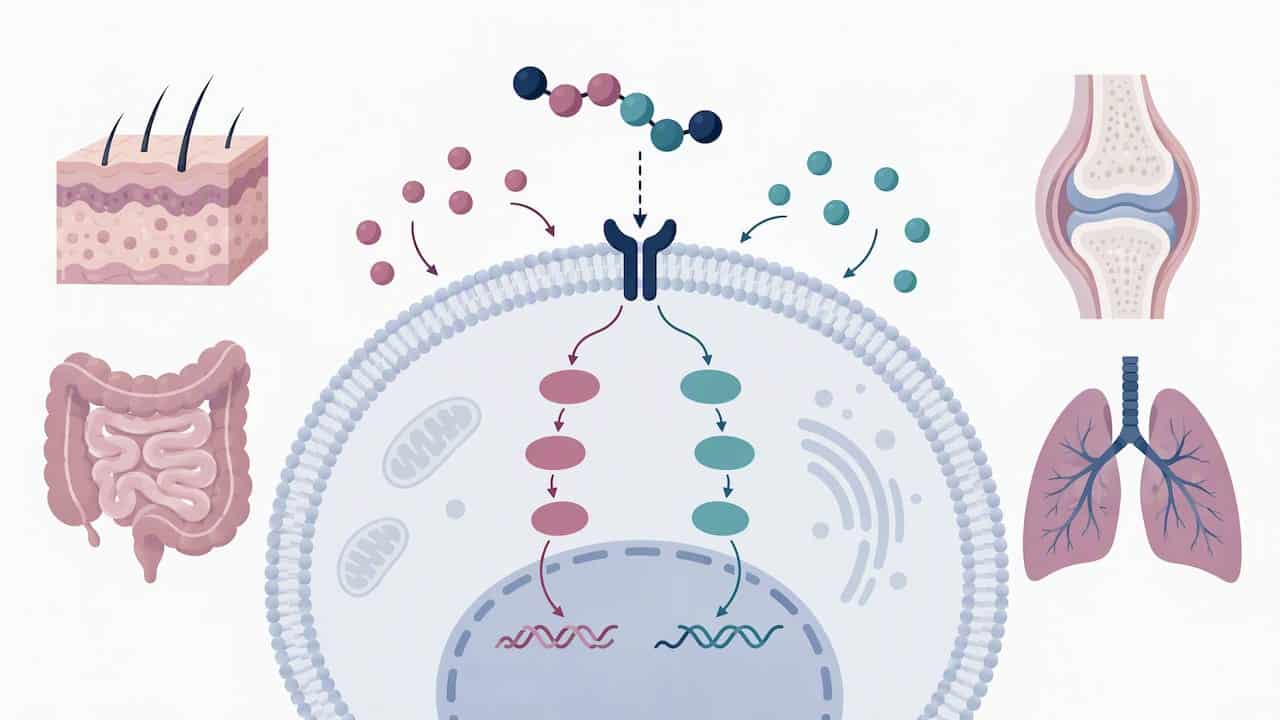
The same authors stress the catch: most positive outcomes come from in vitro or animal models. More human data on dose, pharmacodynamics and long-term behaviour is needed before any of this counts as standard therapy.
The peptides people ask about most
| Peptide | What it is | What it is studied for | Strength of evidence |
|---|---|---|---|
| BPC-157 | A 15-amino-acid sequence derived from a gastric protein | Gut inflammation, wound and tendon healing | Mostly animal studies, a few small human pilots |
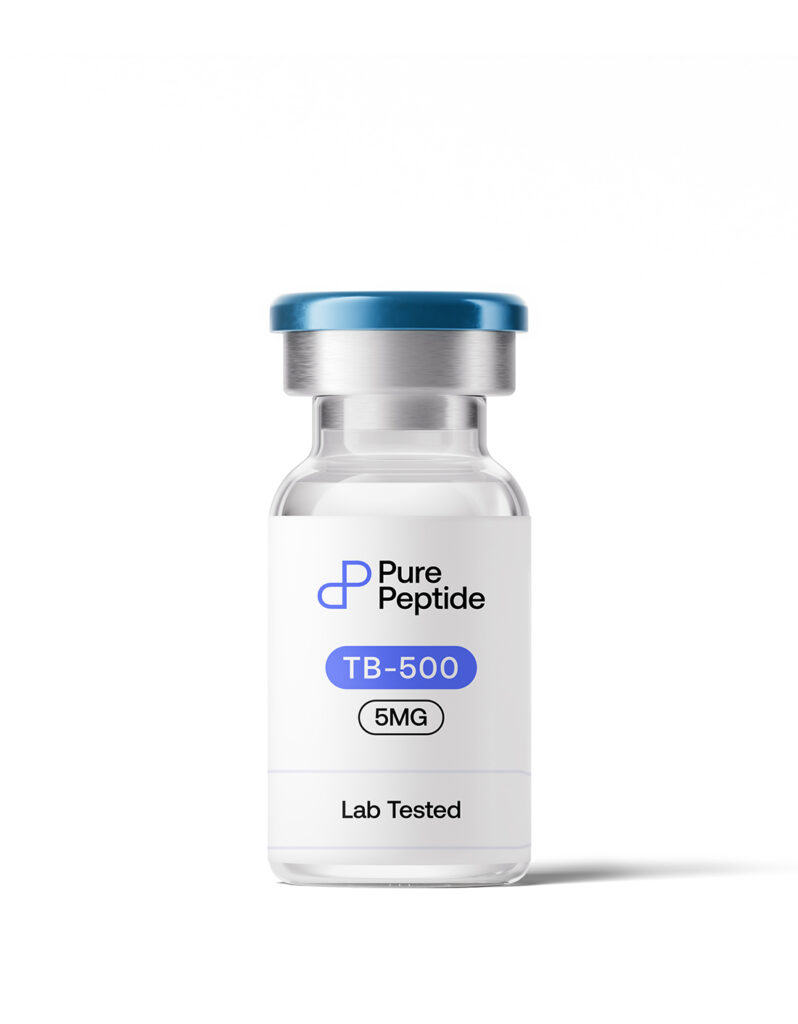
| TB-500 | Synthetic fragment of thymosin beta-4 | Tissue repair, cell migration, inflammation in injury models | Mainly preclinical |
| KPV | Three-amino-acid fragment related to alpha-MSH | Gut and skin inflammation | Mainly cell and animal work |
| GHK-Cu | Copper-binding tripeptide found naturally in plasma | Skin repair, collagen, anti-aging | Cosmetic and lab research |
| LL-37 | Human antimicrobial peptide | Immune modulation, infection and wounds | Complex, can be pro- or anti-inflammatory |
The table is a map of where research is happening, not a ranking of what works. None of these is approved in Canada as a treatment for inflammation.
BPC-157
BPC-157 is the name that comes up first in almost every discussion. Much of the classic work comes from a Croatian group. One rat study describes the peptide as having been in trials for inflammatory bowel disease and found it helped heal an intestinal anastomosis. Another rat study on fistulas points to the nitric oxide system as part of the mechanism. A separate paper on NSAID toxicity examined whether BPC-157 counteracts the damage NSAIDs do to the gut.
Human evidence is thin. A 2024 pilot study in interstitial cystitis reported that 10 of 12 patients had complete symptom resolution after an intravesical injection of 10 mg. It was small and uncontrolled in design, so it is a reason for larger trials, not proof. In animal work, doses as low as 10 ng/kg or 10 μg/kg have been used, and those numbers do not translate directly to people.
If you want the background on this peptide, our own pieces cover BPC-157 benefits and applications, tendon healing research and half-life and dosing.
TB-500
Readers searching for TB-500 and inflammation are usually thinking about injured tendons, muscle strains or stubborn joints. TB-500 is a synthetic fragment related to thymosin beta-4, a protein involved in cell migration and repair. The reasoning in the research is that faster, better-organised repair means less prolonged inflammation. That is a hypothesis built mostly on lab models. There are no approved human products containing it, a point the FDA’s advisory committee briefing makes about both BPC-157 and TB-500.
See our comparison, BPC-157 and TB-500 side by side, for how the two are discussed in recovery research.
KPV, GHK-Cu and LL-37
KPV is a short fragment studied mainly for gut and skin inflammation. GHK-Cu is better known in skin research, and we cover it in our GHK-Cu guide. LL-37 is a naturally occurring human peptide whose effects depend on context. It can calm or amplify immune activity, which is a good reminder that “peptide” does not mean “gentle”.
Other sources in this space are food-derived, such as hydrolysed proteins. A Food & Function review covers peptides from food sources with anti-inflammatory activity, and these are a different category from injectable research peptides.
What about a “stack”?
People often ask about combining peptides, typically BPC-157 with TB-500. The logic is that one acts on local healing and the other on cell migration and repair. Our guides explain how the pairing is discussed in recovery research and in this complete recovery guide.
Be clear on one thing: there are no controlled human trials showing that a combination reduces inflammation better than either alone. Stacking two compounds with limited safety data does not halve the uncertainty, it adds to it. Any adverse reaction becomes harder to attribute to one product.
Where the evidence runs out
Three limits matter for anyone reading the “best peptides for inflammation” lists that dominate search results.
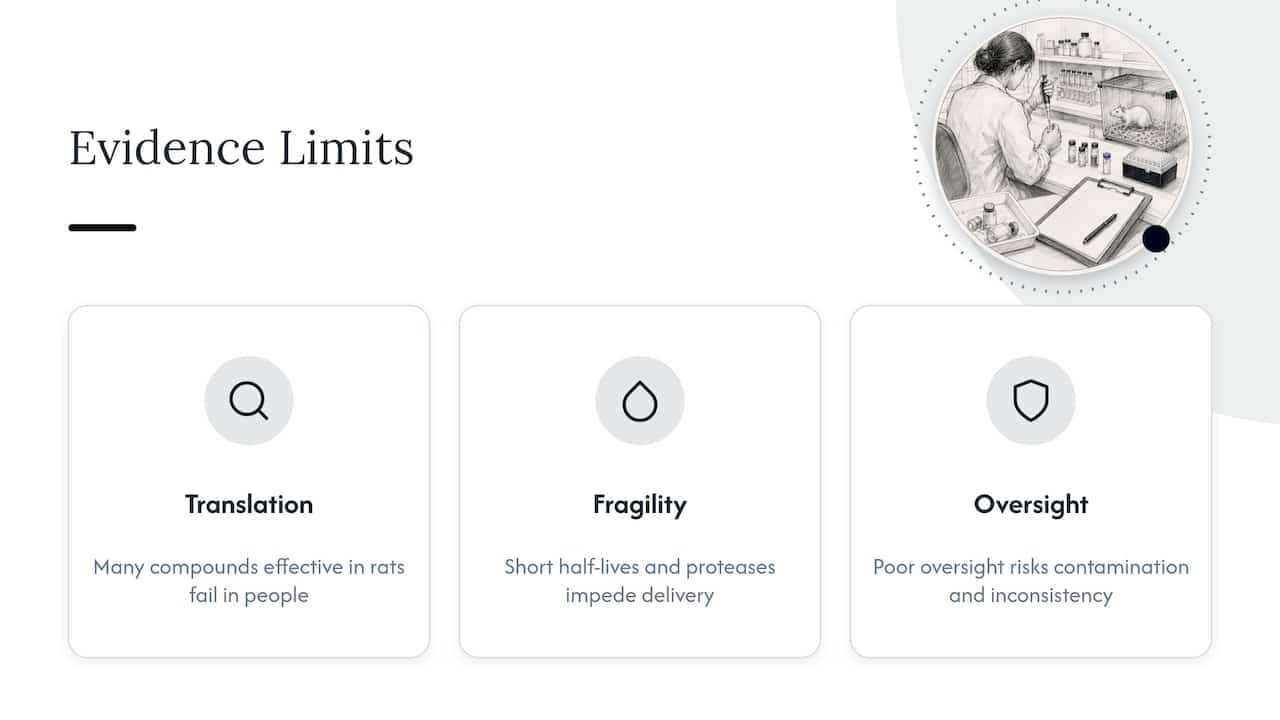
Animal results often do not carry over. Rodent healing studies are useful for generating ideas. Many compounds that work in rats fail in people.
Peptides are fragile. Researchers point to short half-lives and breakdown by proteases as major obstacles. Work on delivery systems, such as nanoparticle encapsulation, aims to protect these molecules in the body, and it is a level of engineering that commercial wellness products rarely match.
Manufacturing oversight matters. A review of peptide therapeutics flags that without regulatory oversight and approved manufacturing standards, batch inconsistency, contamination and unwanted immune reactions become real risks. The FDA’s committee materials add that compounded peptides are prone to impurities and aggregation. Reports to its adverse event database for BPC-157 include injection site reactions, shortness of breath and hyperpigmentation, although causality is hard to establish.
That last point is why a purity figure, even a high one, is not the whole story. A certificate of analysis tells you what a lab found in a sample. It does not substitute for clinical safety data on the compound.
The Canadian situation
Health Canada’s position is unambiguous. Its 2025 safety alert on a seized peptide supplier advises people not to buy or use unauthorized drugs and to see a healthcare professional if they have used one and have concerns. It also says to buy prescription drugs only from licensed pharmacies. A later alert from December 2025 describes products seized from two stores in Maple Ridge, BC, including injectable peptides, SARMs and anabolic steroids.
There is a wrinkle. A CBC News investigation found that Health Canada prohibits BPC-157 as an injectable drug or licensed natural health product, yet says it can be compounded as an oral product by pharmacies with a prescription. That route is a conversation to have with a physician, not something to improvise. Commentary from McMaster-linked researchers in The Conversation makes the same point: the hype is ahead of the evidence.
We sell research-grade peptides, and we think you should have this context before you buy anything, from us or anyone else. Our products are sold for research use, and what you do with them is your responsibility under Canadian law.
Our perspective
We work with people who are serious about recovery: athletes with nagging tendon problems, lifters managing training load, and people who have read the same studies you have. Our view is simple.
First, read the primary sources, not the listicles. Many pages that rank for this topic sort peptides into “best” lists without separating a rat study from a human trial. We try to keep the two apart in our own guides.
Second, purity is necessary but not sufficient. We back our products with third-party lab certificates of analysis and purification methods aimed at purity above 99%, because you should be able to verify what is in a vial. But we will not tell you that purity equals proven clinical benefit. It does not, and the regulators we cite say as much.
Third, inflammation is a symptom with many causes. Persistent joint pain, bowel symptoms or skin flares deserve a proper diagnosis. Peptide research is interesting, and it belongs alongside medical care, not instead of it.
— Pure Peptide
Before you act: practical checks
- Name the problem. Is it a sports injury, a chronic condition such as colitis or arthritis, or general soreness? Chronic conditions need a physician, and peptides should never replace prescribed treatment.
- Ask a professional about interactions. If you take NSAIDs, immunosuppressants or blood thinners, ask a pharmacist before adding anything.
- Check the paperwork. Look for a batch-specific certificate of analysis from an independent lab, not a generic PDF.
- Know the status. Injectable peptides are not authorized in Canada for human use. Read Health Canada’s alerts yourself.
- Stop and seek care if something goes wrong. Shortness of breath, swelling, a spreading rash or signs of infection at an injection site call for medical attention right away.
And the basics still do most of the work for ordinary inflammation: sleep, graded return to training, protein intake, and appropriate rehab. A physiotherapist can tell you more about a sore tendon than any supplement page.
Where Pure Peptide fits
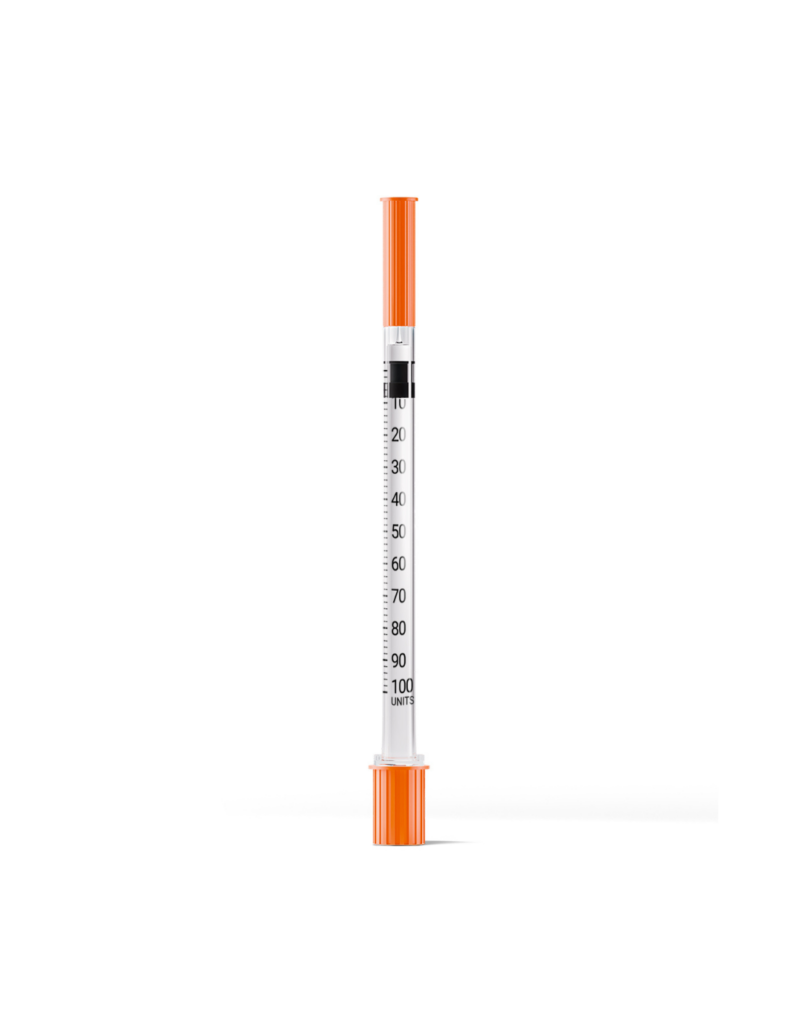
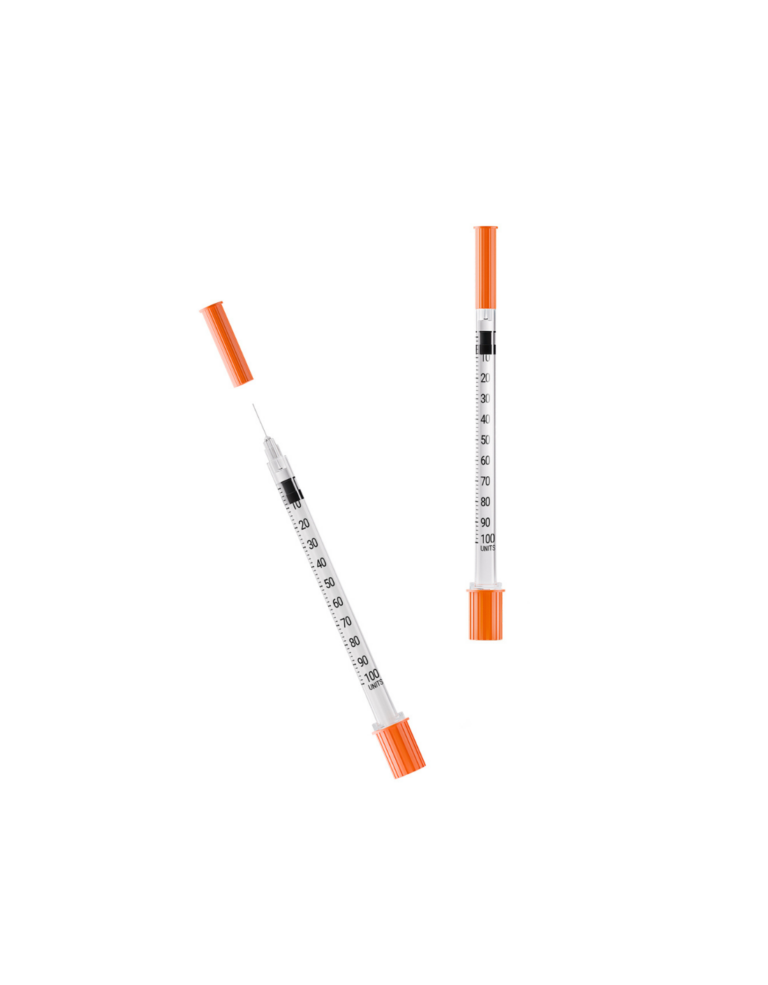
If you are researching recovery compounds and want a catalogue organised by goal, our recovery and healing range groups the peptides discussed above, and the main store lists the full selection, including reconstitution supplies such as bacteriostatic water, syringes and alcohol pads. Each product is supported by third-party lab certificates of analysis. Prices are shown on the site.
FAQ
Do peptides decrease inflammation?
Some do in laboratory and animal studies, by influencing cytokine release and signalling pathways such as NF-κB. Human evidence is limited, and no peptide sold for wellness in Canada is authorized to treat inflammation. Approved peptide medicines exist, such as GLP-1 drugs, but they are used for other conditions.
What is the best peptide for inflammation?
BPC-157 has the most research behind it, mostly in animals, and KPV is often discussed for gut and skin. “Best” is not a claim the evidence supports yet, because there are no head-to-head human trials. Ask a physician what fits your condition.
Is TB-500 good for inflammation?
TB-500 is studied for tissue repair and cell migration, which may indirectly shorten inflammatory phases in injury models. There are no approved human products containing it, and the human data is minimal. Health Canada has named it among unauthorized injectable peptides.
Are peptides safe to take for joint inflammation?
Safety has not been established. Regulators warn about impurities, aggregation and immune reactions, and adverse event reports for BPC-157 include injection site reactions and shortness of breath. For joint pain, see a physician or physiotherapist, particularly if it is persistent or swollen.
Sources
- Advances in the application and mechanism of bioactive peptides in the treatment of inflammation (PMC)
- Frontiers in Immunology review, 2024
- BPC 157 and ileoileal anastomosis in the rat (PubMed)
- BPC 157 and colocutaneous fistulas in rats (PubMed)
- Toxicity by NSAIDs and BPC 157 (PubMed)
- BPC-157 pilot study in interstitial cystitis (PubMed)
- FDA Pharmacy Compounding Advisory Committee materials
- Peptides and protein hydrolysates with anti-inflammatory activity (Food & Function)
- Peptide therapeutics review (PMC)
- Health Canada alert: unauthorized injectable peptide drugs
- Health Canada alert: Maple Ridge, BC seizures
- CBC News: regulatory loophole and BPC-157
- The Conversation: The peptide problem