


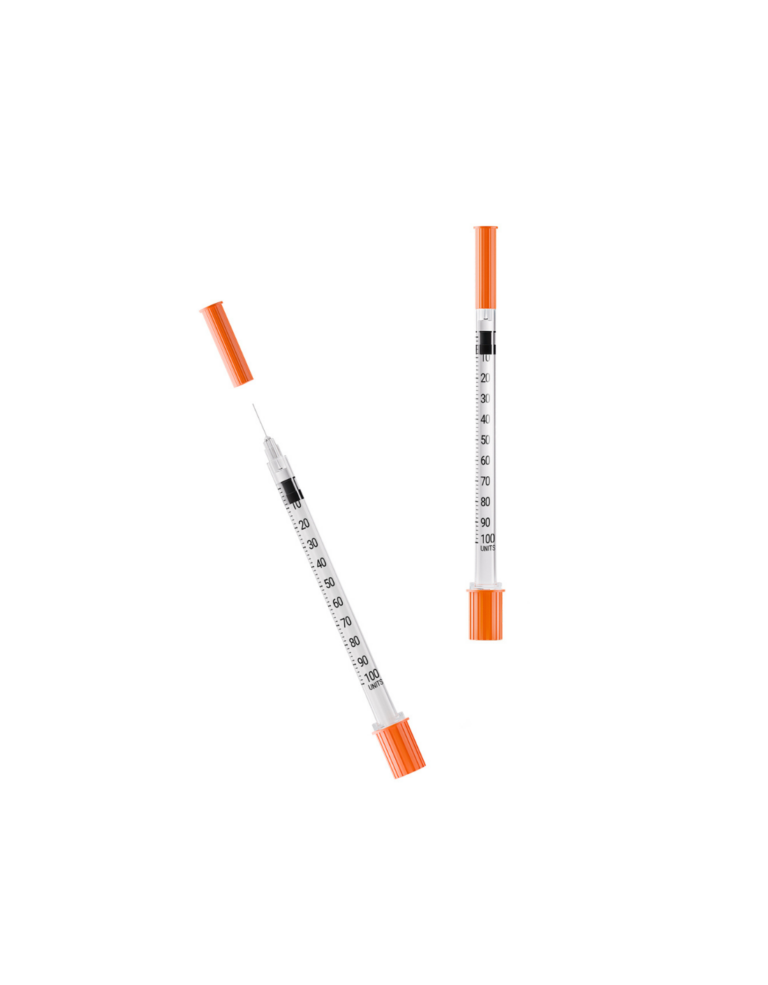
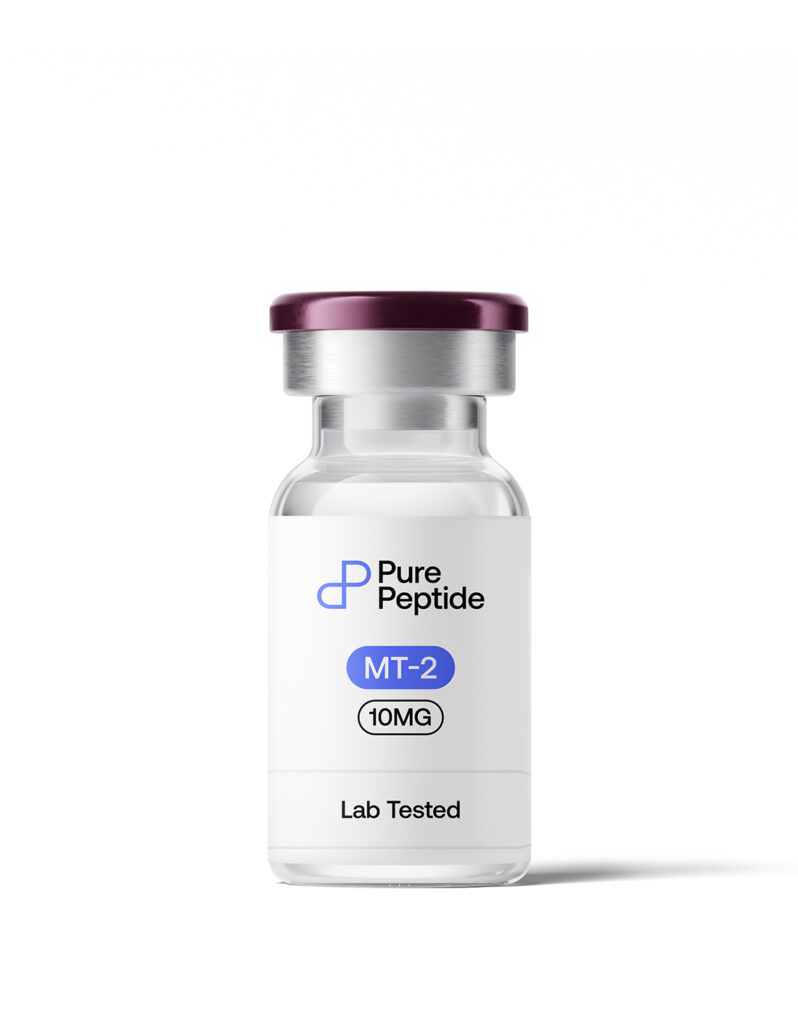


Most Canadians can drop off used syringes for free at a participating pharmacy through the Health Products Stewardship Association (HPSA), or in Quebec, through the SIRSAU system. Put used sharps in an approved container right away, then check your municipal or health unit page or call a nearby pharmacy to confirm they accept drop-offs before you go.
TL;DR:
- Most Canadians can drop off used syringes at participating pharmacies for free, but availability and participation vary by location and province.
- Proper disposal requires immediate placement of syringes into approved, puncture-resistant containers, which should be sealed and kept out of reach of children and pets.
- Household sharps should never be disposed of in regular garbage, recycling bins, or flushed down toilets, due to safety risks and municipal regulations.
- The main programs are geared toward individuals managing health conditions at home, while businesses producing sharps must use licensed biomedical waste services.
- Confirm drop-off points and prepare sharps containers properly to prevent needle sticks and ensure safe, legal disposal.
Table of Contents
- Where to return used syringes in Canada
- How to prepare and contain syringes at home for safe disposal
- Legal, municipal and safety rules: what you must not do
- Who can use household sharps programs and who must use commercial disposal
- How to find local sharps drop-off points and services
- Expert safety tips for handling and transporting sharps
- Balancing accessibility and safety in sharps disposal
- Pure Peptide’s role in safe injection supplies and guidance
- Sources
- FAQ
Where to return used syringes in Canada
Canada does not have a single national syringe collection network. Instead, disposal runs through provincial stewardship programs, pharmacy take-back, and municipal services, with the right option depending on where you live.
The Health Products Stewardship Association runs the country’s largest free consumer medical sharps collection effort, covering Manitoba, Ontario, New Brunswick, Quebec, and Prince Edward Island. Participating pharmacies in these provinces can hand out free approved sharps containers and accept full ones back for disposal at no cost, covering home-use items like needles, syringes, pen tips, lancets, infusion sets, and pre-filled syringes or cartridges.
Participation is site-specific, not automatic. A statement from HPSA makes clear that not every location within a pharmacy chain takes part, so calling ahead saves a wasted trip and confirms whether a fresh container will be waiting when you return a full one.
Quebec runs its own parallel system. SIRSAU, the province’s integrated used syringe and needle recovery system, supplies free containers and maintains return points at pharmacies, CLSCs, Injection Equipment Access Centres (CAMIs), and participating hospitals. The program was built with both home medical treatment and people who inject drugs in mind, so its network tends to be broader and more visible than in other provinces.
Municipalities fill in the rest of the picture. The City of Windsor’s sharps disposal page describes 24-hour outdoor sharps bins along with instructions for getting a free approved container from a pharmacy and reporting a found needle to municipal services. Peel Region and Calgary publish similar guidance, listing acceptable containers, outdoor bin locations, and who to call if you spot a needle in a park or on a sidewalk.
Typical local options include:
- Participating pharmacies that supply free containers and accept them back once full.
- Public 24-hour outdoor sharps bins in some cities, often near parks or transit areas.
- Health units and CLSCs (particularly in Quebec) that operate as return points under SIRSAU.
- Special municipal collection events advertised through local waste or public works pages.
Availability varies block by block. A downtown pharmacy in one city might take sharps back without hesitation while a location a few kilometres away does not participate at all, so always confirm before making the trip.
How to prepare and contain syringes at home for safe disposal
Getting a syringe safely out of your home starts with the right container, not the drop-off itself. An approved sharps container is rigid, puncture-resistant, and has a lid that locks or seals permanently once closed. Many pharmacies that participate in HPSA’s program give these out free, and you can also buy them at pharmacies or medical supply stores if none are available nearby.
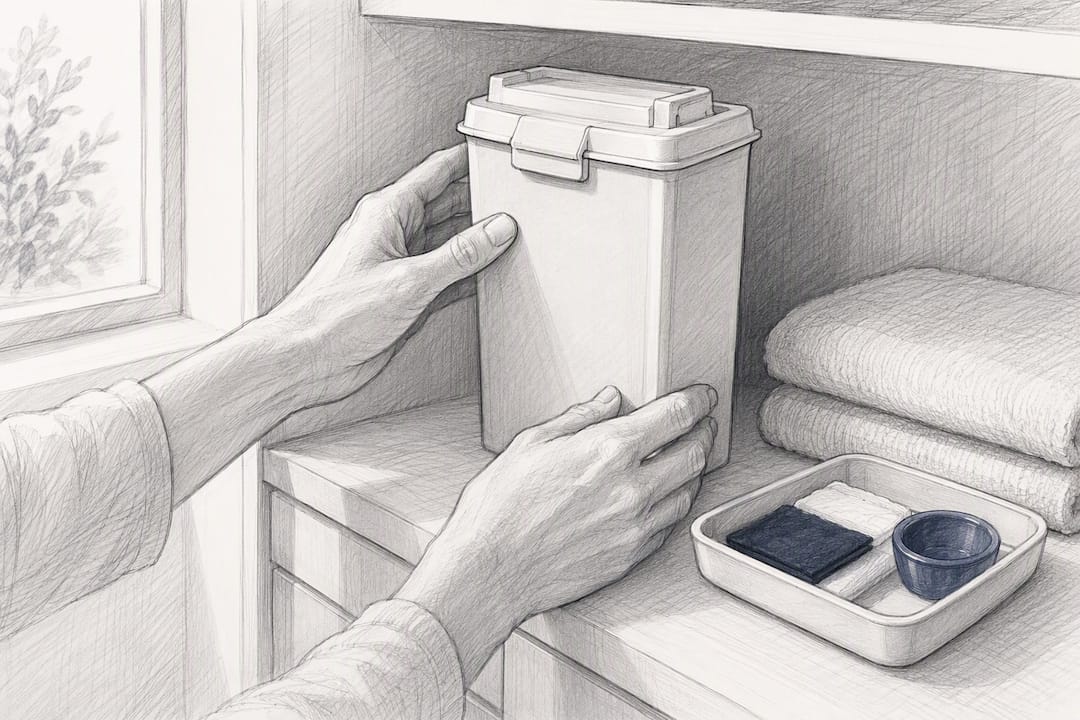
When no approved container is on hand, Alberta Health Services recommends a thick-walled, puncture-resistant plastic bottle with a tight, secure lid, such as an empty laundry detergent container, clearly labelled “Sharps” so nobody mistakes it for household recycling.
Follow these steps every time you dispose of a used syringe:
- Drop the needle and syringe into the container immediately after use, point first.
- Never recap a needle by hand or try to bend, break, or force it into the container.
- Stop filling once you reach the manufacturer’s fill line, or roughly three-quarters full if using a substitute container.
- Close the lid fully and tape or seal it before moving the container anywhere.
- Keep the container upright during transport and never place it in a recycling or garbage bin.
Pro Tip: Keep your sharps container in the same spot every time, ideally somewhere out of reach of children and pets, so you’re never tempted to improvise with a flimsy substitute.
Overfilling is one of the most common mistakes. A container packed past its line increases the odds of a needle poking through gaps around the lid, which defeats the entire purpose of using one in the first place.
Legal, municipal and safety rules: what you must not do
Provincial health guidance and municipal bylaws are consistent on this point: loose needles do not belong anywhere near household waste streams. Alberta Health Services is explicit that sharps placed in garbage or recycling risk needle-stick injuries to waste workers, and many municipal rules prohibit it outright.
Avoid these actions entirely:
- Never place loose needles or syringes in household garbage or recycling bins.
- Never flush needles or syringes down a toilet.
- Never leave a filled sharps container unsealed or with the lid loose during transport.
- Never assume a municipality will pick up waste containing visible loose sharps.
Some municipalities will suspend regular waste collection at a household if sharps turn up loose in the bin, treating it as a safety violation rather than a one-off mistake. Provincial stewardship regulations exist precisely to prevent this scenario by giving households a free, legal alternative.
It is worth separating household disposal from commercial waste. Business-generated sharps, whether from a clinic, a tattoo studio, or a veterinary practice, fall under a different regulatory stream entirely. Those generators are required to contract licensed biomedical waste processors rather than relying on pharmacy take-back or municipal bins meant for individual households.
Who can use household sharps programs and who must use commercial disposal
Consumer sharps programs like HPSA and SIRSAU exist for individuals managing health conditions at home: people using insulin, allergy medication, fertility treatments, or any other self-administered injectable. If you are disposing of syringes you used yourself or for a family member at home, you are the intended audience for these free programs.
The line gets drawn at commercial and institutional generators. Clinics, tattoo artists, nursing homes, and veterinary practices producing sharps as part of a business or service are excluded from consumer take-back programs and must arrange disposal through licensed biomedical waste contractors instead, as federal guidance on controlled substances handling reflects for regulated waste streams more broadly.
If you are unsure which category applies to your situation, a quick call to a participating pharmacy or your local public health unit will clear it up faster than guessing.
How to find local sharps drop-off points and services
Finding the nearest option takes a few minutes if you know where to look.
- Check HPSA’s location tools where the program operates, since not every pharmacy near you will necessarily be a participant.
- Call ahead to your closest pharmacy to confirm they take sharps back and have containers in stock before making a trip.
- Search your municipal website’s waste or 311 pages for details on outdoor sharps bins and any scheduled special collection events.
- In Quebec, check your local CLSC or CAMI location, since SIRSAU return points are often listed alongside other public health services.
Local news outlets sometimes report on new public sharps bin installations or program changes, so a quick search for your city’s name alongside “sharps disposal” can turn up recent updates that a static municipal page hasn’t caught up with yet.
Expert safety tips for handling and transporting sharps
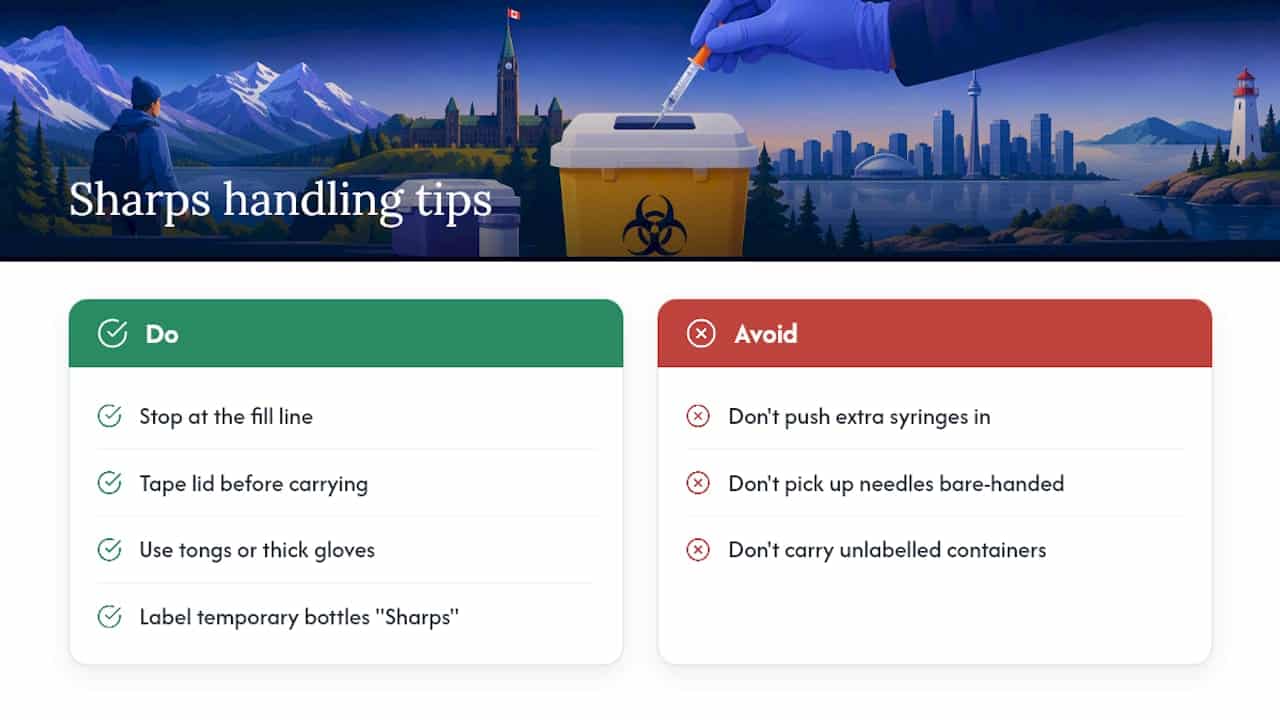
The fill line matters more than it might seem. Health guidance is consistent that forcing extra syringes into an already full container is one of the most common causes of accidental sticks during handling, so stop at the line and start a new container rather than pushing your luck.
Tape the lid before you carry a container anywhere, even a short walk to the pharmacy. If you come across a needle in a public space and don’t have a container with you, don’t pick it up bare-handed. Quebec’s public health guidance recommends using tongs or thick gloves to place it point-first into a puncture-resistant container, or calling 311 or a local health line if you’re not confident doing it yourself.
If you’re reconstituting medication at home and want more detail on technique, our guide to peptide injection sites covers safe handling from the other end of the process.
Pro Tip: A thick laundry detergent bottle with a screw-on lid works in a pinch, but label it “Sharps” the moment you start using it, before it ends up mixed in with other household bottles.
Balancing accessibility and safety in sharps disposal
Programs like HPSA and SIRSAU work because they make the safe choice the easy choice. The moment disposal requires a long drive or an awkward conversation, people find shortcuts, and shortcuts are exactly how needles end up in garbage bags or storm drains.
We think the bigger opportunity is normalizing these programs so nobody feels they need to hide the fact that they use injectable medication or inject substances of any kind. Call your pharmacy, ask your local health unit what’s available, and treat disposal as routine, not something to feel awkward about. Waste workers, kids playing in parks, and family pets all benefit when a used syringe ends up in a sealed container instead of a trash bag.
— Pure Peptide
Pure Peptide’s role in safe injection supplies and guidance
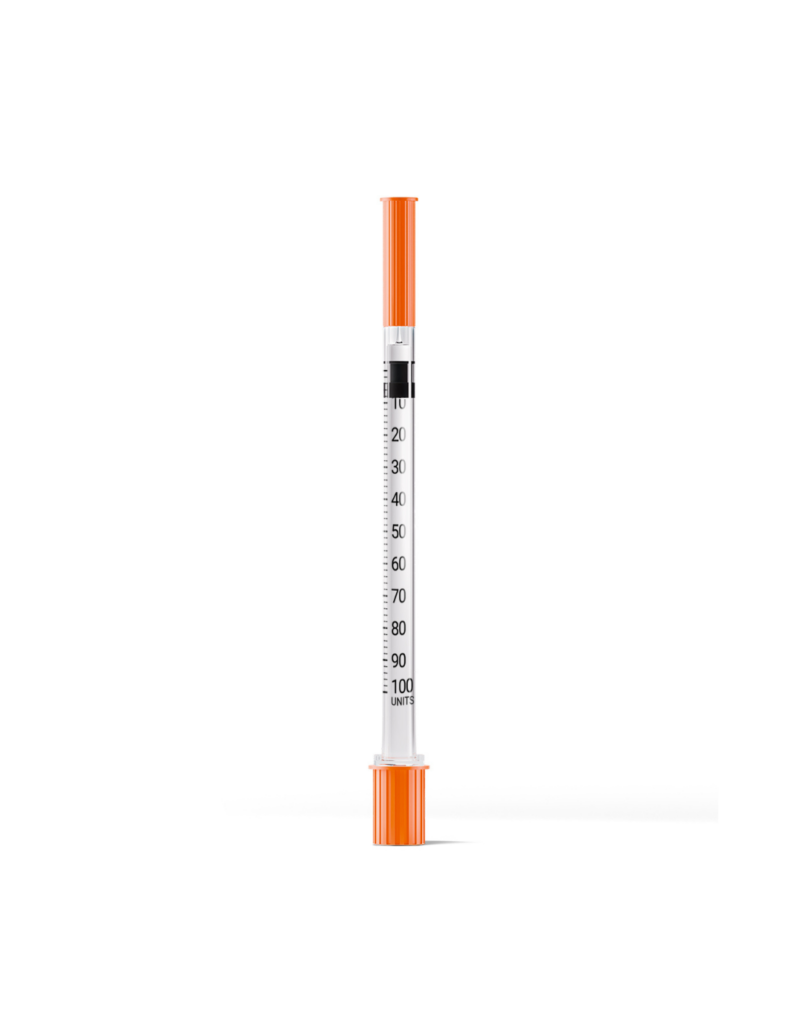
Buying ancillaries and disposing of them safely are two separate responsibilities, and we take the first one seriously so you can focus on the second. Supplies of sterile ancillaries such as syringes and bacteriostatic water may be available alongside guidance on technique, supporting readers managing self-administered injections at home.
- Sterile syringes, needles, and bacteriostatic water may be offered as ancillaries alongside peptide products.
- Our insulin syringe sizes guide helps you choose the right barrel, gauge, and length for your use case.
- We publish practical guidance on injection sites and technique to reduce risk during administration.
None of this changes what happens after use. Every syringe still needs to go into an approved sharps container and out through a pharmacy take-back program, HPSA, SIRSAU, or your municipal option, exactly as described above. Browse our full product range if you’re looking for ancillaries or peptide products alongside the disposal information you came here for.
Sources
- Health Products Stewardship Association (HPSA) — who is HPSA?
- Alberta Health Services — getting rid of needles safely
- City of Windsor — Sharps and syringe disposal
FAQ
How do I dispose of a syringe at home?
Place the used syringe immediately into an approved sharps container, point first, without recapping it by hand. Once the container reaches its fill line or is about three-quarters full, seal it permanently and return it to a participating pharmacy or your municipal drop-off point.
Are sharps containers free at pharmacies in Canada?
Many pharmacies that participate in the HPSA program give out free approved sharps containers and accept them back once full, though participation varies by location and province. Call ahead to confirm a specific pharmacy takes part before visiting, since not every location does.
How do I dispose of syringes if I live in Quebec?
Quebec residents can use SIRSAU, the province’s integrated syringe recovery system, which provides free containers and return points at pharmacies, CLSCs, CAMIs, and participating hospitals. This network is separate from HPSA’s program in other provinces but works on the same principle of free containers and free return.
How should you dispose of a used syringe safely?
Contain it right away in a rigid, puncture-resistant container labelled for sharps, never in household garbage, recycling, or down a toilet. Seal the container once full and take it to a participating pharmacy, a municipal sharps bin, or your provincial program’s designated drop-off location, as outlined by Health Products Stewardship Association guidance.
What should I do if I find a needle in a public place?
Don’t pick it up bare-handed. Quebec public health guidance recommends using tongs or thick gloves to move it into a puncture-resistant container, or calling your municipal 311 line or local health unit if you’d rather have someone trained handle it.