

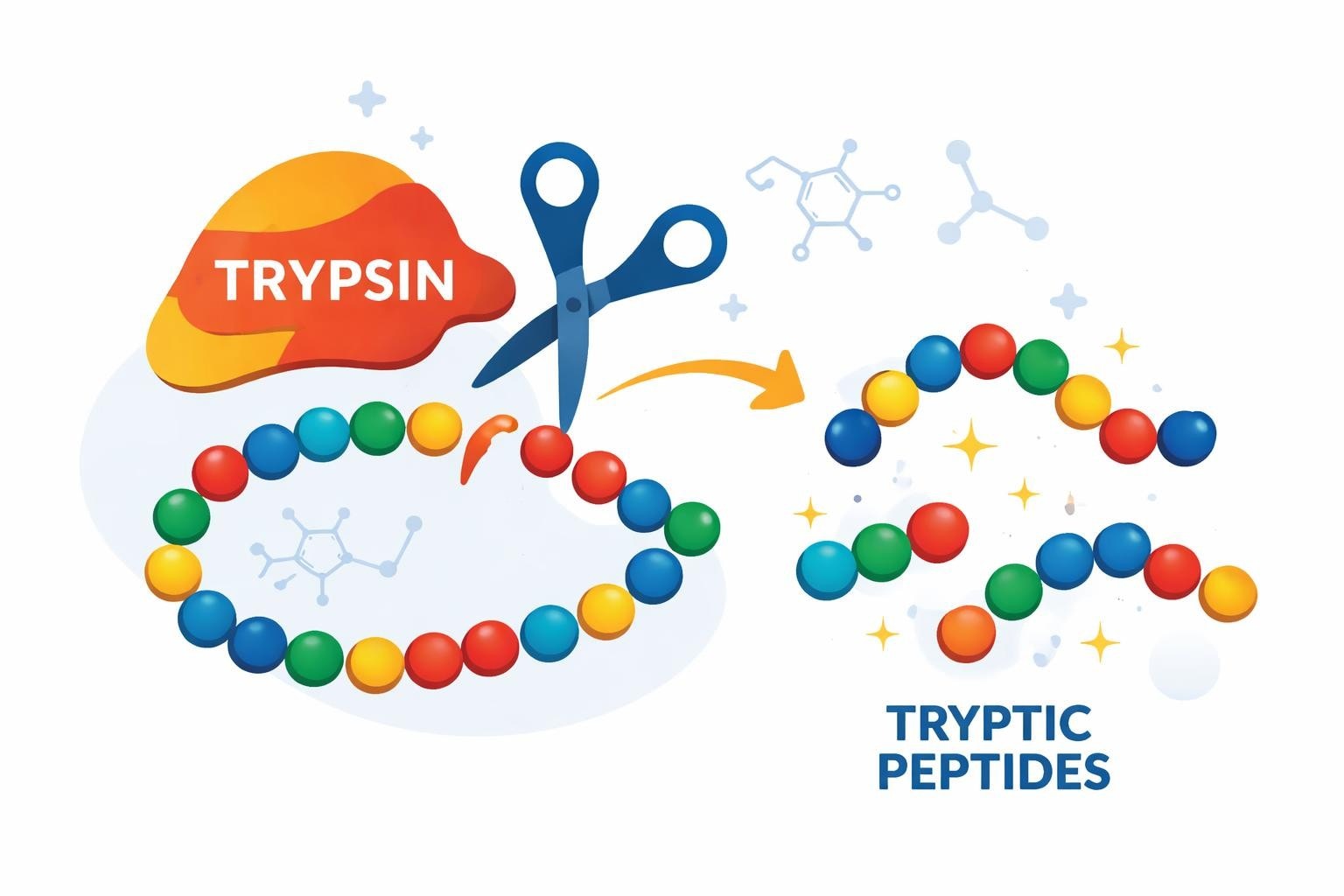
Understanding the fundamental building blocks of proteins is essential for anyone working with or researching peptides. A tryptic peptide represents a specific fragment created when the enzyme trypsin cleaves a protein at particular amino acid sites. This enzymatic digestion process forms the cornerstone of modern proteomics and peptide analysis, enabling researchers and manufacturers to verify peptide identity, assess purity, and ensure product quality. For companies committed to delivering premium peptides, mastering the science behind tryptic peptide generation and analysis is non-negotiable.
Understanding Tryptic Peptide Formation
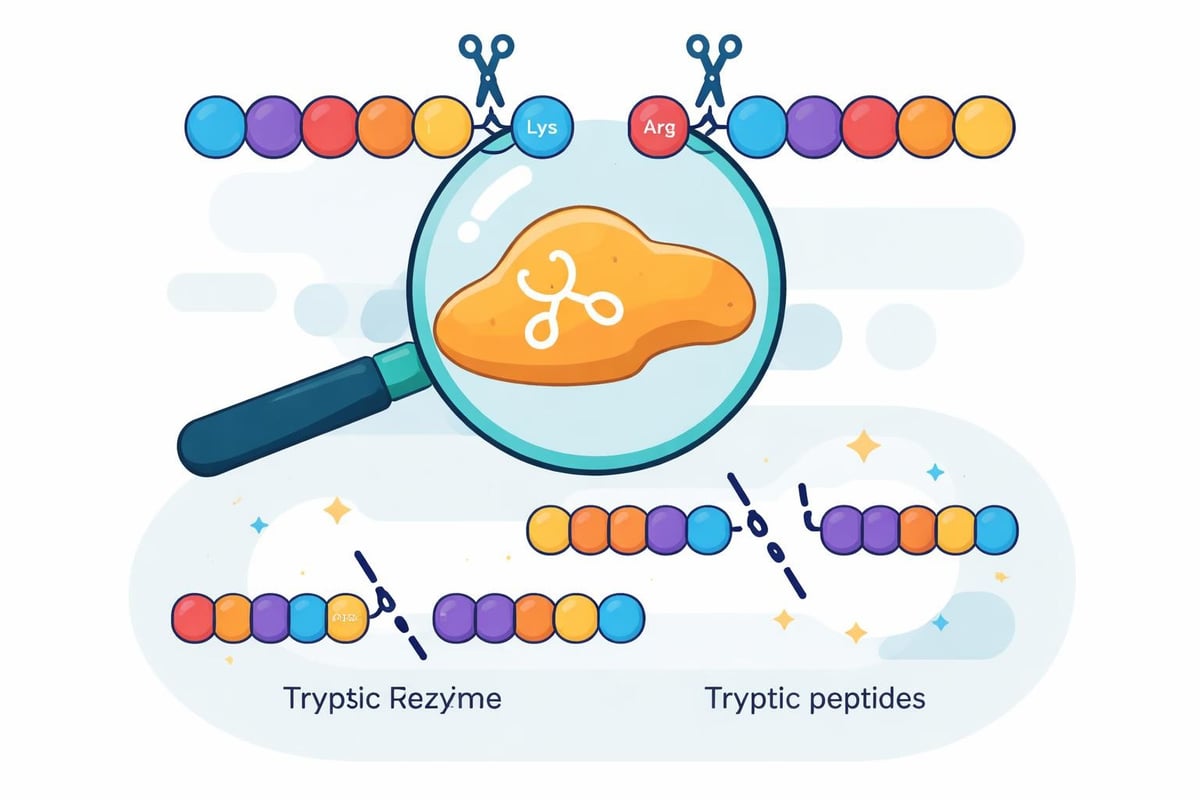
The creation of a tryptic peptide begins with enzymatic digestion using trypsin, a serine protease that cleaves peptide bonds specifically at the carboxyl side of lysine and arginine residues. This predictable cleavage pattern makes trypsin the gold standard enzyme for protein and peptide analysis across research laboratories worldwide.
When trypsin encounters a protein sequence, it recognizes basic amino acids and performs hydrolysis with remarkable specificity. The resulting fragments-tryptic peptides-typically range from 5 to 30 amino acids in length, creating pieces ideal for mass spectrometry analysis. This size range provides sufficient structural information while remaining small enough for accurate detection.
Why Trypsin Is the Preferred Enzyme
Several characteristics make trypsin uniquely valuable for generating peptides:
- Predictable cleavage sites at lysine and arginine residues
- High specificity with minimal non-specific cutting
- Optimal fragment sizes for analytical techniques
- Commercial availability in highly purified forms
- Well-established protocols across research institutions
The enzyme's reliability stems from its evolutionary role in digestive processes, where it breaks down dietary proteins into absorbable fragments. Researchers have harnessed this natural function for analytical purposes, creating standardized methods that produce consistent, reproducible results.
Applications in Peptide Quality Control
For manufacturers focused on peptide purity and efficacy, tryptic peptide analysis serves as a critical quality assurance tool. The technique allows precise identification of peptide sequences and detection of potential contaminants or synthesis errors that might compromise product effectiveness.
Mass spectrometry combined with tryptic digestion creates a molecular fingerprint unique to each peptide. This fingerprint verification process ensures that products like semaglutide or BPC-157 match their intended molecular structure before reaching customers.
Quality Testing Workflow
The standard quality control process follows these systematic steps:
- Sample preparation with protein extraction and purification
- Enzymatic digestion using pharmaceutical-grade trypsin
- Chromatographic separation via liquid chromatography
- Mass spectrometric detection for precise identification
- Data analysis comparing results against reference standards
- Documentation of findings for batch release
This comprehensive approach, detailed in systematic tryptic peptide identification research, ensures that every batch meets stringent purity requirements. The process identifies even trace-level impurities that might escape less sophisticated testing methods.
| Quality Parameter | Detection Method | Acceptance Criteria |
|---|---|---|
| Sequence Identity | Tryptic MS/MS | 100% match to reference |
| Purity | Peak area analysis | ≥98% main peak |
| Related Substances | Peptide mapping | ≤2% total impurities |
| Molecular Weight | Intact mass analysis | Within 0.01% of theoretical |
Advanced Analytical Techniques
Modern laboratories employ cutting-edge technologies to analyze tryptic peptides with unprecedented precision. Liquid chromatography-tandem mass spectrometry (LC-MS/MS) has become the industry standard, offering sensitivity down to femtomole levels and the ability to sequence unknown peptides directly.
The METATRYP database demonstrates how computational tools enhance tryptic peptide research by predicting digestion products across entire proteomes. Such resources allow scientists to anticipate which fragments will form and design optimal analysis strategies before entering the laboratory.
Reverse-Phase Liquid Chromatography
Separation of tryptic peptides requires sophisticated chromatographic techniques that can resolve fragments with subtle structural differences. Reverse-phase systems use hydrophobic stationary phases and aqueous mobile phases containing organic modifiers.
Key separation parameters include:
- Column chemistry (C18, C8, or specialized phases)
- Gradient slope and duration
- Mobile phase pH and additives
- Flow rate and column temperature
- Injection volume and sample concentration
These variables must be carefully optimized for each peptide type. What works for analyzing therapeutic antibodies may not suit smaller bioactive peptides used in anti-aging or muscle growth applications.
Clinical and Research Applications
Beyond quality control, tryptic peptide analysis has expanded into diverse fields including disease biomarker discovery, therapeutic monitoring, and personalized medicine. Researchers use this approach to identify protein signatures associated with specific health conditions.
The application of tryptic peptide screening for immunodeficiency detection illustrates how this technology extends beyond basic research into practical diagnostic tools. Similar principles apply when developing peptides targeting specific biological pathways for weight loss, recovery, or cognitive enhancement.
Biomarker Discovery
Scientists searching for disease indicators frequently employ tryptic digestion as part of their discovery pipeline. The IT1H3 tryptic peptide biomarker exemplifies how specific fragments can serve as indicators for cancer screening and early detection.
This same analytical rigor applies to verifying that therapeutic peptides maintain their intended structure throughout storage and handling. Products designed for muscle growth and recovery must retain full biological activity, which depends entirely on correct molecular structure.
Peptide Mapping for Structural Verification
Peptide mapping creates a comprehensive profile of all tryptic fragments within a protein or larger peptide. This technique provides structural information beyond simple molecular weight, revealing details about amino acid sequence, post-translational modifications, and potential degradation products.
For complex peptides containing disulfide bonds, specialized protocols capture these structural features. The analysis of disulfide-linked tryptic peptides demonstrates methods for characterizing these crucial structural elements that often determine biological activity.
| Analysis Type | Information Gained | Primary Use |
|---|---|---|
| Standard Mapping | Linear sequence confirmation | Identity verification |
| Disulfide Mapping | Cysteine connectivity | Structural integrity |
| Modified Peptide | Post-translational changes | Activity prediction |
| Degradation Products | Breakdown pathways | Stability assessment |
Building Reference Libraries
Establishing reference standards for tryptic peptides enables rapid, confident identification in future analyses. The NIST monoclonal antibody spectral library provides a model for how comprehensive databases support quality control and regulatory compliance.
Similar libraries for bioactive peptides would enable faster batch release testing and more reliable product characterization. When customers invest in premium peptides for specific health goals, they deserve assurance that every vial contains exactly what the label promises.
Practical Considerations for Peptide Users
Understanding tryptic peptide analysis helps consumers make informed decisions about peptide quality and supplier credibility. While most users won't perform these tests personally, knowing what questions to ask creates accountability.
Critical quality questions include:
- What analytical methods verify peptide identity?
- How is purity determined and documented?
- Are certificates of analysis available for each batch?
- What specifications must products meet for release?
- How frequently are testing methods validated?
Reputable suppliers provide detailed certificates of analysis documenting test results for every batch. These documents should reference specific analytical techniques, including mass spectrometry and chromatographic methods that rely on tryptic peptide analysis.

Emerging Technologies and Future Directions
The field of tryptic peptide analysis continues evolving with innovations in mass spectrometry, data processing, and automation. High-resolution instruments now achieve mass accuracy better than one part per million, enabling confident identification from complex mixtures.
Artificial intelligence and machine learning algorithms increasingly assist in spectral interpretation, predicting fragmentation patterns and identifying modified peptides with minimal human intervention. These advances make comprehensive peptide characterization faster and more accessible than ever before.
Integration with Quality Systems
Modern manufacturers integrate tryptic peptide analysis into comprehensive quality management systems that track products from synthesis through delivery. This end-to-end approach ensures consistency and provides traceability if questions arise about product performance.
Even applications in seemingly unrelated fields, such as analyzing protein binders in artwork, demonstrate the versatility and reliability of tryptic peptide methods. The same fundamental chemistry that identifies ancient proteins can verify modern therapeutic peptides with equal precision.
Specialized Applications for Bioactive Peptides
Peptides designed for specific biological effects-whether promoting anti-aging, enhancing cognitive function, or supporting metabolic health-require particularly stringent quality standards. Small structural variations can dramatically alter activity, making precise characterization essential.
The methodology for determining peptides in food products using tryptic standards shows how these techniques adapt to various matrices and applications. Similar principles ensure that therapeutic peptides maintain their integrity through reconstitution and administration.
Reconstitution and Stability
Understanding how tryptic peptide analysis monitors stability helps users handle products correctly. Peptides shipped as lyophilized powders must be reconstituted with appropriate diluents-typically bacteriostatic water-and stored under conditions that preserve structural integrity.
Stability monitoring examines:
- Primary sequence integrity over time
- Oxidation at susceptible residues
- Deamidation of asparagine and glutamine
- Aggregation or precipitation
- Loss of biological activity
Regular stability testing using tryptic peptide mapping ensures that products maintain quality throughout their shelf life and under typical storage conditions.
Regulatory Perspectives and Compliance
Regulatory agencies worldwide recognize tryptic peptide analysis as a gold-standard technique for peptide characterization. Pharmaceutical manufacturers must validate their analytical methods according to strict guidelines, demonstrating specificity, accuracy, precision, and robustness.
These same principles apply whether producing large-scale therapeutics or research-grade peptides for specialized applications. Quality cannot be compromised based on intended use-every product deserves thorough characterization and documentation.
| Validation Parameter | Requirement | Verification Method |
|---|---|---|
| Specificity | Distinguishes target from impurities | Spiked sample analysis |
| Linearity | R² ≥ 0.99 across range | Multi-level calibration |
| Precision | RSD ≤ 2% for replicates | Repeated injections |
| Accuracy | 98-102% recovery | Reference material testing |
| Robustness | Consistent under variation | Parameter adjustment studies |
The rigor required for regulatory compliance ultimately benefits all users by ensuring consistent, reliable products. When investing in peptides for health optimization or research, this level of quality assurance provides peace of mind and predictable results.
Optimizing Analysis for Different Peptide Classes
Not all peptides behave identically during tryptic digestion and analysis. Highly basic peptides with multiple arginine residues may generate very small fragments, while those with few cleavage sites produce larger pieces. Understanding these nuances allows analysts to optimize conditions for each peptide type.
Modified peptides present additional challenges. Those containing non-natural amino acids, cyclization, or chemical modifications may resist standard tryptic digestion or produce unexpected fragments. Specialized protocols address these situations, ensuring comprehensive characterization regardless of peptide structure.
Custom Protocol Development
Developing optimized methods for novel peptides requires systematic evaluation of multiple variables. This includes testing different enzyme ratios, digestion times, and solution conditions to achieve complete, reproducible cleavage.
For peptides in specialized blends containing multiple active components, methods must resolve and quantify each constituent separately. This complexity demands sophisticated analytical strategies and careful validation to ensure accurate results.
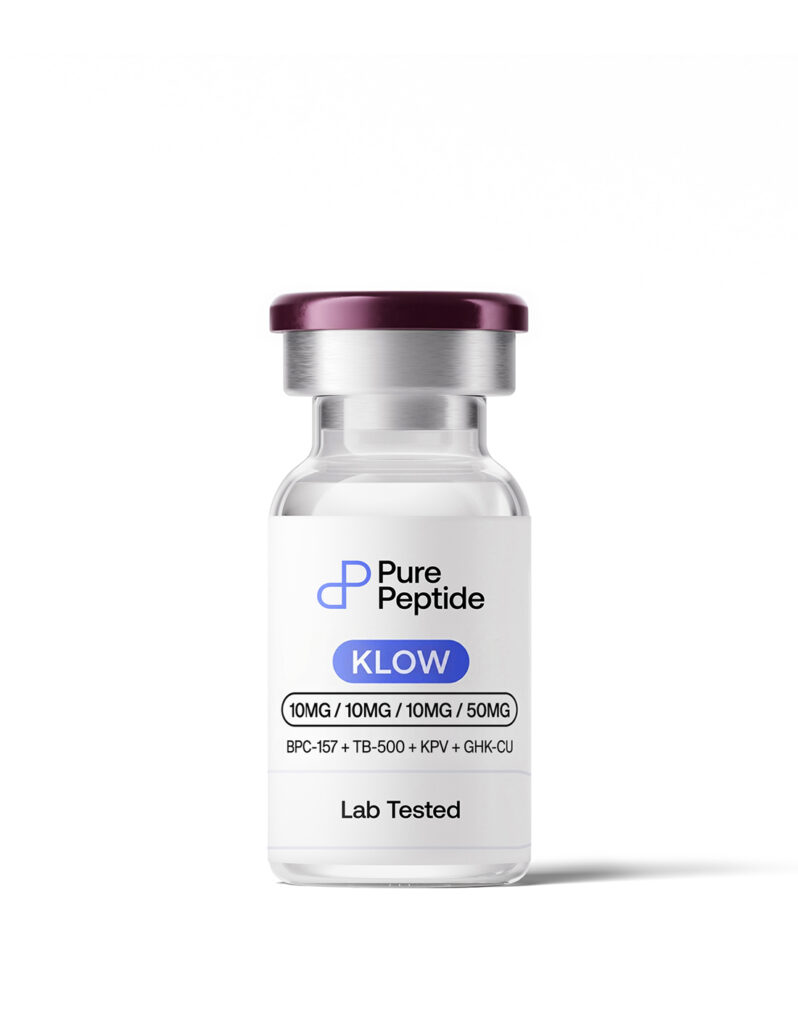
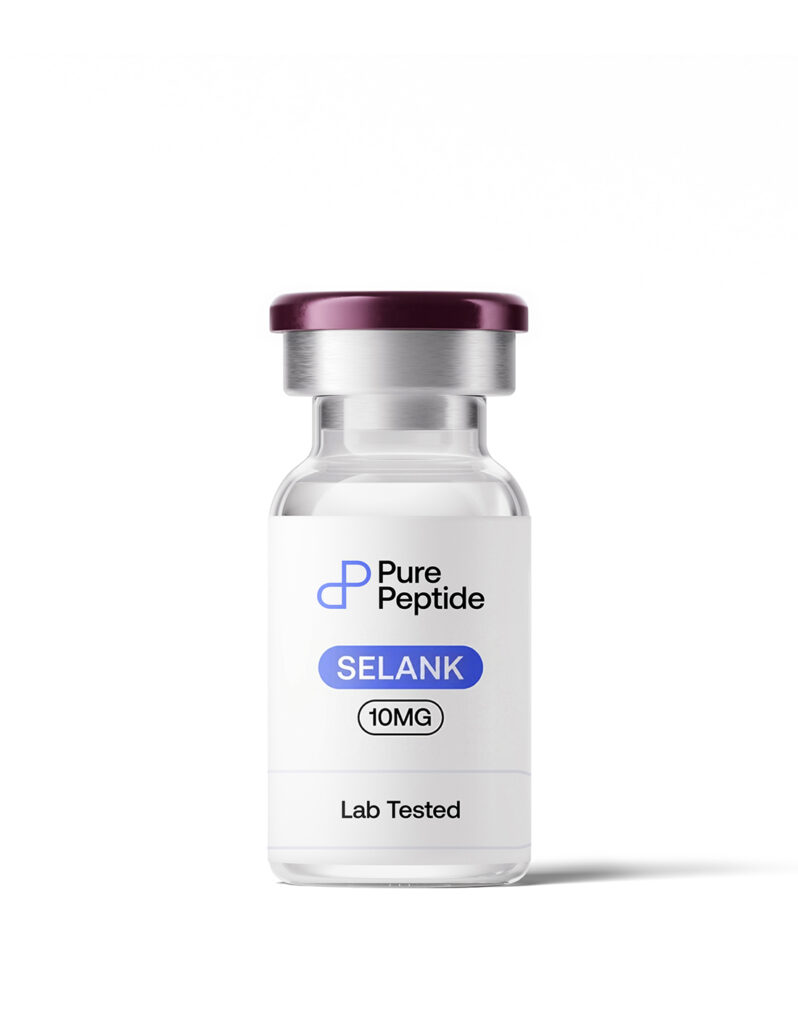
Tryptic peptide analysis represents the scientific foundation ensuring peptide products meet the highest standards of purity, identity, and quality. This enzymatic digestion approach, combined with advanced mass spectrometry, provides the molecular-level verification that separates premium peptides from inferior alternatives. Whether you're seeking peptides for anti-aging, performance enhancement, or metabolic support, understanding these quality assurance principles helps you make informed decisions. Pure Peptide employs rigorous tryptic peptide analysis and comprehensive quality testing to guarantee that every product delivers the purity and efficacy you deserve for achieving your health and wellness goals.