






Yes, microneedling can improve delivery of the copper peptide GHK‑Cu, though large human trials of the pairing are still missing. The practical rule is simple: give your skin plain barrier care while it is acutely irritated, then introduce peptides once the redness settles. Everything below explains why.
TL;DR:
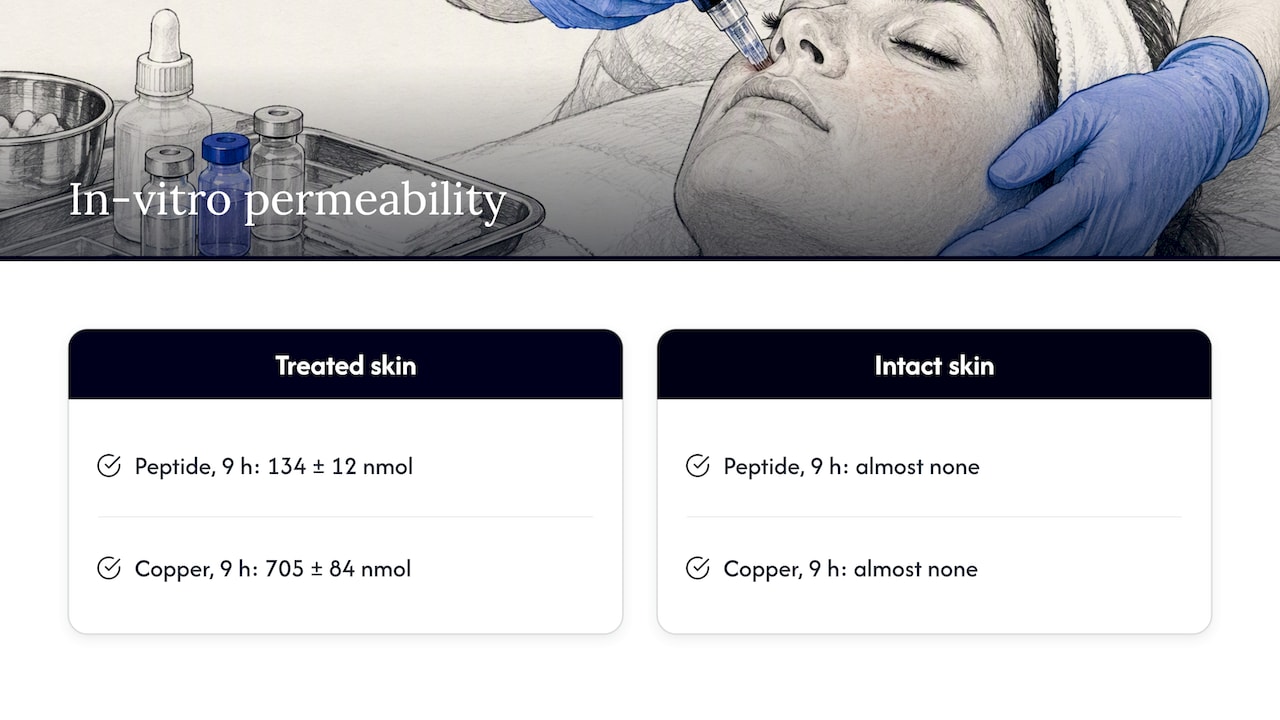
- A laboratory study measured 134 ± 12 nmol of peptide crossing microneedled skin in nine hours; this in vitro result does not establish facial outcomes.
- Use gentle cleansing and barrier moisturizer while redness or tenderness persists; patch test a copper peptide serum and introduce it gradually after symptoms ease.
- Acne scar studies commonly use three to five sessions spaced two to four weeks apart, but microneedling is not designed to treat deep sagging.
- Choose a trained practitioner who uses sterile technique and single use cartridges; disclose skin conditions and medications, and seek help if pain or swelling worsens.
- Some studies report dark patches after inflammation, and sun exposure raises that risk; use sunscreen during recovery and avoid acids or retinoids until healed.
Table of Contents
- What does the evidence say about microneedling and GHK‑Cu?
- When should you apply copper peptides after microneedling?
- What can copper peptides realistically add to your results?
- How do you keep microneedling safe?
- How do you introduce copper peptides step by step?
- Our perspective: timing and sterility matter more than the serum
- Looking for GHK‑Cu? Start with our product page
- FAQ
- Sources
What does the evidence say about microneedling and GHK‑Cu?
The strongest data on delivery comes from the lab. In a microneedle delivery study, pretreating human skin with microneedles let measurable amounts of GHK‑Cu cross it: 134 ± 12 nmol of peptide and 705 ± 84 nmol of copper permeated treated skin in 9 hours, while almost nothing crossed intact skin. That is a permeability result in vitro, not a measure of what happens on a face over months.
Separate research on cosmeceutical peptides adds a useful caution. Microneedling enhances penetration for some peptides, but the size of the effect depends on molecular weight, needle length and application force, so one peptide’s result does not transfer cleanly to another.
On the clinical side, a systematic review of microneedling for scars covering 58 studies and 1,845 patients found improvement across scar types and generally good tolerability. It also flagged post‑inflammatory hyperpigmentation in some studies and a lack of standardized protocols. Other systematic reviews describe typical acne‑scar series of 3–5 sessions at 2–4 week intervals.
What is missing is the bridge between the two. Permeability data show more peptide gets in; scar and texture trials show microneedling helps by itself. No large randomized trial has shown that adding copper peptides produces better long‑term outcomes than microneedling alone. Treat the combination as plausible and reasonable, not proven.
When should you apply copper peptides after microneedling?
Freshly needled skin has an open barrier, so strong actives applied straight away tend to sting and can provoke more inflammation than you want. Clinicians commonly suggest plain, gentle care first and peptides once the acute phase passes. Use this as general guidance, not a prescription:
- While skin is acutely irritated: cool compresses if needed, gentle cleanser, simple barrier moisturizer, no actives.
- Once redness and tenderness have eased: begin a copper peptide serum cautiously and increase use only if your skin stays calm.
- Deeper treatments: wait until your skin has recovered, and follow your practitioner’s instructions over any generic schedule.
Pro Tip: Needle depth and device type change healing time. If your skin still looks flushed, feels hot or is flaking heavily, wait until it has recovered before adding anything new.
What can copper peptides realistically add to your results?
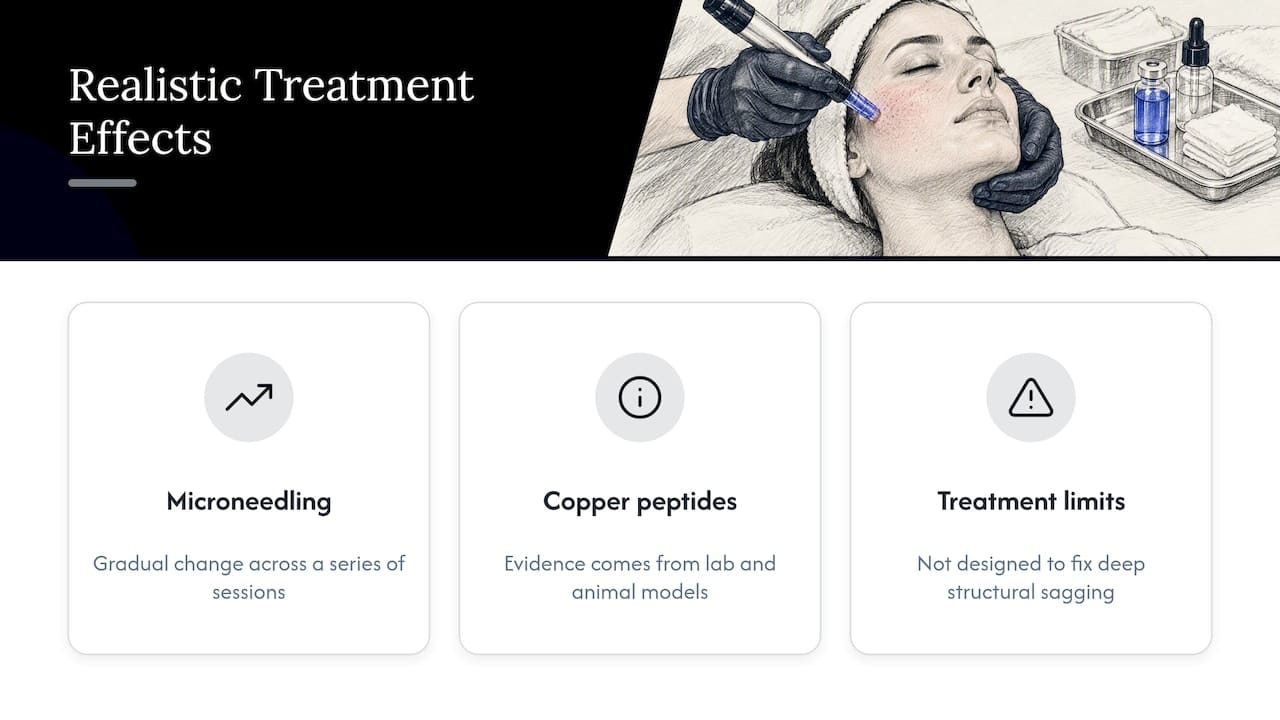
Microneedling on its own has the better‑documented track record: it is used to soften acne scars and improve texture, and the American Academy of Dermatology describes it as collagen induction therapy that stimulates collagen and elastin production. Expect gradual change across a series of sessions, not a single‑visit transformation.
What copper peptides might add comes from preclinical work. Research on copper in skin reports that copper and Cu‑GHK support collagen and elastin synthesis and wound healing in laboratory and animal models. If microneedling brings more GHK‑Cu to where remodelling is happening, a modest boost to repair is a reasonable expectation. It is an inference, though, not a measured clinical benefit.
Limits matter too. Significant skin laxity and deep structural sagging, including jowls, are not what microneedling is designed to fix, and a serum will not change that. Those concerns usually call for more invasive tightening procedures, so talk with a qualified practitioner about what suits your goals.
How do you keep microneedling safe?
Microneedling punctures the skin barrier, which is why infection control matters. Public health guidance on personal services settings stresses sterile technique and infection‑prevention principles for any procedure that breaks the skin. Use this checklist:
- Choose a clinic that follows clean, sterile technique with single‑use needle cartridges and disinfected surfaces.
- Tell your practitioner about cold sores, active acne, eczema, blood thinners and past reactions, since herpes reactivation and allergic reactions are rare but possible.
- Expect redness and mild swelling; call your practitioner if swelling worsens, pain increases or you see signs of infection.
- Watch for dark patches. Post‑inflammatory hyperpigmentation has been reported in some studies, and sun exposure raises the risk.
- Leave deeper or repeated treatments to a trained professional rather than an at‑home roller or pen.
- Never share devices, and never use one on skin that is broken or infected.
At‑home devices usually have shorter needles and less control over hygiene and technique. A practitioner can match depth to your skin and the problem you are treating.
How do you introduce copper peptides step by step?
Start with the basics, then add the peptide slowly.
- While skin is acutely irritated: cool the skin if it feels warm, cleanse gently, apply a barrier moisturizer and skip serums, acids and retinoids.
- Before first use: patch‑test the serum on a small area, such as behind the ear or along the jaw.
- Once redness and tenderness have eased: apply a thin layer of GHK‑Cu serum on clean skin, start cautiously, and watch for stinging or lasting redness.
- Until healed: keep strong acids and retinoids out of the routine.
- During the remodelling phase: use peptides if tolerated, wear sunscreen daily and ask your practitioner to review your product strength.
Pro Tip: Choose a product labelled GHK‑Cu that comes with a third‑party certificate of analysis, and follow your practitioner’s guidance on concentration and frequency. Our GHK‑Cu science page explains what the peptide does in more detail.
Our perspective: timing and sterility matter more than the serum
We think the science behind GHK‑Cu is promising, and we also think it is easy to oversell. The best results are likely to come from sterile technique, sensible timing and patience, not from rushing a peptide onto raw skin. Whatever you buy, ask for third‑party analysis and purity documentation, and involve your practitioner before you start.
— Pure Peptide
Looking for GHK‑Cu? Start with our product page
If you decide to add a copper peptide to your routine, we offer GHK‑Cu with third‑party analysis, and our peptide GHK‑Cu page describes the product. Before you order or start:
- Read the certificate of analysis and check the purity documentation.
- Review concentration and usage details on the product page.
- Confirm dosing and timing with your practitioner.
You can also browse everything we carry at Purepeptide.
This article is general information, not a substitute for advice from a qualified doctor. Consult a qualified healthcare professional about your own circumstances before acting on anything here.
FAQ
Can copper peptides help with acne scars?
Copper peptides may support skin repair, but the evidence for acne scars comes mainly from lab and animal work, not large human trials. Microneedling itself has the better clinical record for scars, so most people treat the peptide as a possible add‑on rather than the main treatment.
Will microneedling help sagging jowls?
Unlikely to a meaningful degree. Microneedling is aimed at texture and scarring, not deep structural laxity, so significant sagging usually needs more invasive tightening options discussed with a qualified practitioner.
Can I apply copper peptides after microneedling?
Yes, but not immediately. Plain barrier care is commonly recommended while skin is acutely irritated, with peptides introduced once redness settles and after a patch test.
What serums are best after microneedling?
In the first day, the best choice is a simple, fragrance‑free barrier moisturizer. Once your skin has calmed, a copper peptide serum is one reasonable option, introduced slowly while strong acids and retinoids stay out until you are fully healed.
Sources
- Microneedle-Mediated Delivery of Copper Peptide Through Skin
- Pubmed
- Microneedling for the Treatment of Scars: An Update for Clinicians – PMC