




Peptides for DOMS is a topic with two very different answers. Collagen peptides, a dietary supplement, have some small human studies behind them for post-exercise soreness. Injectable recovery peptides such as BPC-157 and TB-500 have mostly animal data, and in Canada injectable peptides are regulated as prescription drugs. This guide separates the two, shows what the research supports, and lays out a practical recovery plan for the days after a hard session.
TL;DR
- DOMS is muscle soreness that starts one to three days after unfamiliar or intense exercise and usually fades within a few days.
- Collagen peptides show promise in small studies of recreationally active men, but only one reviewed study found a significant drop in self-reported soreness.
- BPC-157, TB-500 and growth hormone secretagogues have promising animal data but no high-quality human trials showing they work.
- Health Canada treats injectable peptides as prescription drugs, and a “research use only” label does not change that.
- Sleep, enough food and protein, and gradual training progression do the heavy lifting for soreness.
Table of Contents
- What DOMS is and how long it lasts
- What “peptides” means in this context
- Collagen peptides and soreness: what the studies found
- Does protein help with DOMS?
- BPC-157, TB-500 and the evidence for human recovery
- Legal status in Canada: what to know before you act
- A practical DOMS recovery plan
- Our perspective on recovery peptides
- Explore our recovery range
- Choosing what to do next
- FAQ
- Sources
What DOMS is and how long it lasts
Delayed onset muscle soreness is the ache you feel after a hard workout or a new activity. According to the Cleveland Clinic, it starts one to three days after the workout and should go away in a few days. If it lasts a week or more, the same source says you may be dealing with an injury such as a muscle strain, which is a reason to see a physiotherapist or doctor rather than wait it out.
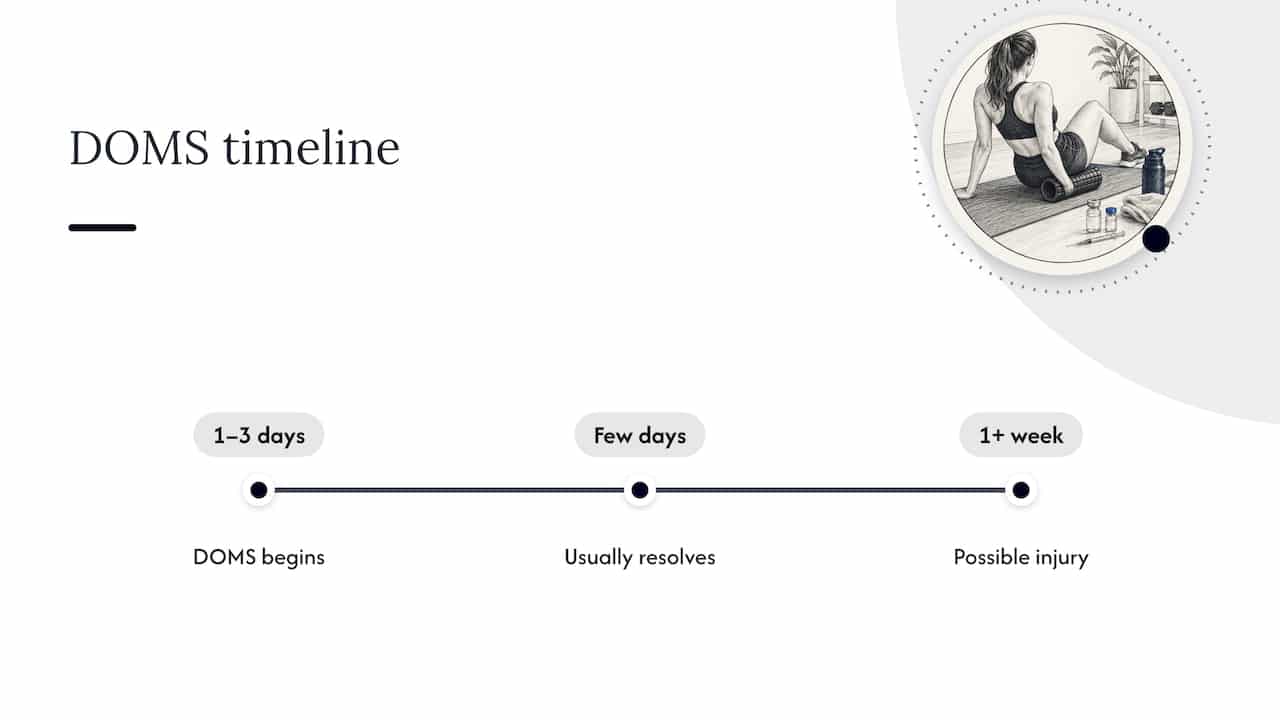
That timing matters when you judge any recovery product. Because DOMS fades on its own, a peptide, a supplement or a cold plunge can appear to work simply because you were going to feel better by day four. Good studies compare against a placebo or control group for exactly this reason, and that is the standard worth holding every claim to.
What “peptides” means in this context
A peptide is a short chain of amino acids. Protein is made of much longer chains, and your digestive system breaks both down. The word covers very different products, and mixing them up is the main source of confusion in this topic.
| Type | Example | How it is used | What the human evidence looks like |
|---|---|---|---|
| Dietary collagen peptides | Hydrolyzed collagen powder | Swallowed, mixed into drinks | Small trials, mixed results on soreness |
| Injectable recovery peptides | BPC-157, TB-500 | Injected after reconstitution | Mostly animal data, no strong human trials |
| Growth hormone secretagogues | CJC-1295, ipamorelin | Injected | Lack large, high-quality human trials for athletic use |
When people talk about peptides in bodybuilding, they usually mean the second and third rows. When a supplement study says “collagen peptides reduced soreness”, it means the first row. These are not interchangeable, and results from one do not transfer to the others.
Collagen peptides and soreness: what the studies found
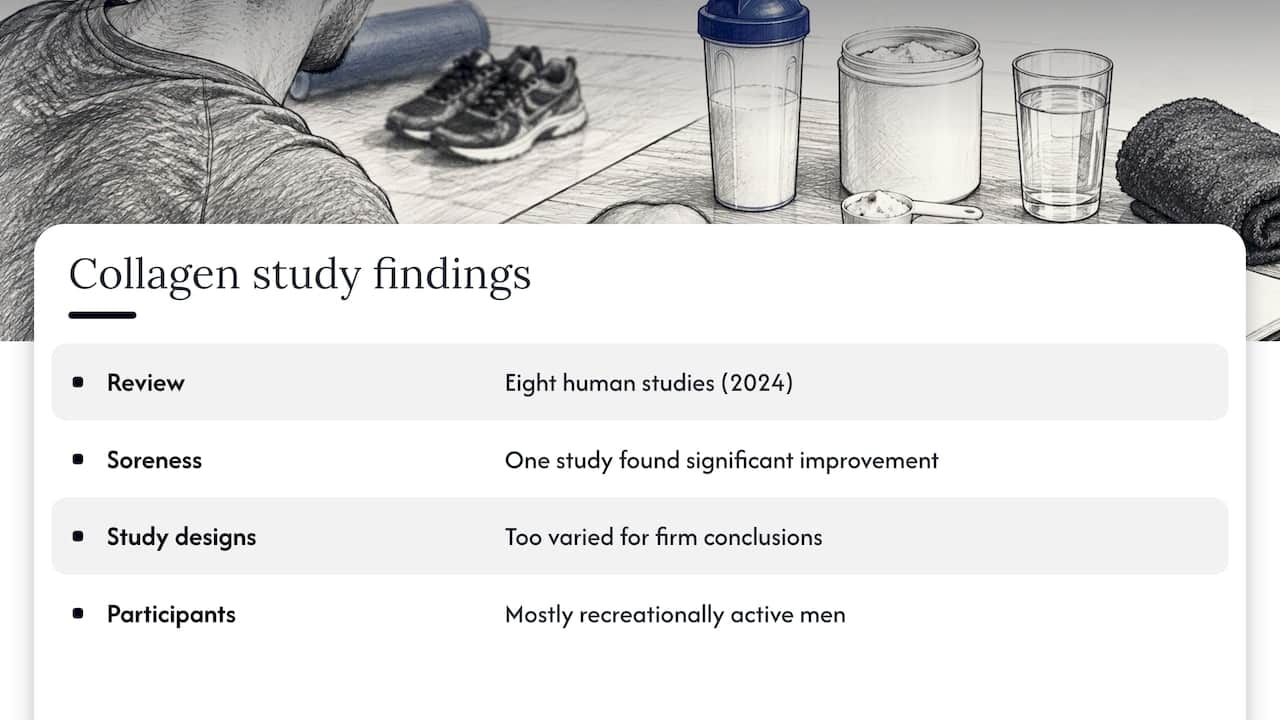
A 2024 review of eight human studies looked at collagen peptides taken as a dietary supplement around strenuous resistance training. It found potential benefits for muscle recovery, but the studies differed so much in design that firm conclusions were not possible. Only one of the reviewed studies reported a significant improvement in self-reported soreness, and the authors call for further trials.
The participants matter too. The small human studies mostly involved recreationally active men, so the results say little about women, older adults or elite athletes. If you are in one of those groups, treat the findings as an early signal rather than a promise.
There is also a tendon and joint angle. Our guide on oral collagen peptides and joint repair covers the dosing that human trials have used for connective tissue, which is a different question from muscle soreness but often asked in the same breath.
What this means for you
If you want to try a collagen peptide supplement, set realistic expectations: a possible modest reduction in soreness, not a guaranteed one. Take it consistently alongside the basics below rather than in place of them.
Does protein help with DOMS?
Protein supports muscle repair and adaptation, but its effect on soreness itself is less clear than many people assume. A meta-analysis of protein supplementation around exercise found that it helps preserve maximal strength and lowers creatine kinase, a blood marker of muscle damage. It did not significantly reduce subjective muscle soreness in young males.
So protein is still worth eating enough of, because it helps you keep performing between sessions. Just do not expect a shake to switch off the ache.
BPC-157, TB-500 and the evidence for human recovery
These are the compounds most often searched alongside DOMS. According to a 2026 sports medicine review from the American Orthopaedic Society for Sports Medicine, performance-focused peptides such as BPC-157, TB-500 and growth hormone secretagogues have promising animal data but lack high-quality human clinical evidence and large multicentre trials. No human efficacy has been demonstrated for them yet.
That answers two common questions. Does BPC-157 build muscle? There is no human evidence that it does. Can peptides heal tendons? Animal results are encouraging, and the human research has not caught up. If you want to read more about how these compounds are discussed, see our guides on BPC-157 and peptides for tendon repair.
Legal status in Canada: what to know before you act
This is the part that matters most for Canadian readers. Health Canada states that injectable peptide drugs are regulated as prescription drugs, and that products including BPC-157, TB-500, CJC-1295 and ipamorelin are often sold illegally. It also says that a label reading “For Research Use Only – Not for Human Consumption” does not exempt a product from regulatory requirements and does not indicate that it is safe or legal.
Health Canada has also issued a public warning about unauthorized injectable peptide drugs seized from a seller. Its advice: read labels to confirm a product is authorized for sale, buy prescription drugs only from licensed pharmacies, and talk to a healthcare professional if you have used an unauthorized injectable and have health concerns.
In practice, that gives you a clear way to stay on the right side of things:
- Check whether a product has an eight-digit DIN or other authorization on its label. Our page on peptide legality in Canada and the DIN explains what to look for.
- Speak with a physician or pharmacist before using any injectable, especially if you take medication, have a medical condition, are pregnant or breastfeeding.
- If you compete in a tested sport, check the anti-doping rules first. The AOSSM review notes that athletes can face sanctions for using prohibited growth factors or unapproved substances.
Purity and sterility
The same review points out that the unregulated online peptide market carries risks of variable purity, dosing and composition, contamination and inadequate sterility. These are the reasons that independent, batch-specific lab testing matters. Our own approach is to supply products backed by third-party certificates of analysis, with purity above 99% as our stated specification, and to publish guidance on buying peptides in Canada so you know what to check for on any product page.
A practical DOMS recovery plan
Whatever you decide about supplements, the soreness itself responds to a handful of habits.
Before the session
Increase volume and load gradually. DOMS is strongest after unfamiliar movements, especially lengthening (eccentric) work like downhill running or slow lowering phases. A new programme should start lighter than you think you need.
In the first 72 hours
- Move lightly. Walking, easy cycling or a mobility session keeps blood moving and often feels better than sitting.
- Eat enough. Protein supports repair and strength maintenance, as the meta-analysis above shows, and total calories matter too.
- Sleep. It is the least glamorous tool and one of the most effective. Aim for a consistent schedule in the nights after a hard session.
- Use heat or gentle massage if they make you feel better. Comfort is a legitimate goal.
When to see a professional
Sharp pain, a swollen limb, dark urine, or soreness that does not ease after about a week is not typical DOMS. See a doctor or physiotherapist. Do not self-treat with injectables.
Our perspective on recovery peptides
We hear from lifters, runners and athletes who want to bounce back faster between sessions. Our view is that recovery is a system: training load, sleep, food and, for some people, targeted supplementation.
We built Pure Peptide around purity and traceability. Every product we sell is backed by third-party lab certificates of analysis, and our formulations are designed around purification methods that take purity above 99%. When you are paying attention to what goes into your recovery routine, knowing exactly what is in the vial matters.
We also believe informed customers are better customers. That is why we publish plain-language guides on recovery, tendon and joint support, and the Canadian regulatory picture, and why we encourage everyone to talk with a healthcare professional before starting anything new.
Pure Peptide
Explore our recovery range
If you are building a recovery routine and want to see what we carry, our peptides for recovery page explains the compounds we offer and the research behind them. You can also browse the full range, including ancillaries such as bacteriostatic water, syringes and alcohol pads, on the Pure Peptide homepage.
Choosing what to do next
Match the action to your situation:
- Occasional soreness after new workouts: progress gradually, sleep, eat enough protein, move lightly. No product is needed.
- Regular heavy training and you want to experiment: consider a collagen peptide supplement alongside those habits, with modest expectations.
- Interested in injectable recovery peptides: read our guides, check the legal and anti-doping position, and discuss it with your physician or pharmacist first.
- Pain in a tendon or joint rather than muscle ache: this is a different problem. A physiotherapist or sports medicine doctor should assess it.
FAQ
Do peptides help with DOMS?
Collagen peptides may reduce soreness, but in a 2024 review only one study found a significant improvement in self-reported soreness. Injectable peptides like BPC-157 have not been shown to relieve DOMS in good human trials. Sleep, food and progressive training remain the most reliable tools.
Does protein help with DOMS?
Protein helps preserve strength and lowers a blood marker of muscle damage after exercise. The meta-analysis did not find a significant reduction in how sore young males felt. It is still a sound part of recovery.
Does BPC-157 build muscle?
There is no high-quality human evidence that it does. The AOSSM review describes promising animal data but no demonstrated human efficacy.
Can I use injectable peptides legally in Canada?
Health Canada regulates injectable peptides as prescription drugs, and a research-use label does not exempt a product. Speak with a physician or pharmacist, and read our guide to the DIN before you decide.
How long does DOMS last?
It typically begins one to three days after exercise and clears in a few days, according to the Cleveland Clinic. Soreness lasting a week or more may signal an injury and deserves a professional’s assessment.
Sources
- The Effects of Collagen Peptides as a Dietary Supplement on Exercise Recovery (PMC, 2024)
- The impact of dietary protein supplementation on recovery after exercise (European Journal of Clinical Nutrition, 2023)
- The boom of peptides in sports medicine (AOSSM, 2026)
- Using bodybuilding products (Health Canada)
- Unauthorized injectable peptide drugs warning (Health Canada)
- Delayed Onset Muscle Soreness (Cleveland Clinic)