





DSIP and melatonin are not two versions of the same thing. Melatonin is a hormone your pineal gland makes to signal night, and it has a large body of trial data behind it. DSIP (delta sleep-inducing peptide) is a short peptide with a small, older research record and no Canadian authorization. This guide sets them side by side so you can see what each is, what the studies say, and where the rules in Canada draw the line.
TL;DR
- Melatonin is a hormone and an amino-acid derivative. DSIP is a nine-amino-acid peptide. Melatonin is not a peptide.
- Pooled trial data show melatonin shortens the time to fall asleep by roughly 9 minutes and adds about 20 minutes of sleep. DSIP’s human data come mostly from small studies from the 1980s.
- In Canada, licensed melatonin is regulated as a natural health product for adults. DSIP has no Canadian authorization, and Health Canada has warned about injectable peptides bought online.
- Timing matters for melatonin: 1 to 3 hours before bed, at about 4 mg, with no extra benefit from higher doses.
- If you are weighing either one, talk to a pharmacist or physician first, especially if you take other medications.
Table of Contents
- What each one actually is
- What the sleep evidence shows
- DSIP vs melatonin: different questions, different answers
- The Canadian rules in plain terms
- How to decide between them
- Perspective
- Where to go from here
- FAQ
- Sources
What each one actually is
Melatonin: the body’s darkness signal
Melatonin is N-acetyl-5-methoxytryptamine, a pineal hormone, as Health Canada’s ingredient database describes it. Your pineal gland makes it from serotonin, and serotonin is made from the amino acid tryptophan, a pathway first shown in pineal tissue in a classic Nature paper. Levels rise in the evening and fall in daylight, which is why melatonin is tied to circadian timing rather than to sedation.
That answers a common question: is melatonin a peptide? No. A peptide is a chain of amino acids. Melatonin is a small indoleamine molecule built from one amino acid, not a chain of them.
DSIP: a nine-amino-acid peptide
DSIP is a peptide of nine amino acids. It was first isolated in the 1970s from the blood of rabbits kept in a sleep-like state, which is where the name comes from. Unlike melatonin, researchers have not pinned down a human gene or receptor for it, so its role in normal human sleep is still a hypothesis rather than an established mechanism. You can read our own overview on the DSIP science and benefits page.
Side by side
| Melatonin | DSIP | |
|---|---|---|
| Type | Indoleamine hormone | Nine-residue peptide |
| Made by the body | Yes, in the pineal gland | Role in humans not established |
| Typical form | Oral tablet, capsule or liquid | Lyophilized powder for reconstitution |
| Human evidence | Many randomized trials and meta-analyses | A few small studies, mostly 1980s |
| Main use studied | Sleep onset, jet lag, delayed sleep phase | Insomnia, sleep architecture, stress |
| Status in Canada | Natural health product for adults when licensed | No Canadian authorization |
What the sleep evidence shows
Melatonin: modest, measurable and well mapped
A 2024 meta-analysis of 26 randomized trials found melatonin cut sleep onset latency by about 9 minutes and increased total sleep time by about 20 minutes. Those are honest, modest numbers, and they are the reason melatonin is best described as a tool for sleep timing, not a knockout sedative.
The same review points to two practical levers:
- Timing: sleep-onset effects were strongest when melatonin was taken 1 to 3 hours before the intended bedtime.
- Dose: about 4 mg was enough, and higher doses gave no additional benefit.
Health Canada’s melatonin monograph supports use as a sleep aid, for altered sleep schedules, for jet lag and for delayed sleep phase. That spread of uses fits what melatonin does: it shifts when your body thinks night begins.
DSIP: promising signals, small studies
The best-known human data come from a placebo-controlled, double-blind study of 14 chronic insomniacs. DSIP improved night sleep and daytime performance, and the effect carried over into the first night after treatment ended. It is a real result, and it is also a small study from 1987.
That is the honest shape of the DSIP picture. The early findings are interesting enough that the peptide still draws attention from people interested in peptides for sleep, but the field lacks the large, repeated trials that melatonin has. Does DSIP make you sleepy? In the study above it improved sleep quality, but it is not described as a sedative in the way a sleeping pill is, and the data do not let anyone promise a particular effect on a particular person.
Be wary of pages that declare a winner. Some online posts say DSIP clearly beats traditional sleep aids, while forum users report the opposite and say melatonin worked better for them. Neither is evidence. Individual reports vary, and only controlled studies can separate the peptide from the placebo effect.
DSIP vs melatonin: different questions, different answers
Mechanism
Melatonin has a known job: it binds receptors that carry the day-night signal. This is why timing is everything with it. Taken at the wrong hour, it can nudge your body clock the wrong way.
DSIP’s mechanism is not settled. It has been described as influencing sleep patterns and stress responses, but no human receptor has been identified. Treat any confident mechanism claim as a working theory.
Speed and feel
Melatonin works best as a schedule cue, so many people take it well before bed rather than at lights-out. DSIP studies looked at nights of sleep and daytime performance across a treatment course, which is a different design and not directly comparable to the melatonin trials. That is why no head-to-head result exists to say one is stronger.
Evidence depth
Melatonin: dozens of randomized trials, pooled in meta-analyses, and a regulatory monograph. DSIP: a handful of small human studies. That gap is the single most important difference between them, more than any claim about potency.
What about tryptophan?
People also ask whether melatonin or tryptophan is better. Tryptophan is the amino acid precursor of serotonin and melatonin. A literature review of natural sleep supplements describes the evidence for tryptophan as mixed, with small improvements in sleep latency and total sleep time in a meta-analysis and no clear effect on other aspects of sleep. Melatonin has the stronger, better-characterised record for sleep timing.
The Canadian rules in plain terms
Melatonin
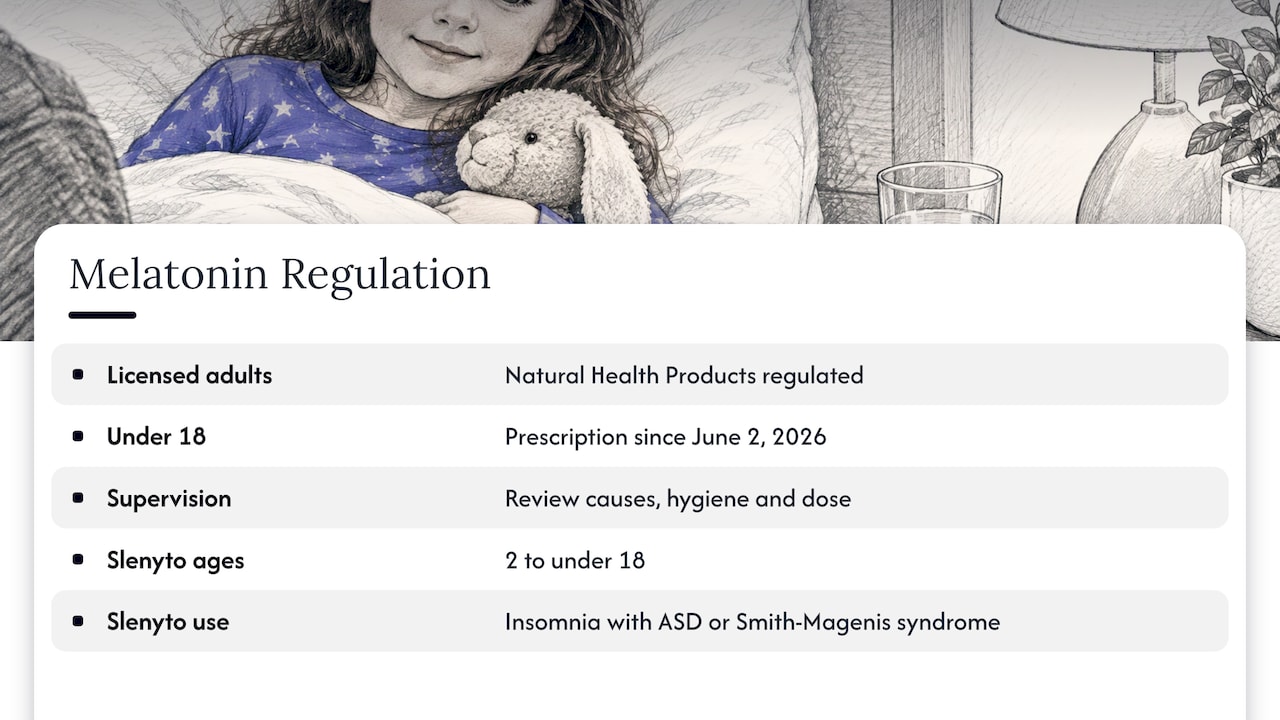
In Canada, licensed adult melatonin products are regulated under the Natural Health Products Regulations. Since June 2, 2026, melatonin sold for sleep-related use in people under 18 is a prescription drug. Health Canada says practitioner supervision is needed to look at underlying causes, sleep hygiene and an appropriate dose based on age, medical history and other medications.
There is a prescription product built for young people with specific conditions: Slenyto is authorized for insomnia in children and adolescents aged 2 to under 18 with Autism Spectrum Disorder or Smith-Magenis syndrome. If you are a parent, that conversation belongs with your child’s physician.
DSIP and other injectable peptides
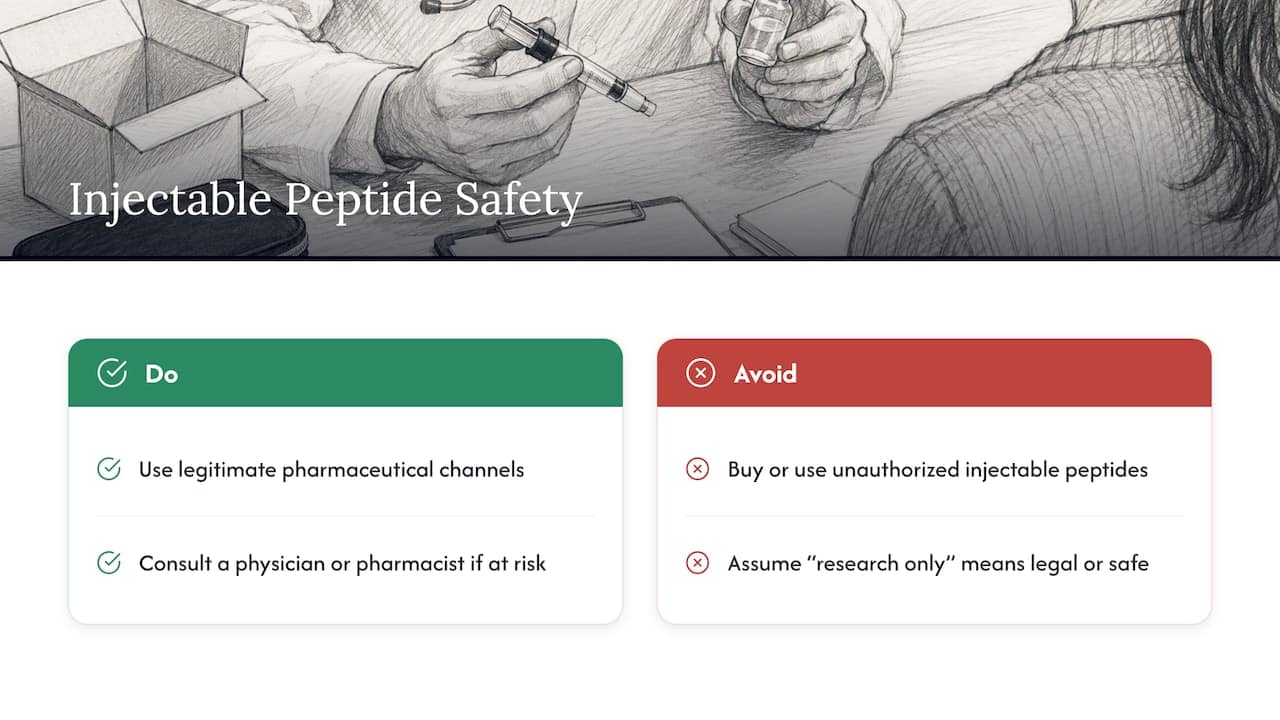
DSIP has no Canadian authorization. In April 2026, Health Canada warned Canadians against buying and using unauthorized injectable peptides such as DSIP, citing risks that include hormonal, liver, kidney and blood clotting complications. The notice adds that a “for research only” label does not make an unregulated peptide legal or safe, and that injectable peptide products should come only through legitimate pharmaceutical channels.
We take that seriously. Our own pages on peptide legality in Canada and peptide safety walk through what the rules say and what to understand before you handle any injectable product. If you have a liver, kidney or clotting condition, take medication, or are pregnant, speak to your physician or pharmacist before considering any peptide.
How to decide between them
Use these questions instead of picking a winner.
- What is your sleep problem? Trouble with timing (jet lag, shift work, a late body clock) lines up with what melatonin’s monograph covers. Persistent insomnia deserves a physician’s assessment, because the cause matters more than the supplement.
- How much evidence do you want behind the choice? Melatonin has pooled trial data. DSIP has early, small studies.
- What does the regulation allow? Licensed adult melatonin is a regulated natural health product. DSIP is not authorized in Canada, and Health Canada’s guidance applies to it.
- What else are you taking? Medications, age and medical history change what is appropriate, which is exactly why Health Canada points to practitioner supervision.
- Can you handle the practicalities? A tablet is simple. Anything that needs reconstitution means precise measuring, so read our guides on DSIP dosage conversions and measuring peptide doses first.
Perspective
We get asked about DSIP and melatonin side by side because people want one clear answer. The clearer answer is that they sit in different places. Melatonin is a familiar hormone with a well-mapped role in timing sleep. DSIP is a peptide that researchers have studied for its sleep and stress effects, and it deserves to be discussed on its own terms.
Our approach to peptides starts with purity and transparency. Every product we offer is backed by third-party lab certificates of analysis, and our formulations are designed to exceed 99% purity through advanced purification methods. We think anyone interested in a peptide should read the certificate, understand the compound and learn the Canadian rules before anything else.
That is why we publish guides on peptide syringes, dosing and legality alongside our product information. A well-informed customer makes better decisions and has a safer experience, whatever their goal.
Pure Peptide
Where to go from here
If DSIP is the compound you want to learn more about, start with our DSIP science page, then read the Canada buying guide for the compliance side. You can browse our full range of research-grade peptides, from recovery and muscle growth to anti-aging, and the reconstitution supplies that go with them, on the Pure Peptide store. Each product comes with a third-party certificate of analysis.
FAQ
Is melatonin a peptide?
No. Melatonin is an indoleamine hormone, N-acetyl-5-methoxytryptamine, made in the pineal gland from serotonin, which itself comes from the amino acid tryptophan. A peptide is a chain of amino acids, and melatonin is not one.
Does DSIP make you sleepy?
In a double-blind study of 14 chronic insomniacs, DSIP improved night sleep and daytime performance. That is not the same as a sedative effect, and the human data are small and old. Responses reported online vary widely.
Which is better for sleep, melatonin or tryptophan?
Melatonin has the clearer evidence for shortening the time to fall asleep and for timing sleep, including a 26-trial meta-analysis. Reviews describe the tryptophan evidence as mixed, with small gains in sleep latency and total sleep time. Your pharmacist can help you match either to your situation.
Is DSIP legal in Canada?
DSIP has no Canadian authorization, and Health Canada has warned that a “for research only” label does not make an unregulated injectable peptide legal or safe. Read our guide to peptide legality in Canada and speak to a pharmacist or physician before making any decision.
When should I take melatonin for the best effect?
Sleep-onset effects were strongest when melatonin was taken 1 to 3 hours before sleep, and about 4 mg was enough, with no added benefit from higher doses. Follow the label on your licensed product and ask a pharmacist if you take other medications.
Sources
- Health Canada: melatonin ingredient record
- Nature: formation of melatonin from tryptophan in pineal glands
- Optimizing the time and dose of melatonin (Journal of Pineal Research, 2024)
- Health Canada: melatonin oral monograph
- Effects of delta-sleep-inducing peptide on 24-hour sleep (PubMed, 1987)
- Herbal and natural supplements for improving sleep: a literature review
- Health Canada: notice of intent on pediatric melatonin
- Health Canada: addition of melatonin to the Prescription Drug List
- Health Canada: think twice before injecting peptides bought online