
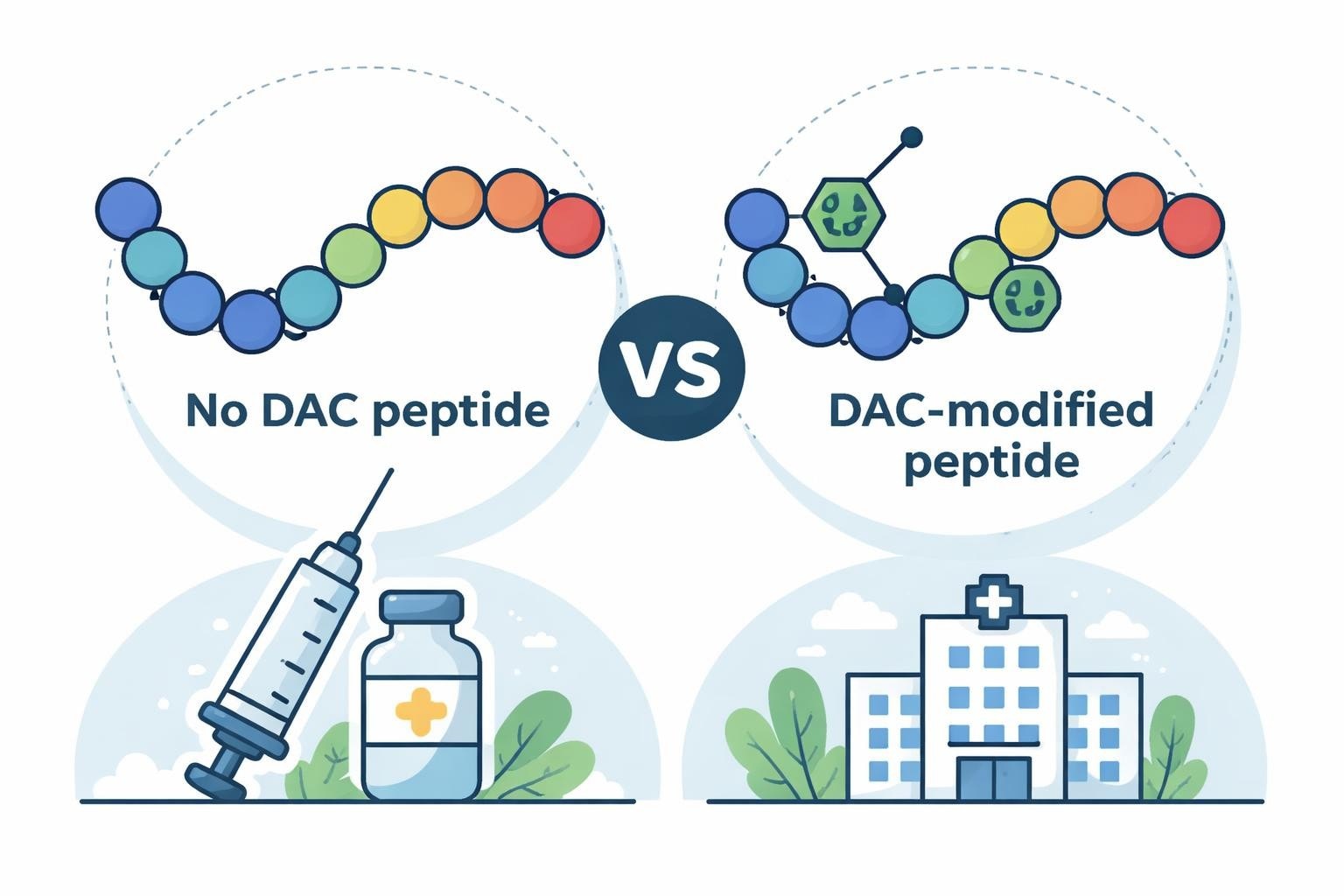
The peptide research landscape has evolved dramatically over the past decade, introducing various molecular modifications designed to enhance stability, bioavailability, and therapeutic efficacy. Among these modifications, the addition of Drug Affinity Complex (DAC) technology has gained significant attention. However, the no DAC approach represents an important alternative that maintains the peptide in its natural or minimally modified form. Understanding when and why researchers and practitioners choose no DAC peptides requires examining the fundamental differences between modified and unmodified compounds, their pharmacological properties, and their specific applications in clinical and research settings.
What Does No DAC Mean in Peptide Chemistry
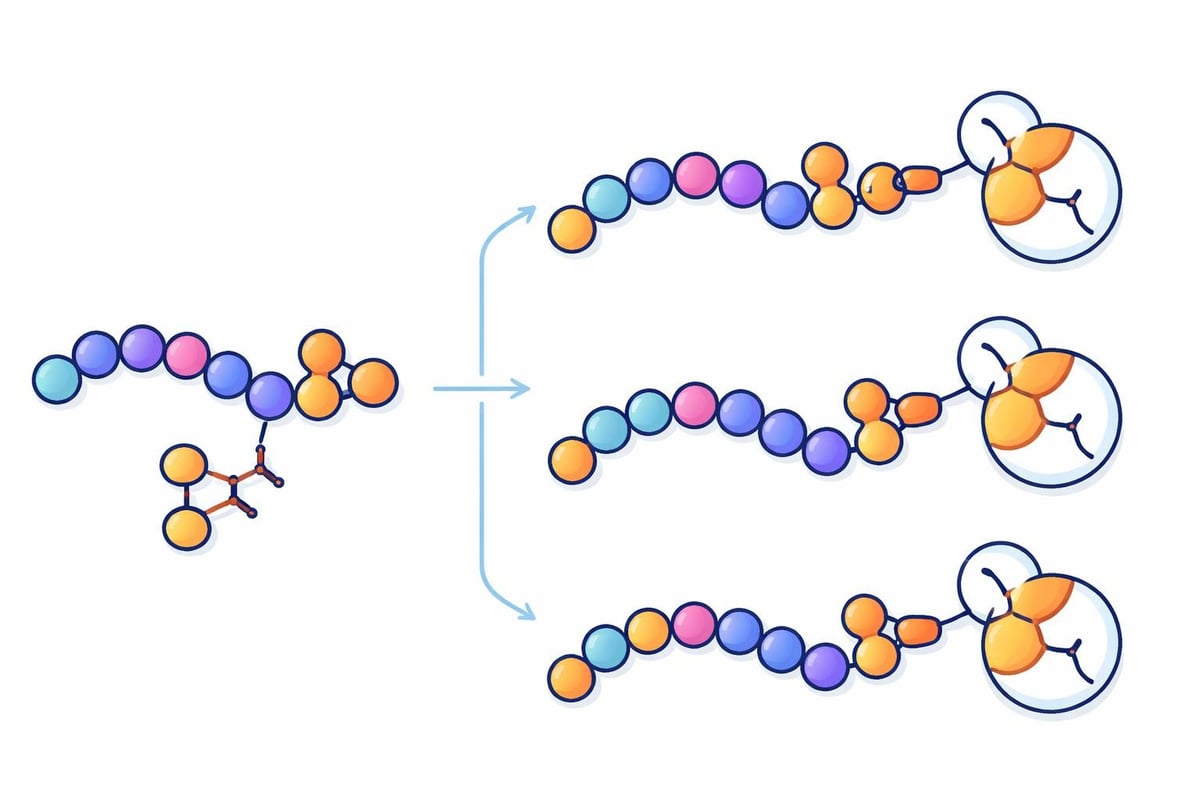
The term no DAC refers to peptides that do not contain Drug Affinity Complex modifications. DAC technology involves attaching a specific side chain to growth hormone-releasing hormones and similar peptides to extend their half-life and duration of action. When a peptide is labeled as no DAC, it maintains its original molecular structure without this specific modification.
This distinction matters significantly because the presence or absence of DAC fundamentally alters how the peptide behaves in the body. No DAC peptides typically exhibit shorter half-lives, requiring more frequent administration schedules. They also demonstrate different binding characteristics and metabolic pathways compared to their DAC-modified counterparts.
Chemical Structure and Molecular Properties
No DAC peptides retain their original amino acid sequence without the additional molecular weight contributed by the DAC side chain. This structural simplicity offers several advantages in research settings where scientists need to study the peptide's native behavior and interactions.
The molecular weight difference between no DAC and DAC-modified variants can be substantial, affecting solubility, stability, and receptor binding affinity. Researchers must carefully consider these factors when selecting peptides for specific experimental protocols or therapeutic applications.
Pharmacokinetic Differences of No DAC Peptides
Understanding the pharmacokinetic profile of no DAC peptides is essential for optimizing dosing protocols and achieving desired therapeutic outcomes. These compounds generally exhibit rapid absorption, distribution, and elimination patterns that differ markedly from extended-release formulations.
Absorption and Bioavailability
No DAC peptides demonstrate quick absorption when administered through appropriate routes. The absence of the DAC modification means these peptides don't have the albumin-binding properties that characterize their modified counterparts. This results in:
- Faster initial absorption rates into systemic circulation
- Higher peak plasma concentrations within shorter timeframes
- More predictable dose-response relationships in acute settings
- Reduced individual variability in initial pharmacokinetic parameters
The bioavailability of no DAC peptides can actually be advantageous in situations requiring immediate physiological responses. For athletes focused on post-workout recovery or researchers conducting time-sensitive experiments, the rapid action profile proves beneficial.
Half-Life and Dosing Considerations
The shorter half-life of no DAC peptides necessitates different dosing strategies compared to DAC-modified versions. Most no DAC variants require administration multiple times daily to maintain therapeutic levels, whereas DAC-modified peptides may only need weekly or bi-weekly dosing.
| Peptide Type | Typical Half-Life | Dosing Frequency | Peak Action |
|---|---|---|---|
| No DAC | 30 minutes – 4 hours | 1-3 times daily | 15-60 minutes |
| DAC-Modified | 6-8 days | Weekly or bi-weekly | Several hours |
| Native Peptides | Minutes to hours | Multiple daily | Immediate |
This table illustrates why understanding no DAC pharmacokinetics is crucial for protocol design. The frequent dosing requirement might seem like a disadvantage, but it offers precise control over peptide levels and allows for rapid adjustments based on individual response.
Clinical and Research Applications
No DAC peptides serve distinct purposes across various research and therapeutic contexts. Their unique properties make them particularly suitable for specific applications where their characteristics align with desired outcomes.
Research Protocol Advantages
In laboratory settings, no DAC peptides offer researchers several methodological benefits. The shorter duration of action allows for cleaner experimental designs with distinct intervention and washout periods. Scientists can establish clear baseline measurements between doses without extended carryover effects.
Research applications where no DAC peptides excel include:
- Acute response studies examining immediate physiological changes
- Dose-escalation trials requiring rapid parameter adjustments
- Comparative pharmacology investigations analyzing receptor binding
- Metabolic pathway research tracking peptide degradation
- Cell culture experiments requiring precise temporal control
The certificate of analysis documentation for no DAC peptides typically shows high purity levels, which is essential for reproducible research outcomes.
Athletic Performance and Recovery
Athletes and fitness enthusiasts often prefer no DAC peptides for their rapid onset and clearance profile. The ability to time doses around specific training sessions or recovery windows provides strategic advantages that longer-acting variants cannot offer.

Post-workout administration of no DAC peptides can support recovery processes during the critical window when the body is most responsive to anabolic signals. This targeted approach allows users to maximize benefits while minimizing unnecessary exposure during non-critical periods.
Safety Profile and Side Effect Management
The safety considerations for no DAC peptides differ from their modified counterparts due to their pharmacokinetic properties. The shorter duration in circulation potentially reduces the risk of certain side effects while introducing different monitoring requirements.
Adverse Event Patterns
No DAC peptides generally produce side effects that are acute and transient, corresponding to their peak plasma concentrations. Users might experience temporary effects such as:
- Water retention lasting several hours rather than days
- Transient changes in blood glucose levels
- Short-duration injection site reactions
- Brief periods of fatigue or drowsiness
These effects typically resolve quickly as the peptide is metabolized and eliminated. The predictable timeframe allows users to plan administration around daily activities and minimize disruption to normal routines.
Risk Mitigation Strategies
Managing the safety profile of no DAC peptides requires different strategies than long-acting formulations. The frequent dosing schedule demands consistent technique and proper storage protocols to maintain peptide integrity.
Healthcare providers and researchers working with no DAC peptides should implement comprehensive monitoring systems. Regular assessment of response parameters helps identify optimal dosing ranges and detect any emerging concerns before they escalate.
For detailed information about quality standards and purity testing, consulting resources like the FAQ section can provide valuable guidance on handling and administration best practices.
Comparing No DAC to Modified Alternatives
The decision between no DAC and DAC-modified peptides depends on multiple factors including therapeutic goals, lifestyle considerations, and individual response patterns. Neither option is universally superior; rather, each serves different needs within the broader peptide therapy landscape.
Clinical Outcomes and Efficacy
Research comparing no DAC to DAC-modified peptides shows different outcome patterns across various endpoints. No DAC variants often demonstrate stronger acute responses, while modified versions provide more consistent steady-state levels over extended periods.
Studies examining muscle growth, fat loss, and recovery markers reveal that no DAC peptides can produce comparable overall results to DAC-modified alternatives when dosed appropriately. The key lies in matching the peptide's properties to the desired outcome timeline and user preferences.
Practical Considerations for Users
Beyond pharmacological differences, practical factors significantly influence peptide selection. No DAC peptides require more frequent preparation and administration, which some users find burdensome while others appreciate the control and flexibility.
Cost considerations also play a role in decision-making. While individual doses of no DAC peptides might be less expensive, the increased frequency of administration can affect the overall budget for extended protocols. Users must weigh these economic factors against convenience and desired outcomes.
The shop inventory typically includes both no DAC and modified options, allowing practitioners to select based on specific protocol requirements.
Quality Standards and Purity Testing
Ensuring peptide quality becomes even more critical with no DAC variants due to their frequent administration schedule. Each dose represents an opportunity for contamination or degradation, making stringent quality control essential for safety and efficacy.
Manufacturing and Purification Processes
High-quality no DAC peptides undergo rigorous purification processes to remove synthesis byproducts and impurities. Advanced techniques such as high-performance liquid chromatography (HPLC) ensure that the final product meets strict purity specifications.
The manufacturing process for no DAC peptides must account for their stability characteristics. Without the protective effects of DAC modifications, these peptides may be more susceptible to degradation during production, storage, and handling.
| Quality Parameter | Target Specification | Testing Method | Frequency |
|---|---|---|---|
| Purity | ≥98% | HPLC | Every batch |
| Endotoxin Level | <1.0 EU/mg | LAL assay | Every batch |
| Peptide Content | 95-105% | UV spectroscopy | Every batch |
| Sterility | Negative | USP standards | Every batch |
Storage and Handling Requirements
No DAC peptides typically require refrigeration at temperatures between 2-8°C to maintain stability. Some variants may tolerate short periods at room temperature, but prolonged exposure to heat or light can significantly degrade the active compound.
Proper reconstitution technique is crucial for no DAC peptides. Using bacteriostatic water and following recommended procedures helps preserve peptide integrity throughout the usage period. Once reconstituted, most no DAC peptides should be used within specific timeframes to ensure optimal potency.

Regulatory and Legal Considerations
The regulatory landscape for peptides continues to evolve, with no DAC variants subject to the same oversight as modified counterparts. Understanding the legal framework helps ensure compliant use in research and therapeutic applications.
Research Use Classification
Many no DAC peptides are available for research purposes, with clear labeling indicating they are not intended for human consumption outside approved clinical trials. This classification affects how these compounds can be marketed, sold, and used in various jurisdictions.
Researchers working with no DAC peptides must adhere to institutional review board guidelines and maintain proper documentation of their experimental protocols. The shorter half-life of these compounds may actually simplify certain regulatory requirements related to washout periods and study design.
Quality Verification and Authentication
Verifying the authenticity and quality of no DAC peptides protects both researchers and end users from substandard or counterfeit products. Reputable suppliers provide comprehensive documentation including certificates of analysis, third-party testing results, and chain-of-custody information.
Working with established suppliers who maintain transparent quality standards helps ensure consistent results across research protocols. The category pages often provide detailed specifications that allow for informed selection based on purity requirements and intended applications.
Optimizing No DAC Peptide Protocols
Developing effective protocols with no DAC peptides requires understanding their unique properties and how to leverage them for optimal results. Strategic timing, dosing patterns, and complementary interventions can significantly enhance outcomes.
Timing Strategies for Maximum Benefit
The rapid action profile of no DAC peptides makes timing a critical variable in protocol design. Administration schedules should align with physiological rhythms and specific activity patterns to maximize beneficial effects.
For muscle growth and recovery applications, timing no DAC peptide doses around training sessions capitalizes on the body's heightened anabolic sensitivity. Post-workout administration during the metabolic window can support protein synthesis and tissue repair processes.
Morning administration of certain no DAC peptides may support natural circadian rhythms, while evening doses might promote recovery during sleep. Individual response patterns vary, making personalized timing adjustments essential for optimal outcomes.
Combination Approaches and Synergy
No DAC peptides often work synergistically with other interventions, creating additive or multiplicative effects. Combining them with appropriate nutrition strategies, exercise protocols, and complementary supplements can enhance overall results.
Stacking multiple no DAC peptides requires careful consideration of their mechanisms of action and potential interactions. Some combinations produce enhanced benefits, while others may create unnecessary redundancy or increase side effect risks.
Nutritional support plays a crucial role in maximizing no DAC peptide efficacy. Adequate protein intake, proper hydration, and strategic nutrient timing create an optimal environment for the peptide to exert its effects on target tissues.
Future Directions in No DAC Peptide Development
The field of peptide therapeutics continues advancing rapidly, with ongoing research exploring new applications and refinement of existing compounds. No DAC peptides remain relevant despite the development of longer-acting alternatives, serving specific niches where their properties offer distinct advantages.
Emerging Research Applications
Scientists are investigating novel uses for no DAC peptides in areas ranging from cognitive enhancement to immune modulation. The precise temporal control offered by short-acting compounds proves valuable in studying complex biological systems with multiple interacting components.
Recent research has explored pulsatile dosing regimens that mimic natural hormone secretion patterns. No DAC peptides are ideal for these protocols due to their rapid clearance, which allows for distinct pulses without sustained elevation of plasma levels.
Technological Innovations
Advances in delivery systems may address some traditional limitations of no DAC peptides. Novel formulations incorporating penetration enhancers, protective carriers, or targeted delivery mechanisms could extend duration of action while maintaining the benefits of the unmodified peptide structure.
Nanotechnology applications show promise for improving no DAC peptide stability and bioavailability. Encapsulation in biocompatible nanoparticles might protect the peptide from premature degradation while allowing controlled release at target sites.
The development of more convenient administration methods could make no DAC peptides more accessible to broader user populations. Innovations in transdermal delivery, oral formulations, and alternative routes of administration continue advancing through various stages of research and development.
Understanding no DAC peptides provides valuable insights for optimizing therapeutic protocols and research applications. These unmodified compounds offer unique advantages in situations requiring rapid onset, precise temporal control, and flexibility in dosing strategies. Whether you're conducting research or exploring peptide applications for wellness and performance, Pure Peptide provides premium quality options backed by rigorous testing and quality assurance. Our commitment to purity and efficacy ensures you receive peptides that meet the highest standards for your specific needs.