






Insulin lowers blood glucose directly, while incretins like GLP-1 and GIP, along with amylin, lower it by slowing digestion and curbing appetite. Ghrelin tends to push glucose up. GLP-1 receptor agonists and dual incretin drugs are established glucose-lowering therapies for type 2 diabetes, and insulin remains the only option when the body makes none of its own. Every one of these therapies needs medical supervision, since the same mechanisms that improve control can also cause low blood sugar or other complications.
TL;DR:
- Incretin drugs like GLP-1 and GIP reduce blood sugar by stimulating insulin only when glucose is high, lowering hypoglycemia risk compared to older therapies.
- Combining GLP-1 and GIP receptor agonists produces greater glucose and weight reductions than using single pathways, with ongoing research into oral peptide formulations.
- Insulin and amylin are used as direct replacements or adjuncts, but incretin therapies require careful dose adjustments and monitoring to prevent hypoglycemia and gastrointestinal side effects.
- Peptide therapies are less suitable for type 1 diabetes without strict supervision due to ketoacidosis risk when insulin doses are reduced or skipped.
- Lifestyle factors such as diet, exercise, and sleep influence peptide hormone levels and overall glucose control, but they do not replace the need for medication in diabetes management.
Table of Contents
- Which peptide classes affect blood sugar and appetite
- Mechanisms: how peptides change blood glucose physiologically
- Clinical evidence: what trials and reviews show about peptide therapeutics for blood sugar control
- Safety, common downsides and important drug interactions
- How peptide therapies differ for type 1 vs type 2 diabetes
- Practical takeaways: what patients and clinicians should do next
- Publisher perspective and evidence: Pure Peptide’s expertise and resources
- Blood sugar regulation in people without diabetes
- How other hormones and factors interact with these peptides
- Lifestyle factors that shape your own peptide levels
- Expert perspective: emerging directions and open questions
- How Pure Peptide can help you go deeper on peptide research
- FAQ
- Sources
Which peptide classes affect blood sugar and appetite
Blood glucose is managed by a small set of peptide hormones working together, some pulling it down and one pushing it up. Knowing where each comes from and what it does clarifies why certain peptide drugs are prescribed and others are not.
- Insulin: made by pancreatic beta cells, it is the primary hormone that lowers blood glucose by helping cells absorb it from the bloodstream; it is used therapeutically as direct replacement in people whose bodies cannot produce enough.
- GLP-1 (glucagon-like peptide-1): released from the gut after eating, it boosts insulin release, slows digestion and reduces appetite; GLP-1 receptor agonists are a mainstay drug class for type 2 diabetes and weight management.
- GIP (glucose-dependent insulinotropic peptide): also a gut-derived incretin, it works alongside GLP-1 to stimulate insulin secretion; it is now combined with GLP-1 in dual-agonist drugs rather than used alone.
- Amylin: co-released with insulin from the pancreas, it slows gastric emptying and suppresses glucagon, which blunts the glucose spike after meals; a synthetic amylin analogue exists as adjunctive therapy alongside insulin.
- Ghrelin: produced mainly in the stomach, it stimulates appetite and can inhibit insulin secretion, which raises blood glucose rather than lowering it, according to a StatPearls review of ghrelin biology.
- PYY and related satiety peptides: released from the gut after eating, they reduce appetite and contribute to the overall sense of fullness that limits food intake and indirectly supports glucose stability.
Insulin and amylin analogues are used as direct replacement or adjunct therapy. GLP-1 and GIP are harnessed as receptor agonist drugs rather than given as the natural peptide itself, since the native hormones break down within minutes. Ghrelin and PYY are not yet established drug targets for glucose control, though both are active areas of pharmaceutical research. The outcomes clinicians track when evaluating these therapies are consistent: A1C (a measure of average blood glucose), fasting and postprandial glucose readings, and in many cases body weight, since several of these peptides affect appetite and glucose together.
Mechanisms: how peptides change blood glucose physiologically
Each peptide class acts through a distinct physiological pathway, but the pathways converge on the same outcome: how much glucose enters the bloodstream after a meal and how quickly cells clear it.
Insulin binds its receptor on muscle, fat and liver cells, triggering glucose uptake into those tissues and suppressing the liver’s own glucose production. Incretins work differently: GLP-1 and GIP stimulate insulin release from the pancreas only when glucose is already elevated, a glucose-dependent mechanism that lowers the risk of driving blood sugar too low compared with older insulin secretagogues. GLP-1 also slows gastric emptying, which flattens the after-meal glucose rise, and acts on appetite centres in the brain to reduce intake, according to a review of gut peptide pharmacology. Amylin adds a second layer of gastric slowing while suppressing glucagon, the hormone that would otherwise push the liver to release more glucose.
A simple way to picture this: peptide signal reaches its receptor, receptor triggers a specific tissue response (insulin uptake, slowed stomach emptying, reduced appetite, suppressed glucagon), and that response adds up to the glucose reading on a meter. A single diagram mapping each peptide to its receptor site and downstream effect would make that chain easier to follow than text alone.
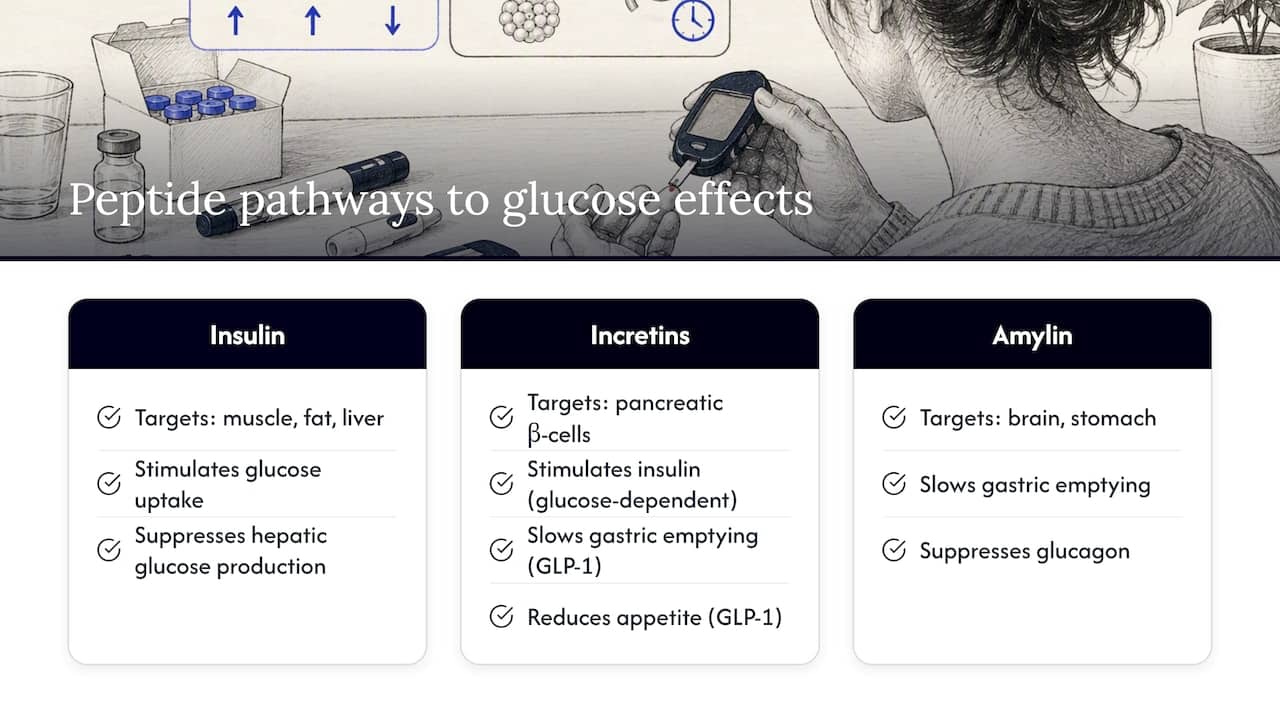
One practical obstacle: natural GLP-1 and GIP are degraded within minutes by an enzyme called DPP-4. Drug developers extend their effect in two main ways: attaching a fatty acid chain (acylation) that slows clearance, or combining GIP and GLP-1 actions into a single co-agonist molecule so one injection does the work of both pathways. These pharmacologic strategies are why modern incretin therapies are typically dosed weekly rather than multiple times a day.
Clinical evidence: what trials and reviews show about peptide therapeutics for blood sugar control
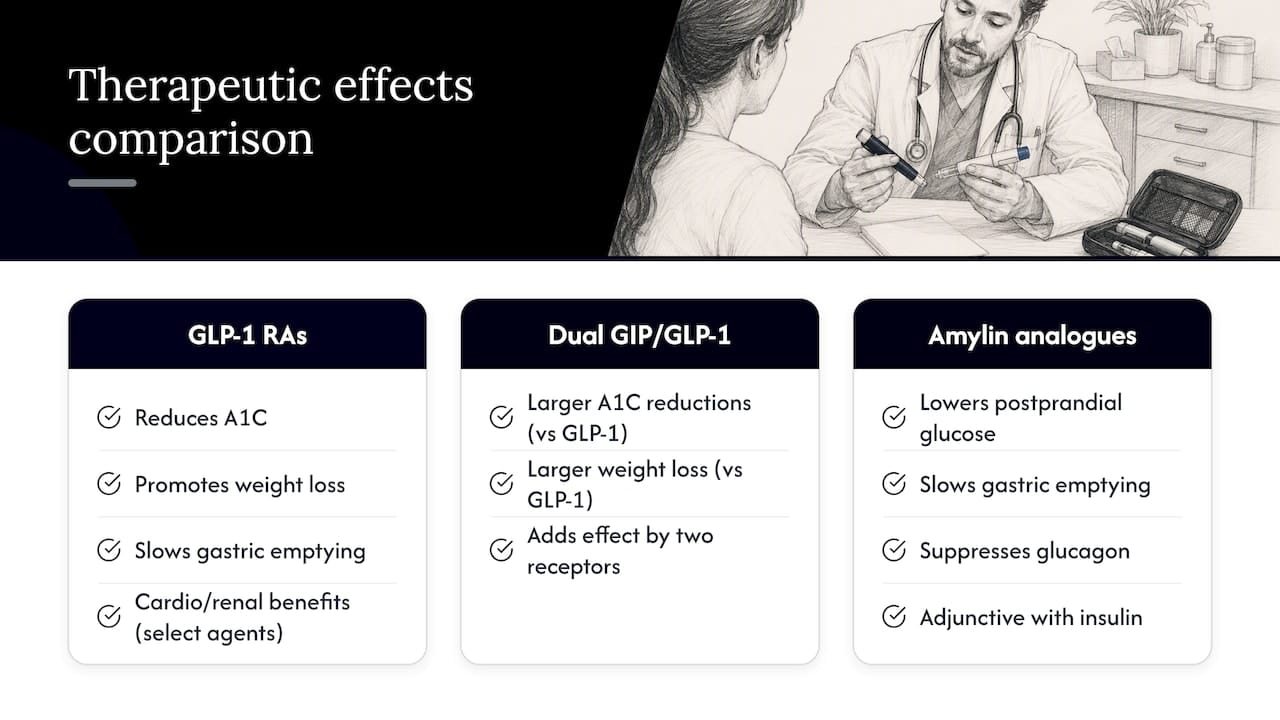
The evidence base for incretin-based therapy is now extensive. Systematic reviews describe GLP-1 receptor agonists as reducing A1C, promoting weight loss, and slowing gastric emptying, with some agents also showing cardiovascular and renal benefits in selected populations, according to a review of gut peptides in metabolic pharmacology.
GLP-1 receptor agonists produce meaningful, reproducible glucose and weight benefits, with cardiovascular and renal advantages demonstrated for specific agents in trial populations, per the same review.
Dual GIP/GLP-1 agonists, which combine both incretin pathways in one molecule, have shown larger weight and A1C reductions in trial populations than single-pathway GLP-1 drugs, reflecting the additive effect of stimulating two complementary receptors rather than one. Amylin analogues remain useful as adjunctive therapy alongside insulin, lowering postprandial glucose by slowing gastric emptying and suppressing glucagon, though dosing requires care and gastrointestinal tolerability can limit use, per the gut peptide review.
Oral peptide delivery is an active research area, since peptide drugs are normally broken down in the digestive tract before they can act. Researchers are testing fatty-acid acylation, structural modification and specialized formulations to get incretin-class molecules past the gut wall intact, according to a review of oral peptide drug development for type 2 diabetes. Meaningful expansion of oral options beyond the handful already available is likely to take years rather than months.
Access to this drug class is also shifting. Health Canada approved its first generic semaglutide injection on April 28, 2026, and a second on May 1, 2026, opening the door to generic competition for a GLP-1 drug that had previously been available only as a brand-name product. That change may lower costs and broaden prescribing over the coming year, though pricing and insurance coverage will determine how much patients actually feel the difference. Readers wanting more background on GLP-1 mechanisms and trial data can review an independent explainer on semaglutide evidence or a physiological guide to GIP function.
Safety, common downsides and important drug interactions
Peptide therapies that lower blood glucose carry real risks, and the biggest one shows up when they are combined with other glucose-lowering drugs.
- Hypoglycaemia: the risk rises sharply when GLP-1 or amylin therapy is added to insulin or sulfonylureas, since these drugs no longer work only when glucose is high; insulin doses typically need downward adjustment when starting incretin therapy.
- Gastrointestinal symptoms: nausea, vomiting and diarrhea are the most commonly reported side effects of incretin-based drugs, and they usually ease with slow dose titration rather than requiring discontinuation.
- Ketosis risk: in people with type 1 diabetes, withholding or reducing insulin while using a GLP-1 agent can precipitate diabetic ketoacidosis, since these peptides do not replace insulin’s role in preventing fat breakdown.
- Pancreatitis and gallbladder events: rare but reported signals associated with incretin-based drugs warrant prompt reporting of severe abdominal pain to a prescriber.
Pro tip: Keep a glucose log for the first two weeks after starting or adjusting any peptide therapy, since that window is when hypoglycaemia and GI side effects are most likely to appear and easiest to catch early.
Clinicians typically monitor fasting glucose, weight and symptom tolerance at each dose increase, and reduce background insulin empirically before introducing an incretin agent to avoid stacking two glucose-lowering effects on top of each other. Anyone starting or changing a peptide-based regimen should do so under the care of a licensed prescriber, not on a self-directed basis.
How peptide therapies differ for type 1 vs type 2 diabetes
In type 1 diabetes, the pancreas produces little or no insulin, so insulin replacement is not optional. GLP-1 receptor agonists are not routinely indicated in type 1 diabetes, and using them without careful oversight carries a genuine ketoacidosis risk if insulin is reduced or skipped at the same time.
In type 2 diabetes, where the body still makes insulin but responds to it poorly, incretin-based therapies have strong support for both glycaemic and weight goals. Diabetes Canada and similar guideline bodies favour GLP-1 receptor agonists and related agents when hypoglycaemia risk and weight management are priorities, with selection made on a person-centred basis rather than a fixed protocol.
Combining therapies across either type requires deliberate insulin adjustment, more frequent glucose checks during the transition, and specialist input when the regimen gets complex. The reasoning differs by type: in type 1, the question is how to add an adjunct without destabilizing a regimen built entirely around insulin; in type 2, the question is which combination of agents best balances glucose control, weight and cardiovascular risk.
Practical takeaways: what patients and clinicians should do next
Before starting or adjusting any glucose-affecting peptide therapy, a short review with a prescriber covers the ground that matters most.
- Review baseline labs: A1C, kidney function, and a history of pancreatitis or gallbladder disease should be checked before starting incretin-based therapy.
- Ask about glucose impact: confirm the expected effect on A1C and whether insulin or other medications will need dose changes.
- Ask about weight and side effects: most incretin drugs affect appetite and GI comfort, so ask what to expect in the first weeks.
- Ask about cost and coverage: generic options are expanding, so ask whether a generic is appropriate and what it costs under your coverage.
- Set a monitoring schedule: agree on how often to check glucose and when to report symptoms during the first month of titration.
Publisher perspective and evidence: Pure Peptide’s expertise and resources
That purity standard matters because contaminants or inconsistent concentrations in a peptide product can distort dosing, which is especially risky for anything that touches blood glucose.
Readers who want a deeper technical grounding in the biology covered here can explore our resources on GLP-1 peptide science, dual GIP/GLP-1 mechanisms, and proinsulin C-peptide function and testing. These pages go further into the mechanisms summarized above for readers who want the full picture before talking to a prescriber.
Blood sugar regulation in people without diabetes
In people without diabetes, the same peptides covered above run a tightly self-correcting loop. Eating triggers GLP-1 and GIP release from the gut within minutes, which prompts the pancreas to release insulin in proportion to the glucose load, while amylin slows gastric emptying so that glucose enters the bloodstream gradually rather than in a spike. As glucose and insulin levels fall between meals, ghrelin rises and stimulates appetite ahead of the next meal, completing the cycle.
This system is resilient because it responds to glucose levels rather than running on a fixed schedule, which is why GLP-1 and GIP are described as glucose-dependent: they ramp up insulin release only when blood sugar is actually elevated, then fall quiet once it normalizes. That built-in brake is also why healthy people rarely experience hypoglycaemia from their own incretin activity, even after a large meal. It is only when this feedback loop breaks down, through insulin resistance, reduced insulin production or impaired incretin signalling, that the glucose swings associated with diabetes start to appear. Understanding the non-diabetic baseline is what makes the therapeutic versions of these peptides make sense: drugs built on GLP-1 and amylin are essentially reinforcing a feedback loop that still works in principle but has become blunted.
How other hormones and factors interact with these peptides
Blood glucose is not controlled by peptides alone. Cortisol, released under stress, raises blood glucose by prompting the liver to produce more of it and by making tissues less responsive to insulin, which can blunt the effectiveness of incretin-based therapy during periods of illness or psychological strain. Glucagon, the direct counterpart to insulin, raises glucose by triggering the liver to release stored sugar, and part of how GLP-1 and amylin work is by suppressing glucagon rather than acting on insulin alone.
Thyroid hormone also shapes the picture: an overactive thyroid speeds up glucose turnover and can make blood sugar harder to predict, while an underactive thyroid tends to slow metabolism broadly. Sex hormones play a role too, since estrogen and testosterone both influence insulin sensitivity, which is part of why glucose control can shift across a menstrual cycle or with age-related hormonal change. None of these factors act in isolation. A person on a GLP-1 agent who is also under chronic stress, or who has an undiagnosed thyroid condition, may see glucose responses that do not match what the peptide alone would predict, which is why clinicians look at the broader hormonal picture rather than treating glucose as a single-input system.
Lifestyle factors that shape your own peptide levels
Diet, exercise and sleep all influence how much GLP-1, GIP, ghrelin and amylin your body produces and how well those signals get through, long before any prescription enters the picture. Meals higher in protein and fibre tend to stimulate stronger GLP-1 and PYY release than meals heavy in refined carbohydrates, which is part of why those meals tend to feel more filling and produce a gentler glucose rise.
Exercise improves how responsive tissues are to insulin, meaning the same amount of insulin does more work after regular physical activity, and some research associates consistent exercise with healthier incretin responses as well. Sleep matters just as much: short or disrupted sleep is associated with higher ghrelin and lower satiety signalling the next day, which can drive overeating and blunt glucose control, consistent with ghrelin’s known role in stimulating appetite and suppressing insulin release, as described in the StatPearls review. None of these lifestyle levers replace medical therapy when it is needed, but they shift the baseline that any peptide drug has to work against, which is why clinicians typically address diet, activity and sleep alongside, not instead of, pharmacologic treatment.
Expert perspective: emerging directions and open questions
The next wave of peptide research is less about discovering new hormones and more about engineering the ones we already know to last longer and hit multiple receptors at once, including amylin-based agents sometimes grouped as DACRAs. The more interesting open question is scientific rather than commercial: researchers have identified hybrid insulin peptides in human islets that may be tied to how type 1 diabetes autoimmunity begins, a finding that could eventually reshape prevention strategies rather than just treatment, according to research on hybrid insulin peptides. Translating that into a clinical test or intervention remains years away.
— Pure Peptide
How Pure Peptide can help you go deeper on peptide research
A supplier offers high-purity research peptides across weight loss, muscle growth, recovery and anti-aging categories, with batches backed by third-party lab certificates of analysis. If the biology in this article has you curious about specific compounds, our GLP-1 and dual-agonist page breaks down the mechanisms behind that drug class in more depth.
None of this is a substitute for medical supervision: any peptide that affects blood glucose carries real risks and needs a prescriber’s oversight, not self-directed dosing. For a full look at what we carry and how our purity standards work, visit our main catalogue.
This article is general information, not a substitute for advice from a qualified doctor. Consult a qualified healthcare professional about your own circumstances before acting on anything here.
FAQ
What peptides should diabetics avoid?
People with type 1 diabetes generally should not use GLP-1 receptor agonists outside careful specialist supervision, since reducing insulin alongside these drugs can trigger ketoacidosis. Anyone with diabetes should avoid unsupervised use of any glucose-affecting peptide, since dosing and monitoring needs differ by individual and by diabetes type.
What is the downside of taking peptides?
The most common downsides of incretin-based peptide drugs are nausea, vomiting and diarrhea, which usually ease as the dose is slowly increased. Less common but more serious risks include hypoglycaemia when combined with insulin or other glucose-lowering drugs, and rare reports of pancreatitis or gallbladder problems.
Can diabetics have peptides?
Yes, many peptide-based drugs, including GLP-1 receptor agonists, dual GIP/GLP-1 agents, amylin analogues and insulin itself, are established therapies for diabetes, particularly type 2. The specific peptide, dose and combination depend on diabetes type, kidney function and other health factors, which is why these decisions are made with a prescriber.
Can peptides reverse diabetes?
Peptide therapies can substantially improve blood glucose control and support meaningful weight loss, but they are not described as a cure or reversal of diabetes in the clinical evidence. Type 1 diabetes requires lifelong insulin, and type 2 diabetes is managed rather than reversed, even when control improves markedly on incretin-based therapy.
Sources
- Canada approves first generic semaglutide for weight loss
- Novel pharmaceuticals in appetite regulation: review of gut peptides and pharmacology
- Biochemistry, Ghrelin – StatPearls