







Peptides affect liver enzymes in two documented ways: GLP-1 receptor agonists like semaglutide often lower ALT, GGT and ALP in people with fatty liver disease, while isolated case reports link some injectable peptides to rare liver injury. Preclinical peptides such as BPC-157 show hepatoprotective effects only in animal and cell studies so far. If you’re concerned, get a baseline liver panel before starting anything and talk to a doctor if you notice fatigue, jaundice or abdominal pain.
TL;DR:
- GLP-1 receptor agonists consistently lower liver enzymes like ALT, GGT, and ALP, with enzyme reductions linked mainly to weight loss and metabolic improvements.
- Rare cases of peptide-linked liver injury exist, but large trials generally show no excess risk of serious hepatotoxicity compared to placebo.
- Preclinical peptides like BPC-157 and PGPIPN show hepatoprotective effects only in animal and cell studies, lacking evidence from human trials.
- Liver enzyme changes during peptide use are usually multifactorial, with rapid weight loss increasing gallstone risk and confounding enzyme patterns.
- Sourcing quality, baseline testing, and monitoring are essential, especially for high-risk individuals with existing liver issues or multiple medications.
Table of Contents
- Human clinical evidence: GLP-1 receptor agonists and liver enzymes
- Documented harms: peptide-linked enzyme elevations and rare liver injury
- Preclinical hepatoprotective peptides: BPC-157, mitochondrial peptides and more
- Why liver enzymes shift and what else explains the change
- Who faces higher risk and how to monitor liver enzymes safely
- Why sourcing and purity affect your liver risk
- Other peptide classes that may touch liver enzymes
- Peptides and liver medication interactions
- Interpreting a liver enzyme change: transient blip or real signal
- A balanced read on where the evidence actually stands
- How we support safer access to verified peptides
- FAQ
- Sources
Human clinical evidence: GLP-1 receptor agonists and liver enzymes
The strongest human data on peptides and liver enzymes comes from trials of GLP-1 receptor agonists, the class that includes semaglutide, liraglutide and tirzepatide. These were developed for diabetes and weight management, but researchers tracking liver enzymes as secondary outcomes found a consistent pattern worth separating from the rest of the peptide landscape.
A clinical trial analysis of semaglutide in people with type 2 diabetes or obesity found that ALT levels dropped alongside markers of inflammation, with reductions in some treatment groups ranging from modest to moderate amounts compared to baseline. In the same body of trial data, elevated ALT normalized in a higher proportion of treated patients compared to placebo, a dose-dependent effect that tracked with weight loss rather than appearing independent of it.
A systematic review pooling 12 randomized trials and 677 subjects with nonalcoholic fatty liver disease sharpened the picture further. The meta-analysis found that GLP-1 receptor agonists reduced ALT by a weighted mean difference around 10 U/L, GGT and ALP also reduced significantly. AST, notably, did not change significantly across the pooled trials.
That AST/ALT split matters clinically. ALT is more liver-specific, while AST appears in muscle, heart and kidney tissue too, so a drop in ALT without a matching AST change fits a pattern of improving hepatocyte stress rather than a broader systemic shift.
A few patterns emerge consistently across this literature:
- ALT, GGT and ALP tend to fall with GLP-1 therapy, while AST often stays flat.
- Effect sizes vary widely, with some trials reporting reductions as small as 6% and others showing changes as large as 43% depending on population and dose.
- Weight loss appears to mediate much of the benefit, since patients who lost more weight tended to see larger enzyme improvements.
- Most liver findings were secondary endpoints, meaning trials were not designed primarily to test liver outcomes, which limits how confidently we can generalize the results.
The pooled data suggest GLP-1 agonists lower ALT by roughly 10 U/L on average in NAFLD populations, according to the meta-analysis of 12 randomized trials, a meaningful shift for people tracking fatty liver progression over time.
The mechanism behind this is not a direct rescue of liver cells. It looks more like a downstream effect of better glucose control, reduced caloric intake and loss of visceral fat, all of which reduce the metabolic load the liver has to process. Trial durations also varied considerably, from a few months to over a year, so how durable these enzyme improvements are over five or ten years remains an open question. For readers wanting the underlying biology in more depth, our overview of GLP-1 mechanisms and applications covers how these peptides interact with metabolic pathways beyond the liver.
Documented harms: peptide-linked enzyme elevations and rare liver injury
Against that encouraging trial data sits a smaller, less reassuring body of evidence: case reports and pharmacovigilance signals describing liver injury in people taking GLP-1 peptides. These are rare, but they are real, and they follow recognizable patterns that clinicians use to tell drug-induced injury apart from incidental illness.
Clinical monographs reviewing postmarketing data on semaglutide note that most large trials did not show an excess rate of clinically apparent liver injury compared to placebo, and many of the liver test improvements were likely weight-loss mediated rather than drug-specific. Isolated case reports exist nonetheless, and some cholestatic enzyme patterns in these reports actually reflect gallstone disease rather than direct hepatotoxicity, since rapid weight loss itself raises gallstone risk.
Tirzepatide shows a similar profile.
When liver injury is suspected in someone taking a peptide, clinicians typically work through a structured process rather than assuming the peptide is the cause:
- Rule out viral hepatitis through serology before attributing injury to a drug.
- Screen for autoimmune liver disease, since autoimmune hepatitis can present with a similar enzyme pattern.
- Check for biliary causes, including gallstones, which are more common after rapid weight loss.
- Review the timeline, since drug-induced liver injury typically has a recognizable latency between starting the medication and enzyme elevation.
This adjudication process matters because cholestatic patterns (elevated ALP and GGT with bilirubin changes) point toward biliary issues, while hepatocellular patterns (dominant ALT and AST elevation) point toward direct liver cell injury. Distinguishing the two changes what a clinician does next: biliary imaging versus a broader drug-injury workup.
Preclinical hepatoprotective peptides: BPC-157, mitochondrial peptides and more
A separate category of peptides shows promise in laboratory and animal models for actively protecting liver cells, rather than indirectly lowering enzymes through weight loss. This group includes BPC-157, mitochondria-derived peptides like MOTS-c, compound active peptides (CAP), the hexapeptide PGPIPN, TB-500 and GHK-Cu. None of these has the randomized human trial base that GLP-1 agonists have, and this gap matters.
Research on compound active peptides found that in vitro and animal models showed increased cell viability, reduced reactive oxygen species and lower apoptosis markers, along with improved liver histology in toxin-exposure models. These are mechanistic signals, the kind of data that points toward a biological pathway worth exploring, not proof of a clinical benefit in people.
The hexapeptide PGPIPN has a more specific preclinical story. In research on alcoholic fatty liver disease models, PGPIPN altered the expression of genes tied to lipid metabolism and oxidative stress, alleviating alcohol-induced steatosis and cell injury in both human liver cell lines and animal models. It is one of the more targeted hepatoprotective candidates in the literature, built specifically around alcohol-related liver stress rather than general injury.
Broader reviews of hepatoprotective peptides describe recurring mechanisms across this category: activation of antioxidant pathways like Nrf2, improved activity of enzymes such as superoxide dismutase and glutathione peroxidase, and reduced lipotoxicity in liver cells exposed to oxidative stress. Smaller peptide fractions, particularly those in the 480 to 640 Da range with hydrophobic amino acid content, tend to show stronger free radical scavenging activity in these models.
A few points are worth holding onto when reading claims about these peptides:
- BPC-157 and TB-500 are studied mainly for tissue repair and recovery, with liver-protective mechanisms reported in animal models rather than human trials.
- Mitochondrial peptides like MOTS-c are investigated for metabolic and cellular stress resilience, including some liver-relevant endpoints in preclinical work.
- PGPIPN has the most liver-specific preclinical focus of this group, targeting alcohol-induced liver damage directly.
- GHK-Cu is best documented for skin and tissue remodelling, with liver-related data far thinner than its cosmetic and wound-healing research base.
Pro Tip: Treat any claim that a peptide “repairs” or “heals” the liver with caution unless it specifies whether the evidence comes from animal studies, cell cultures or actual human trials. These are not interchangeable.
The translational gap here is the single most important caveat in this entire category. Promising rodent data does not reliably predict human outcomes, and none of these hepatoprotective peptides has gone through the kind of large, randomized human trials that GLP-1 agonists have. Readers researching BPC-157 and TB-500 specifically for recovery purposes can find more detail in our guide to these two recovery peptides.
Why liver enzymes shift and what else explains the change
Liver enzyme changes during peptide use rarely have a single cause, which is exactly why clinicians look at the whole clinical picture rather than one number on a lab report.
Weight loss itself lowers ALT and GGT in many people, independent of which drug caused the weight loss, because less fat accumulation in liver tissue means less cellular stress. Anti-inflammatory effects reported in GLP-1 trials compound this, reducing the inflammatory signalling that keeps enzymes elevated in fatty liver disease.
But rapid weight loss carries its own risk: it increases the likelihood of gallstone formation, and gallstones can produce a cholestatic enzyme pattern, elevated ALP and GGT, that looks like liver injury but is actually a biliary complication. This is one of the more common confounders in people losing significant weight quickly on any therapy, peptide or otherwise.
A few other factors shape how enzymes behave during peptide therapy:
- Metabolic fate matters. Most peptides are broken down into amino acids through normal proteolysis, which generally limits their potential for intrinsic hepatotoxicity compared to small-molecule drugs metabolized through the liver’s cytochrome P450 system.
- Contaminants are a bigger risk than the peptide itself. Products made with poor manufacturing controls can contain residual solvents, bacterial endotoxins or incorrect peptide concentrations, any of which can stress the liver independent of the intended compound.
- Chemical modifications change behaviour. Peptides altered for longer half-lives or different receptor binding do not necessarily carry the same safety profile as the native peptide they’re based on.
- Polypharmacy and underlying conditions complicate interpretation. Someone on multiple medications with pre-existing liver disease will show enzyme patterns that are harder to attribute to any single agent.
Who faces higher risk and how to monitor liver enzymes safely
Not everyone taking a peptide faces the same level of risk, and knowing where you fall matters more than trying to interpret a single lab value in isolation.
People with pre-existing liver disease, regular alcohol use, multiple medications, older age or a history of rapid weight loss carry higher baseline risk for enzyme disruption, regardless of which peptide they’re using. These factors compound rather than operate independently, so someone with two or three of them warrants closer monitoring than someone with none.
A practical monitoring approach looks like this:
- Get a baseline panel before starting: ALT, AST, ALP, GGT and bilirubin, so you have a reference point for comparison.
- Recheck at 4 to 12 weeks after starting therapy, since this window captures most early drug-related changes without over-testing.
- Continue monitoring as clinically indicated, with frequency guided by baseline risk factors and how the first follow-up panel looks.
- Treat ALT above five times the upper limit of normal as a clear trigger for action, particularly when paired with symptoms like fatigue, nausea, dark urine or jaundice.
- Investigate with imaging and serology when enzymes rise meaningfully, to rule out viral, autoimmune or biliary causes before assuming the peptide is responsible.
- Hold therapy and consult a hepatologist when injury patterns persist or worsen despite stopping other obvious causes.
Pro Tip: A single mildly elevated ALT reading rarely means much on its own. What matters is the trend across two or three tests and whether it comes with symptoms.
This structure isn’t about assuming the worst with every peptide. It’s about having a reference point and a plan, so a genuine problem gets caught early instead of being dismissed or, just as often, overreacted to.
Why sourcing and purity affect your liver risk
Much of the liver risk tied to peptides has less to do with the peptide itself and more to do with what else ends up in the vial; when possible, it’s wise to verify COAs for Semaglutide, Tirzepatide, Retatrutide to ensure purity and lab-grade quality. Unregulated manufacturing is where contamination, incorrect dosing and mislabelling creep in, and all three can stress the liver independent of the peptide’s actual pharmacology.
Third-party lab testing and certificates of analysis exist specifically to close that gap, confirming that a product contains what it claims at the purity it claims, free of the residual solvents or microbial contamination that cheaper manufacturing processes can introduce.
A few checks reduce sourcing risk meaningfully:
- Ask for a lot-specific certificate of analysis, not a generic one for the product line.
- Confirm proper storage and reconstitution guidance is provided, since improperly reconstituted peptides can degrade or become contaminated.
- Look for batch traceability so a specific vial can be tied back to its testing record.
- Keep a clinician in the loop, particularly if you have existing liver risk factors.
Health Canada has specifically warned that injectable peptides bought online without regulatory authorization have not been assessed for safety, efficacy or quality and can cause serious harm. The agency’s concern centres on unregulated manufacturing rather than the peptide molecules themselves, which lines up with what the contamination research suggests: the biggest liver risk often isn’t the peptide, it’s what came with it.
Other peptide classes that may touch liver enzymes
Beyond GLP-1 agonists and the hepatoprotective candidates already covered, a handful of other peptide classes show up in liver-related discussions, though the evidence behind them is thinner or more indirect.
Growth hormone secretagogues, including peptides like CJC-1295 and ipamorelin, work through the growth hormone and IGF-1 axis rather than direct liver pathways, but IGF-1 itself is processed through the liver, so clinicians sometimes watch liver panels in people combining these with other metabolic therapies. Collagen-stimulating peptides such as GHK-Cu, while best known for skin applications, show some antioxidant activity in tissue studies that overlaps conceptually with the mechanisms seen in hepatoprotective peptide research, though liver-specific human data for GHK-Cu remains limited.
Thymosin-based peptides, including TB-500, are studied mainly for tissue repair and immune modulation, with liver-relevant findings largely confined to animal models rather than clinical trials. Bioregulator peptides, a category used in some longevity-focused research, make broad claims about organ support including liver function, but this category generally lacks the kind of controlled human trial data that would support specific liver claims.
The honest summary across this wider group is that most peptides outside the GLP-1 class simply haven’t been studied with liver enzymes as a primary focus. Absence of evidence isn’t evidence of harm, but it also isn’t evidence of benefit, and treating preliminary mechanistic data as proof of a liver effect overstates what the research currently supports.
Peptides and liver medication interactions
Interactions between peptide therapies and common liver medications or supplements are an underexplored area, partly because peptides are metabolized differently than most small-molecule drugs. Since most peptides break down through normal proteolysis rather than the liver’s cytochrome P450 enzyme system, they generally carry less risk of the metabolic drug interactions that complicate many oral medications.
That doesn’t mean interactions are impossible. People taking medications that are themselves hepatotoxic, such as certain statins, some antifungals or high-dose acetaminophen, add a second variable to any liver enzyme change observed during peptide use, making it harder to attribute a rise or fall to either agent alone. Herbal supplements marketed for liver support, including high-dose green tea extract or certain traditional remedies, have their own documented hepatotoxicity risk in case report literature, and combining them with a peptide under investigation for liver effects muddies the picture further rather than clarifying it.
The practical takeaway is straightforward: if you’re taking a peptide alongside any medication or supplement with known liver effects, baseline and follow-up liver testing becomes more important, not less, because isolating which agent caused a change gets harder with each additional substance in the mix. Mentioning every medication and supplement to whoever is monitoring your liver panels is the simplest way to avoid a confusing result later.
Interpreting a liver enzyme change: transient blip or real signal
A single enzyme reading rarely tells the whole story, and knowing how to read a change over time matters more than reacting to one number.
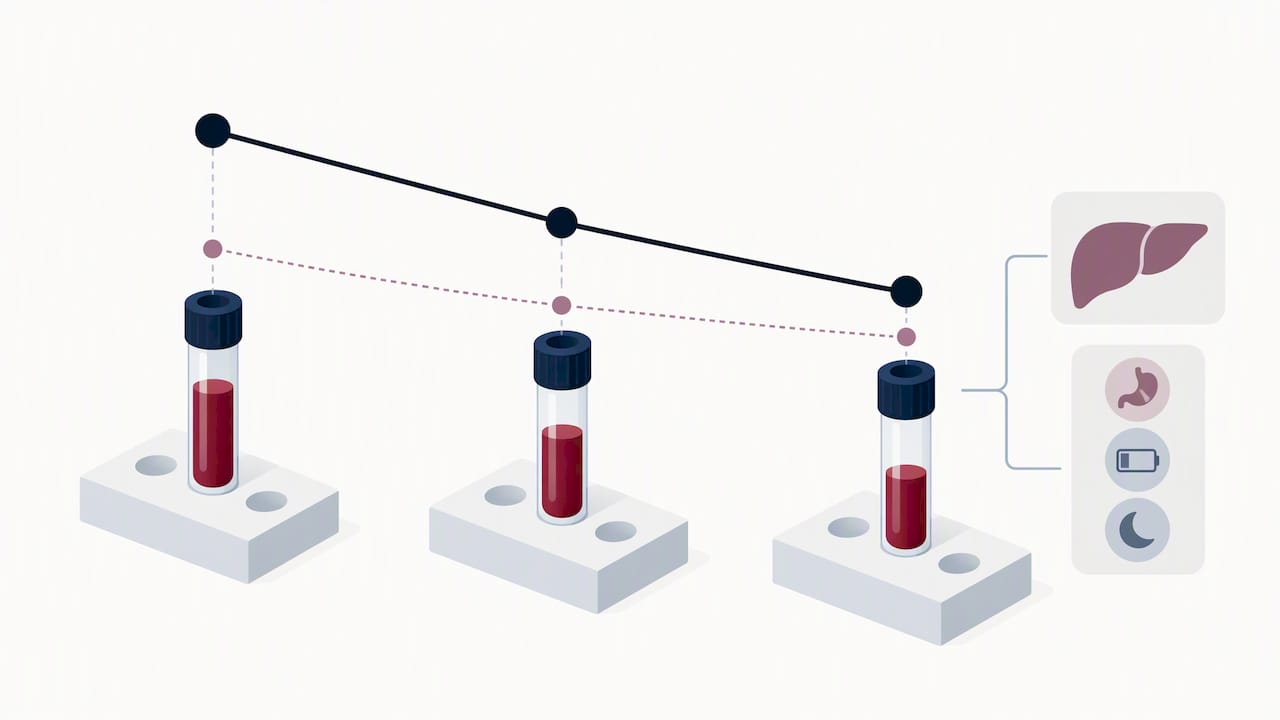
A mild, isolated rise in ALT or AST, particularly one under twice the upper limit of normal with no symptoms, often reflects transient variation: recent exercise, a viral illness, alcohol intake in the days before testing, or even lab variability between draws. These fluctuations are common and don’t necessarily mean a peptide is causing harm.
What raises genuine concern is a pattern: enzymes climbing across two or three consecutive tests, a rise paired with bilirubin elevation or symptoms like jaundice and fatigue, or any single value climbing above five times the upper limit of normal. That combination points toward something that needs investigation rather than observation.
Timing also carries information. A rise that appears within days to weeks of starting a new peptide and then plateaus or reverses after stopping fits a classic drug-injury pattern. A rise that develops gradually over months, independent of any dose change, more often points toward something unrelated to the peptide entirely, whether that’s progressing fatty liver disease, alcohol use or an unrelated medical issue. Context, trend and symptoms together tell you far more than any single lab value in isolation.
A balanced read on where the evidence actually stands
The clearest signal in this entire body of research is that GLP-1 agonists have real, trial-backed evidence for lowering liver enzymes in people with metabolic fatty liver disease, while almost everything else, BPC-157, mitochondrial peptides, PGPIPN, TB-500, GHK-Cu, remains preclinical. That gap between promising and proven is the whole story, and it’s one worth sitting with rather than glossing over.
None of that means the preclinical candidates are worthless. It means they deserve more human trials, not more confident marketing. Until those trials exist, the responsible path is clinician oversight, baseline and follow-up testing, and products you can actually verify.
— Pure Peptide
How we support safer access to verified peptides
We don’t claim any peptide we sell treats or reverses liver injury, and nothing here replaces blood work or a clinician’s judgment.
What we do offer is traceability: a COA tied to the batch in your hand, clear reconstitution guidance, and categories spanning weight loss, muscle growth, recovery, anti-aging and libido support. If you’re weighing sourcing options after reading the research, our weight loss and recovery peptide categories are a place to start, alongside our safety guide on injection and handling practices for anyone new to reconstituting peptides at home. For readers specifically comparing GLP-1 options, our tirzepatide page covers dosing and mechanism details worth reading before you buy anything.
This article is general information, not a substitute for advice from a qualified doctor. Consult a qualified healthcare professional about your own circumstances before acting on anything here.
FAQ
Do peptides cause elevated liver enzymes?
Most peptides with strong human trial data, particularly GLP-1 receptor agonists, tend to lower liver enzymes like ALT and GGT rather than raise them, largely through weight loss and reduced inflammation. Rare case reports describe liver enzyme elevation or injury linked to some peptide therapies, but large trials generally haven’t shown an excess rate of liver injury compared to placebo.
Is BPC-157 harmful to the liver?
There’s no human clinical trial data establishing BPC-157 as harmful to the liver, and most research on it comes from animal and cell models exploring tissue repair rather than liver-specific safety testing. Because it lacks robust human safety data, the main concern isn’t a documented harm but the unregulated sourcing many BPC-157 products come from, which Health Canada has specifically flagged as a safety risk for injectable peptides bought online.
Which peptide is best for liver repair?
No peptide currently has strong human clinical trial evidence specifically for liver repair. GLP-1 receptor agonists have the most robust data for improving liver enzymes in fatty liver disease, while candidates like PGPIPN and compound active peptides show hepatoprotective effects only in animal and cell-model research so far.
Can you fix your liver enzymes?
Liver enzyme levels often improve with treatment of the underlying cause, whether that’s weight loss, reduced alcohol intake, or management of conditions like fatty liver disease. Clinical trial data shows GLP-1 receptor agonists can meaningfully lower ALT and GGT in people with obesity or type 2 diabetes, but any elevation should be evaluated by a doctor to identify the specific cause before starting a treatment plan.
Sources
- Effect of semaglutide on liver enzymes and markers of inflammation in subjects with type 2 diabetes and/or obesity
- Think twice about injecting peptides bought online: unauthorized products can seriously harm — Recalls and safety alerts, Government of Canada