






Common community protocols use a loading phase of 4 to 8 mg per week split into two injections, followed by a maintenance phase of about 2 to 2.5 mg weekly or 2 mg every 10 to 14 days. No validated, clinically established human dose for injectable TB-500 exists, and Health Canada has flagged unauthorized TB-500 labelled products seized from retailers. Talk to a clinician before considering any peptide protocol.
TL;DR:
- Protocols vary by goal: acute injuries use 6–8 mg weekly for four to six weeks, while joint maintenance commonly uses 2–4 mg weekly.
- For a 10 mg vial mixed with 2 mL of water, the concentration is 5 mg/mL, so a 2.5 mg dose requires 0.5 mL.
- The NL005 trial tested full length recombinant thymosin beta 4 intravenously at microgram per kilogram doses, so it does not validate subcutaneous peptide protocols.
- A certificate tied to the specific lot can confirm tested identity and purity, but it cannot establish sterility or clinical safety.
- Stop and contact a clinician if swelling spreads, fever develops, unusual fatigue appears, or redness worsens instead of fading within 48 hours.
Table of Contents
- Common dosing protocols: loading and maintenance
- Reconstitution math and example calculations
- Administration: injection sites, technique and monitoring
- Evidence, regulation and safety: what the research actually shows
- Protocol variations, common stacks and mistakes to avoid
- Storage, handling and verifying what you’re injecting
- Publisher perspective: an evidence-first approach to TB-500
- Sourcing peptides and ancillaries the right way
- FAQ
- Sources
Common dosing protocols: loading and maintenance
Community-reported protocols typically follow a two-phase structure: a loading period meant to build tissue levels quickly, followed by a lower maintenance dose meant to sustain whatever effect the loading phase produced. These numbers come from practice communities and peptide forums, not from clinical dosing trials, and that distinction matters throughout this section.
During loading, reported ranges run from 4 to 8 mg per week, usually split into two injections of 2 to 4 mg each, spaced three to four days apart. A common example schedule looks like 2.5 mg on Monday and 2.5 mg on Thursday for four to six weeks. Higher-end loading, around 6 to 8 mg weekly, appears more often in protocols aimed at acute injuries, while lower loading, closer to 4 mg weekly, shows up in general joint support or long-term maintenance contexts.
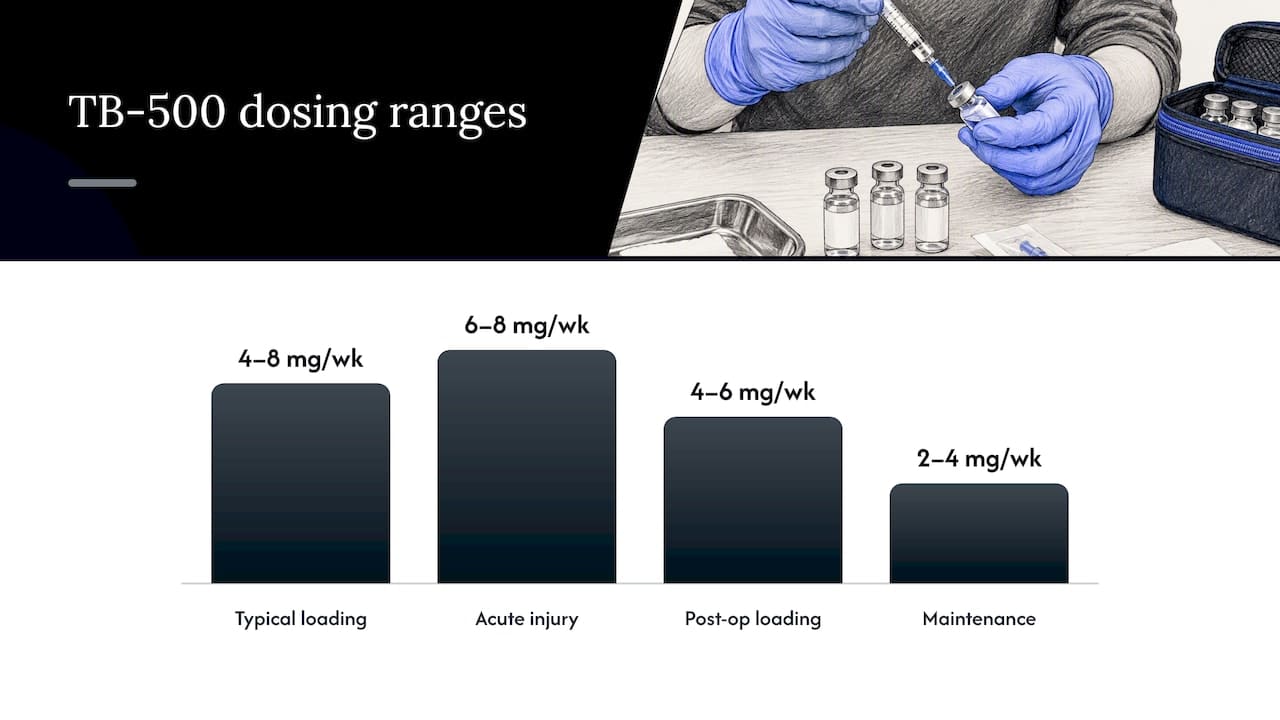
Once loading ends, maintenance protocols often reduce dosing frequency and amount, with some users reporting weekly injections or injections every 10 to 14 days, especially for ongoing joint support.
A few goal-based patterns recur across community sources:
- Acute tendon or ligament injury: higher loading (6 to 8 mg weekly) for four to six weeks, then taper to maintenance.
- Post-operative support: moderate loading (4 to 6 mg weekly) started once a clinician clears injection use, with close monitoring.
- Long-term joint maintenance: lower, steady dosing (2 to 4 mg weekly) without a distinct loading phase.
No peer-reviewed clinical trial has established any of these figures as an effective or safe human dose for TB-500. They reflect what people report using, not what research has validated, which is why the next sections walk through reconstitution, administration, and the actual evidence base in detail.
Reconstitution math and example calculations
Getting the concentration right matters more than almost anything else in this process, since a miscalculated vial turns every dose that follows into a guess.
- Start with a 10 mg vial and add 2 mL of bacteriostatic water. This gives a concentration of 5 mg/mL (10 mg ÷ 2 mL).
- To draw a 2.5 mg dose from that vial, draw 0.5 mL (2.5 mg ÷ 5 mg/mL = 0.5 mL).
- If you use a different water volume, the concentration changes: 1 mL of water gives 10 mg/mL, 2.5 mL gives 4 mg/mL, and 3 mL gives roughly 3.33 mg/mL.
- The general formula is always the same: desired dose in milligrams, divided by concentration in mg/mL, equals the volume to draw in millilitres.
When reconstituting, add the water slowly down the inside wall of the vial rather than directly onto the lyophilized powder, then swirl gently. Shaking or spraying water directly onto the powder can denature the peptide and leave an uneven concentration, which throws off every dose drawn afterward. Check the vial label for the labelled milligram amount before you calculate anything, since a wrong starting assumption carries through every subsequent dose.
Pro Tip: Write the calculated concentration (in mg/mL) directly on the vial with a marker so you never have to redo the math under time pressure.
Administration: injection sites, technique and monitoring
TB-500 is typically injected subcutaneously, into the fatty tissue of the abdomen, the outer thigh, or the back of the upper arm near the deltoid. Rotating sites between injections reduces localized irritation and helps you spot any site-specific reaction early. Our peptide injection sites guide covers site rotation and angle technique in more detail.
- Clean the site with an alcohol pad and let it dry before inserting the needle.
- Pinch a fold of skin, insert at roughly a 45-degree angle, and inject slowly and steadily.
- Apply gentle pressure with a clean pad afterward rather than rubbing the site.
- Log the date, dose, site, and any effects so patterns are visible over weeks, not just days.
During loading, injections spaced every three to four days (twice weekly) let you track tolerance before increasing frequency or dose. Watch for swelling that spreads beyond the injection site, fever, unusual fatigue, or any sign of infection such as redness that worsens rather than fades over 48 hours. Any of those warrant stopping and contacting a clinician promptly. For a broader safety checklist before injecting anything, see our peptide safety guide.
Pro Tip: Keep an injection log on your phone, not just in your head. Reaction patterns are easy to miss without dates and doses written down.
Evidence, regulation and safety: what the research actually shows
A 2026 scoping review mapped roughly 80 studies on thymosin beta-4 and concluded that the underlying biology is plausible for tissue repair, but direct human musculoskeletal evidence specific to TB-500 is sparse. Most human data concerned ocular or wound-healing contexts rather than tendons, ligaments, or joints, which is a meaningfully different application.
Biological plausibility is not the same thing as clinical validation.
That distinction gets lost in a lot of discussion around this peptide. The first-in-human NL005 trial is frequently cited as supporting evidence, but it studied full-length recombinant thymosin beta-4, given intravenously, at microgram-per-kilogram doses in single- and multiple-ascending-dose cohorts. That is a different molecule, a different route, and a dose scale roughly a thousand times smaller than the milligram-level subcutaneous protocols described above. A dose-escalation study on one compound does not establish safety or dosing for a different fragment given a different way.
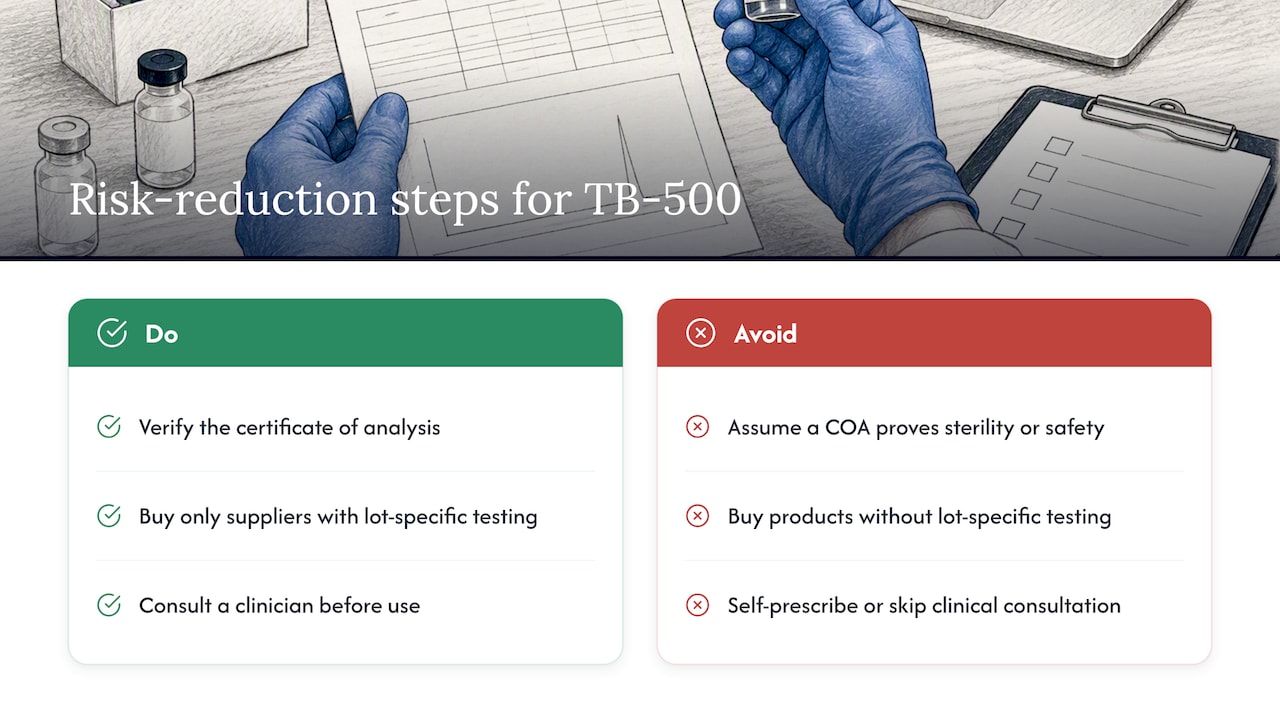
Health Canada’s own enforcement record adds a further, practical complication: a December 2025 alert listed injectable TB-500 labelled products among unauthorized health products seized from retailers, flagging risk from unapproved supply. A certificate of analysis tells you what a tested sample contained; it does not confirm sterility or clinical safety for the product you’re holding. Verifying a certificate of analysis, buying only from suppliers who provide lot-specific testing, and consulting a clinician before use are the three concrete steps that actually reduce risk here.
Protocol variations, common stacks and mistakes to avoid
Protocols diverge mainly by intensity and purpose: higher-loading plans (6 to 8 mg weekly) tend to target acute injuries, while lower, steadier dosing (around 4 mg weekly) is more common for general joint support without a sharp loading curve.
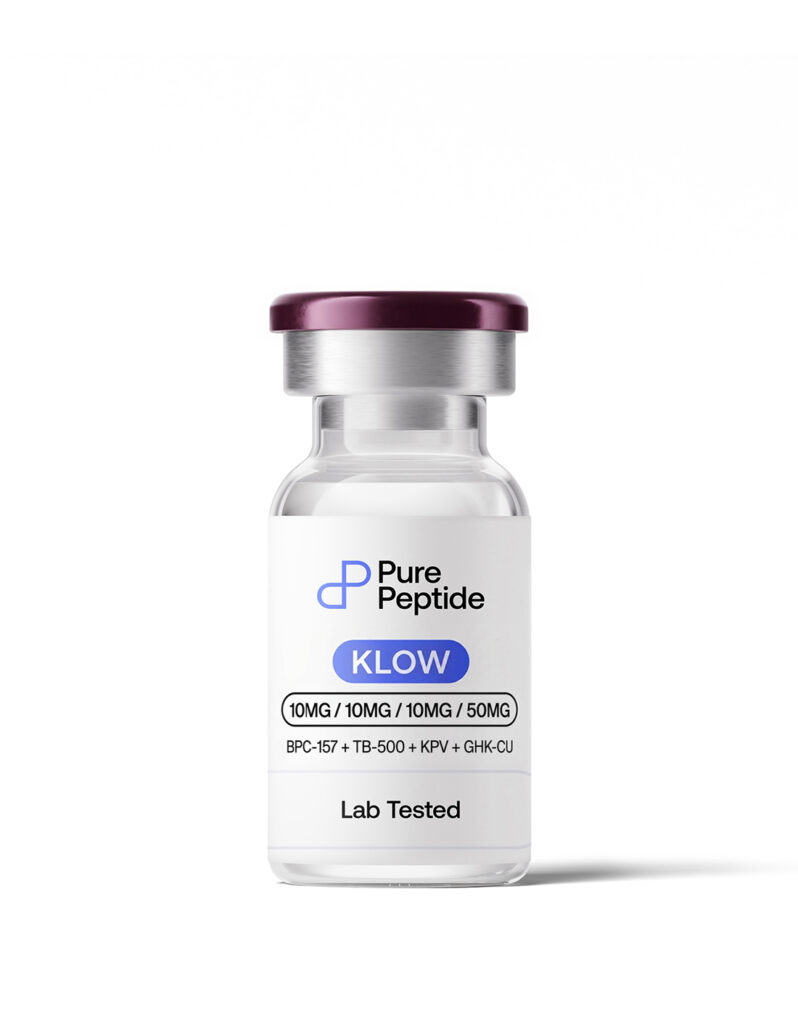
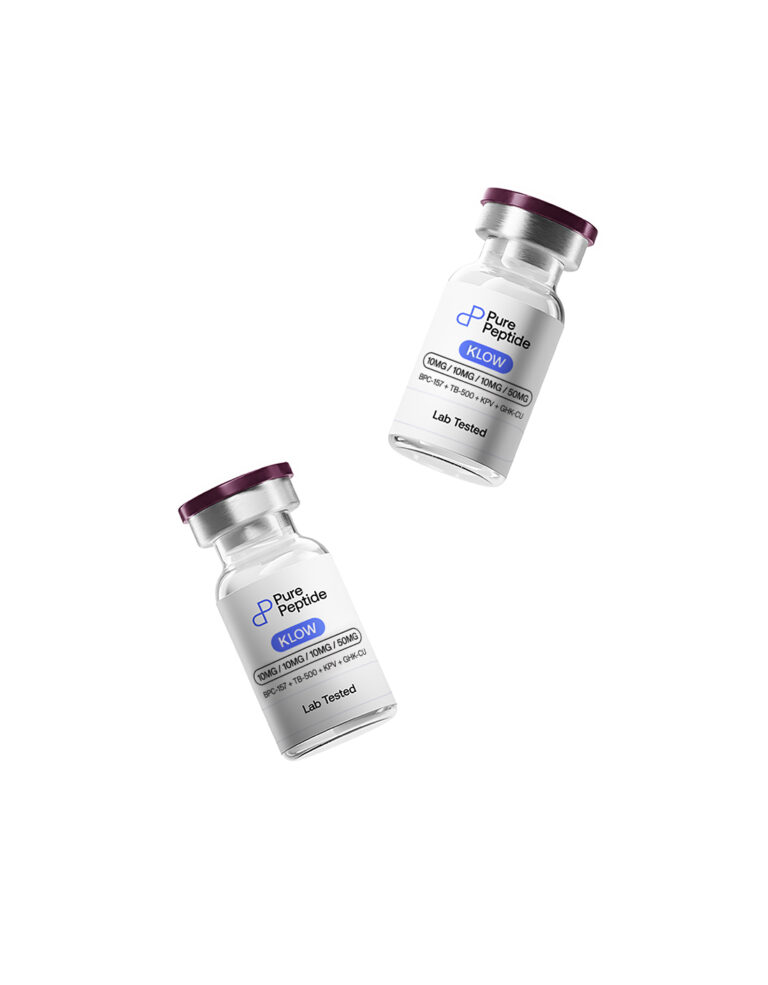
Stacking TB-500 with BPC-157 is widely discussed in recovery communities, usually as two separate injections rather than a combined syringe. Human evidence for added benefit from stacking these two peptides is limited, so any claimed synergy is anecdotal rather than established. Our TB-500 and BPC-157 guide walks through how these protocols are typically structured.
- Mixing two peptides in the same syringe can affect stability and makes dosing errors harder to catch.
- Relying on vials without lot-specific testing leaves you unable to confirm what’s actually in the syringe.
- Miscalculating concentration after reconstitution is the single most common dosing error.
Tapering down rather than stopping abruptly, and pausing entirely at the first sign of an adverse reaction, are more sensible defaults than running a fixed schedule regardless of how the body responds.
Storage, handling and verifying what you’re injecting
Lyophilized TB-500 powder stays stable refrigerated and is often stored frozen for longer-term holding before reconstitution. Once reconstituted with bacteriostatic water, most guidance points to refrigeration and use within roughly four weeks, discarding any solution that looks cloudy or discoloured.
- Store unreconstituted vials refrigerated or frozen, away from light.
- Keep reconstituted vials cold and use them within the supplier’s stated window.
- Request a lot-specific certificate of analysis showing identity and purity testing, not just a generic document.
- Remember a COA confirms what was tested, not that the product is clinically validated or sterile for injection.
For independent perspective on vetting suppliers and reading lab testing data, see this guide to choosing a peptide supplier and this comparison of TB-500 and thymosin beta-4 chemistry.
Publisher perspective: an evidence-first approach to TB-500
We focus on purity verification and education, not on prescribing doses. Every protocol discussed above reflects what practice communities report, not an evidence-based human dosage we’re asserting as safe or effective. Our stance stays consistent: confirm a lot-specific certificate of analysis before buying anything, and bring any TB-500 protocol to a qualified clinician rather than deciding alone.
— Pure Peptide
Sourcing peptides and ancillaries the right way
COA-backed peptides are available alongside the ancillaries a reconstitution requires, addressing common sources of dosing errors.
- COA-verified peptide categories including recovery, weight loss, and muscle growth lines.
- Bacteriostatic water, syringes, and alcohol pads sized for accurate reconstitution.
- Educational resources on injection technique, storage, and protocol structure.
Check a product’s certificate of analysis before ordering, and talk to a clinician before starting any protocol. Browse our peptide catalogue to see current COA-backed options and ancillaries.
This article is general information, not a substitute for advice from a qualified doctor. Consult a qualified healthcare professional about your own circumstances before acting on anything here.
FAQ
What is a typical TB-500 loading dose?
Community protocols commonly use 4 to 8 mg per week during loading, split into two injections of 2 to 4 mg each, for roughly four to six weeks. No clinical trial has established this range as a validated or effective human dose.
How is TB-500 maintenance dosing different from loading?
Maintenance typically drops to 2 to 2.5 mg weekly, or 2 mg every 10 to 14 days, once the loading phase ends. This lower frequency reflects community practice aimed at sustaining earlier effects rather than an evidence-based tapering protocol.
Is TB-500 safe to use?
There is no validated human dosing study for TB-500 itself, and Health Canada has flagged unauthorized TB-500 labelled products seized from retailers as a safety concern. Anyone considering it should verify product testing and consult a clinician first.
How do I calculate TB-500 dosage after reconstitution?
Divide the desired dose in milligrams by the vial’s concentration in mg/mL to get the volume to draw. For example, a 10 mg vial mixed with 2 mL of water gives 5 mg/mL, so a 2.5 mg dose means drawing 0.5 mL.
Does the NL005 study prove TB-500 is effective?
No. The NL005 first-in-human trial tested full-length recombinant thymosin beta-4 given intravenously at microgram-per-kilogram doses, a different molecule, route, and scale than milligram-level subcutaneous TB-500 protocols. It does not establish dosing or safety for TB-500 itself.
Sources
- Thymosin beta-4 and TB-500 in tissue healing, regeneration, and musculoskeletal repair: a scoping review
- A first-in-human randomized, double-blind, single- and multiple-dose study of recombinant thymosin beta-4 (NL005)
- Unauthorized health products seized from two stores in Maple Ridge, BC may pose serious health risks
- A first‐in‐human, randomized, double‐blind, single‑and multiple‑dose study (Journal of Cellular & Molecular Medicine)