




The peptides with the best human evidence for improving insulin sensitivity are the GLP-1 receptor agonists, such as semaglutide, and the dual GIP/GLP-1 agonist tirzepatide. In trials of adults with type 2 diabetes they lowered HOMA-IR, a lab estimate of insulin resistance. In Canada they are prescription drugs, and injectable peptides are always classed as drugs. Exercise, modest weight loss and medical follow-up remain the foundation. This guide covers what the research says, what Canadian rules mean for you, and how to use any peptide plan more safely.
TL;DR
- GLP-1 and GIP/GLP-1 peptide medicines have the strongest human data for improving insulin-resistance markers, mainly in adults with type 2 diabetes.
- The certainty of that evidence ranges from low to very low in several analyses, so results are not guaranteed.
- In Canada, injectable peptides are regulated as drugs, and unauthorized products carry real risks.
- Resistance training, aerobic activity and a 5% to 10% weight loss are well-supported ways to improve insulin sensitivity.
- If you have diabetes or prediabetes, talk to your doctor or pharmacist before adding any peptide.
Table of Contents
- Insulin sensitivity and insulin resistance, in plain terms
- Which peptides have human evidence?
- What this means in Canada
- What improves insulin sensitivity alongside (or before) any peptide
- How to maximize insulin sensitivity for muscle growth
- Perspective
- Choosing quality supplies and products
- Questions to bring to your appointment
- FAQ
- Sources
Insulin sensitivity and insulin resistance, in plain terms
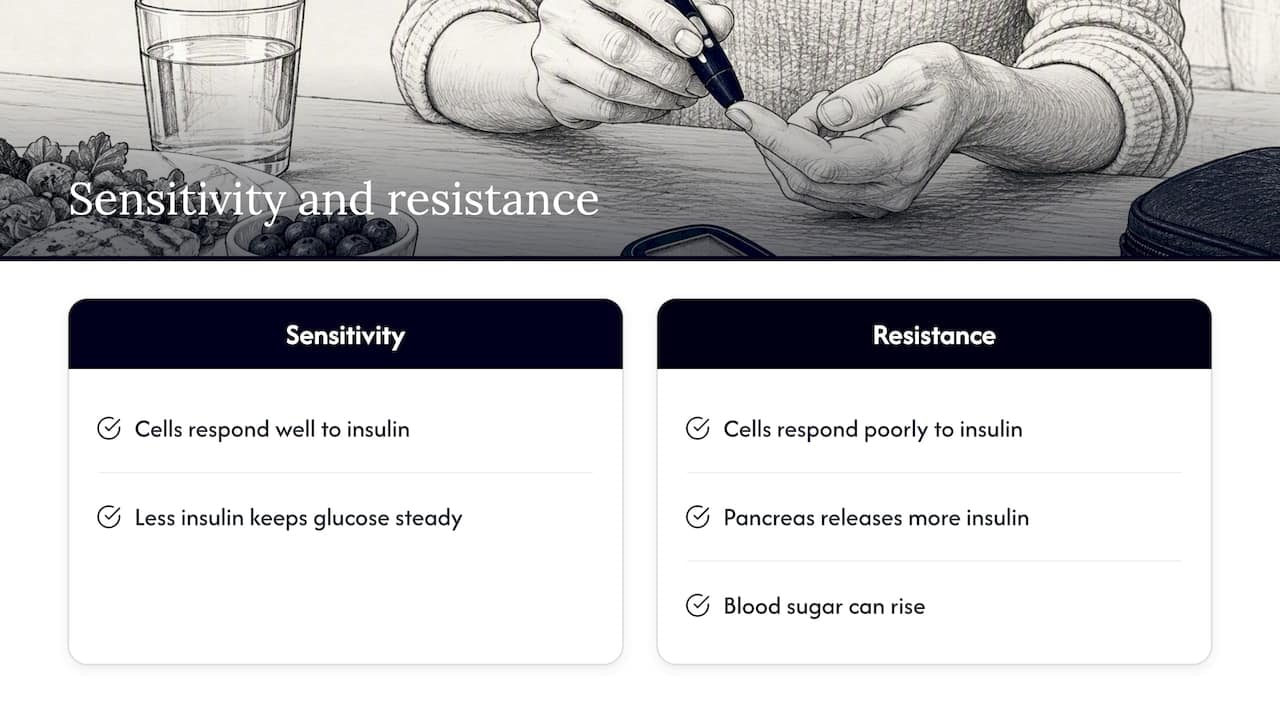
Insulin is the hormone that tells your muscle, fat and liver cells to take up glucose from the blood. Insulin sensitivity describes how well your cells respond to that signal. When they respond well, your body needs less insulin to keep blood sugar steady. Insulin resistance is the opposite: cells respond poorly, the pancreas compensates by releasing more insulin, and over time blood sugar can rise.
A peptide is simply a short chain of amino acids. Insulin itself is a peptide hormone, as is GLP-1. That is why the phrase “peptides for insulin sensitivity” covers very different things: hormone-mimicking medicines, food-derived bioactive peptides studied in labs, and the research-grade compounds that circulate in fitness circles. Their evidence is not equal, and it helps to keep them apart.
HOMA-IR and HOMA2-IR are the markers most trials use. They are calculated from fasting glucose and insulin (or C-peptide). A lower number suggests better insulin sensitivity. They are useful for research, but they are estimates, not a direct measure of how your own cells behave.
Which peptides have human evidence?
GLP-1 receptor agonists
GLP-1 is a gut hormone that stimulates insulin release after meals. Drugs that mimic it are the best-studied peptide class for blood sugar. A network meta-analysis found that GLP-1 receptor agonists reduced HOMA-IR versus placebo in patients with type 2 diabetes, with a weighted mean difference of −0.67 (95% CI −1.08 to −0.27). The authors rated the quality of that evidence as low.
For semaglutide specifically, a meta-analysis of eight studies reported lower HOMA-IR compared with comparators in adults with type 2 diabetes, though the certainty was rated very low. In other words, the direction is encouraging, but the size and reliability of the effect are still being established.
Tirzepatide
Tirzepatide activates both GIP and GLP-1 receptors. In a 26-week trial of adults with type 2 diabetes, the 10 mg dose significantly decreased HOMA2-IR compared with placebo and with dulaglutide. It also improved glycemic control and reduced body weight. Importantly, weight loss explained only part of the improvement in HOMA2-IR, which suggests the drug acts on insulin sensitivity beyond what the scale shows.
If you want the wider background on how this peptide class works, our GLP-1 science guide and our overview of how peptides shape blood sugar go deeper.
What the table looks like at a glance
| Peptide class | Human finding on insulin-resistance markers | Population studied | Certainty reported |
|---|---|---|---|
| GLP-1 receptor agonists (group) | Lower HOMA-IR vs placebo | Adults with type 2 diabetes | Low |
| Semaglutide | Lower HOMA-IR vs comparators | Adults with type 2 diabetes | Very low |
| Tirzepatide 10 mg | Lower HOMA2-IR vs placebo and dulaglutide | Adults with type 2 diabetes, 26 weeks | Reported as significant in a randomized trial |
Notice the shared limit: these results come from people with type 2 diabetes. They do not automatically apply to healthy adults who simply want better insulin response for training or body composition.
Other peptides you will read about
Search results for this topic often mention recovery peptides such as BPC-157 alongside insulin resistance. The pages we reviewed describe those peptides mostly for tissue repair, and the human evidence for an insulin-sensitivity benefit is not at the level of the GLP-1 class. Treat claims about them with patience and look for trial data before you draw a conclusion.
What this means in Canada
The rules matter here, because the answer to “can I use this?” depends on how a product is classified.
Health Canada states that injectable peptides are always classified as drugs and regulated under the Food and Drug Regulations. It also explains that authorization rests on a point-in-time assessment of safety, efficacy and quality, and that whether a peptide product is a drug or a natural health product depends on its nature and intended use.
The legally authorized GLP-1 receptor agonists in Canada, such as semaglutide (Ozempic, Wegovy) and tirzepatide (Mounjaro, Zepbound), are prescription medications for type 2 diabetes and obesity. That means a clinician decides whether one fits your health picture, your other medications and your monitoring needs.
Selling unauthorized drugs is illegal in Canada, and Health Canada has seized unauthorized injectable peptide drugs from a Canadian online seller. Our own explainer on peptide legality in Canada walks through what an eight-digit DIN means and why it matters before anyone injects anything.
Safety points worth knowing
Health Canada lists the risks of unauthorized peptides as infections, allergic reactions, hormonal imbalances, blood sugar imbalances, and possible contaminants such as heavy metals, microbes or unlisted ingredients. For unauthorized or counterfeit GLP-1 products, the agency warns that they may contain too much, too little or none of the active ingredient.
The practical safe-use points follow from that:
- Talk to your doctor first if you have diabetes, prediabetes, take insulin or sulfonylureas, or are pregnant or breastfeeding. Peptides that change blood sugar can interact with glucose-lowering medication, so your prescriber should know about every product you use.
- Ask your pharmacist to check any product’s authorization status. Health Canada’s regulations page explains how to verify it.
- Treat forum advice as anecdote. Health Canada cautions that online community advice is not a substitute for professional clinical evidence, because individual experiences vary and usually lack standardized monitoring.
- Use sterile technique and quality supplies for anything you are cleared to inject. Our peptide safety guide covers what to know before you inject anything.
What improves insulin sensitivity alongside (or before) any peptide
Peptide trials are always run on top of lifestyle care, and the lifestyle evidence is strong and reassuring. It is also the part you control every day.
Move in two ways
Diabetes Canada recommends at least 150 minutes a week of aerobic exercise and at least two resistance sessions a week, and notes that physical activity can improve glycemic control and decrease insulin resistance in people with diabetes. The same guideline says aerobic and resistance training have additive effects on glycemic control.

Aim for a modest weight change
For people with diabetes, losing 5% to 10% of starting body weight is associated with better insulin sensitivity, blood pressure and glycemic control. For a 90 kg adult, that is roughly 4.5 to 9 kg, a far more reachable target than a dramatic transformation.
Build the basics around training
Sleep, protein intake spread across the day and meals built around fibre-rich carbohydrates all support training and appetite control. We do not cite a number for each here because the best plan depends on your health history. A registered dietitian can set targets that fit your labs.
How to maximize insulin sensitivity for muscle growth
If your goal is building muscle rather than managing diabetes, the same research points one way: resistance exercise can decrease insulin resistance and increase lean muscle mass. Muscle is a major site of glucose uptake, so more trained muscle gives your body more room to handle carbohydrates.
A workable week looks like this:
- Two to four resistance sessions covering major muscle groups, progressing load over time.
- Aerobic work, such as brisk walking, cycling or swimming, building toward 150 minutes.
- A short walk after larger meals, an easy habit that costs nothing.
- Consistent sleep and bedtime, since poor sleep tends to be paired with worse appetite control.
If you are exploring peptide support for training or recovery, our guides to peptides for muscle growth and peptides for recovery explain the categories and the research behind them.
Perspective
We built Pure Peptide around one idea: people who take their training and health seriously deserve clear information and products made to a high standard. Our catalogue spans weight loss, muscle growth, recovery, anti-aging and libido, and our products are backed by third-party certificates of analysis, with purity documented above 99%.
On insulin sensitivity, we think the honest framing is this. The research on GLP-1 and GIP/GLP-1 peptides is some of the most active in metabolic science, and it shows why peptides deserve attention. We also believe the best results come from pairing any compound with a solid training routine, sensible nutrition and professional guidance.
That is why we publish plain-language guides on Canadian rules, safety and quality, and why we encourage you to review them before you buy. Purity and transparency are where we put our effort, and we want you to feel confident about what you bring into your routine.
Pure Peptide
Choosing quality supplies and products
Whatever your plan, quality is not an afterthought. Look for a certificate of analysis from a third-party lab for every batch, clear labelling and sterile ancillaries. Our range includes peptides for weight loss, muscle growth, recovery and anti-aging, plus the reconstitution essentials: bacteriostatic water, syringes and alcohol pads. You can read our Canadian buying and compliance guide before you choose.
When you are ready to browse, you will find every category on the Pure Peptide store, each supported by lab documentation.
Questions to bring to your appointment
A short list makes a visit with your doctor or pharmacist more productive:
- Are my fasting glucose and A1C where they should be, and would a fasting insulin or C-peptide test add anything?
- Do any of my medications change how a peptide would affect my blood sugar?
- What symptoms of low or high blood sugar should I watch for?
- Would an authorized GLP-1 medication be appropriate for my situation?
- How should I track progress: waist measurement, labs, training performance?
The C-peptide point is worth a note. C-peptide is released alongside insulin, and clinicians use it to understand how much insulin your own pancreas is making. It is a lab clue, not a peptide treatment.
FAQ
What peptide can help with insulin resistance?
The best human evidence is for GLP-1 receptor agonists, including semaglutide, and for tirzepatide. Trials in adults with type 2 diabetes show lower HOMA-IR or HOMA2-IR, although the certainty of the evidence is low to very low in several analyses. In Canada these are prescription medications, so your doctor decides whether one suits you.
Do peptides affect hormones?
Yes. Many peptides are hormones or act on hormone pathways: insulin and GLP-1 are both peptide hormones. Health Canada lists hormonal and blood sugar imbalances among the risks of unauthorized peptides, so tell your doctor about any peptide you use, especially if you take diabetes medication.
How do I maximize insulin sensitivity for muscle growth?
Start with resistance training at least twice a week and add aerobic activity toward 150 minutes weekly, as Diabetes Canada’s guideline recommends for people with diabetes. Resistance exercise can increase lean mass and reduce insulin resistance, and the two types of exercise add to each other’s effect on blood sugar.
Are peptides for insulin sensitivity legal in Canada?
Injectable peptides are always classified as drugs under the Food and Drug Regulations, and selling unauthorized drugs is illegal. Authorized GLP-1 medications are available by prescription. Read our peptides Canada guide for the practical details and check any product’s status with your pharmacist.
Sources
- Incretin-based therapies and β-cell function meta-analysis (PubMed, 2019)
- Tirzepatide and insulin sensitivity in type 2 diabetes (PMC, 2020)
- Semaglutide and pancreatic β-cell function meta-analysis (PMC, 2025)
- Peptides: Regulations and enforcement (Health Canada)
- Peptides: Health risks (Health Canada)
- Thinking about buying GLP-1 drugs like Ozempic or Mounjaro? (Health Canada)
- Unauthorized injectable peptide drugs seized (Health Canada)
- Physical Activity and Diabetes (Diabetes Canada)
- Weight Management in Diabetes (Diabetes Canada)