





Semax is the peptide most often chosen for cognitive enhancement and neuroprotection, while Selank is the one most often chosen for anxiety and stress regulation. The two are usually studied as complementary tools rather than interchangeable options, since they act on different pathways. Whichever you’re evaluating, the sourcing matters as much as the peptide itself: purity and verified certificates of analysis determine whether the research findings below apply to what’s actually in the vial, as detailed in this research comparison.
TL;DR:
- Semax’s strongest human evidence comes from stroke recovery: trials reported improved neurological measures and higher BDNF, but large independent trials remain scarce.
- Research used intranasal Semax at 12 to 18 mg daily for 5 to 10 days, but these trial regimens are not self directed dosing recommendations.
- No controlled studies establish how Selank and Semax interact, so combining them has no proven added benefit or safety; consult a clinician first.
- Neither peptide has broad drug approval or established long term safety; check local rules and request the lot specific certificate of analysis before purchase.
Table of Contents
- Semax vs Selank at a glance: uses, outcomes, and forms
- How Semax and Selank work: a mechanism comparison
- What the human and animal studies actually show
- Dosing patterns, safety signals, and regulatory status
- Stacking Selank and Semax: what’s known and what isn’t
- Side effects and who should be cautious with each peptide
- What users report: cognition gains versus calm, and where accounts diverge
- Our approach to Selank and Semax at Pure Peptide
- Sourcing Selank, Semax, and the ancillaries that support safe handling
- FAQ
- Sources
Semax vs Selank at a glance: uses, outcomes, and forms
The clearest way to separate these two peptides is by the outcome researchers are measuring. Semax work concentrates on focus, memory, and neuroprotection, with outcome measures like brain-derived neurotrophic factor (BDNF) levels and cognitive or motor recovery scores. Selank research concentrates on anxiety and emotional regulation, with outcome measures tied to anxiolytic markers and stress response.
Both peptides are typically administered intranasally in the studies that investigate them, a route chosen for fast absorption and to bypass first-pass metabolism. Formulation stability and nasal spray delivery are common practical considerations for either one, since peptides degrade more readily than small-molecule drugs.
- Semax fits goals around sustained attention, learning, and recovery after neurological injury.
- Selank fits goals around calming an overactive stress response or supporting emotional regulation.
- Readers chasing both outcomes at once are the ones most likely to see the two peptides discussed together in research peptide literature.
If your priority is mental sharpness or post-injury recovery, the evidence base points toward Semax. If your priority is dialling down anxiety or stress reactivity, Selank’s research profile is the closer match.
How Semax and Selank work: a mechanism comparison
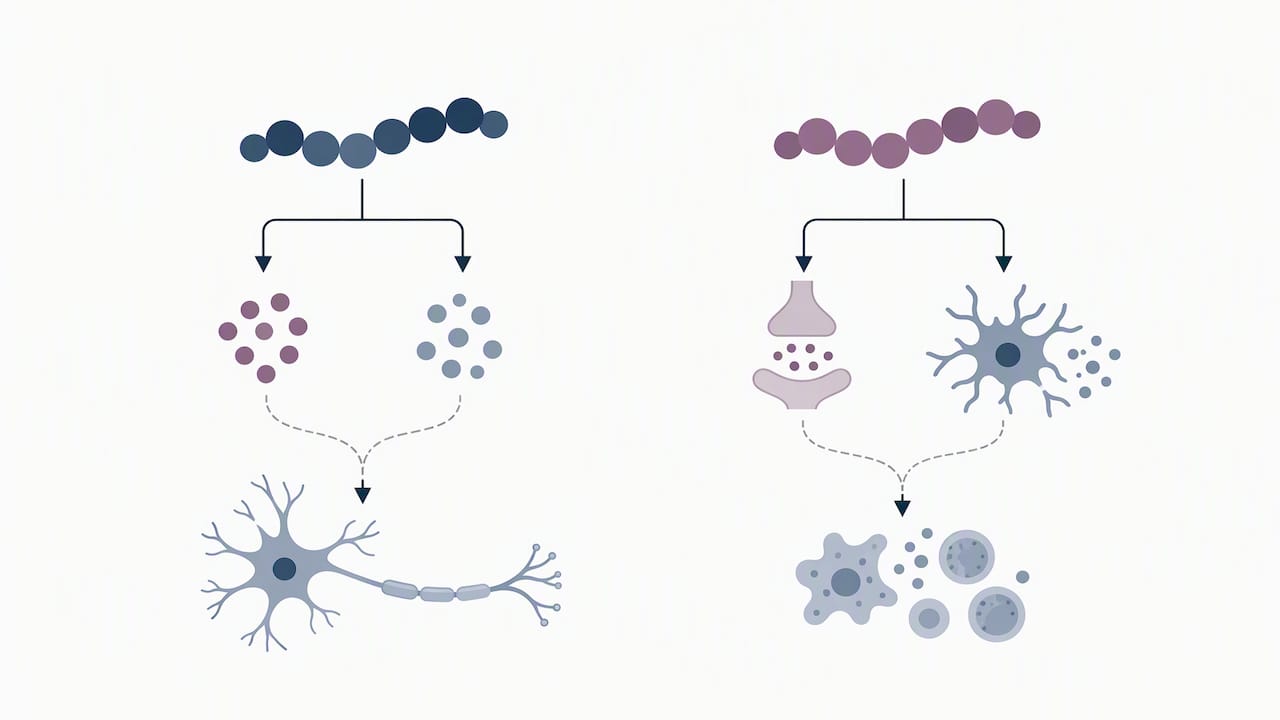
Semax is derived from a fragment of adrenocorticotropic hormone, specifically ACTH(4-10), stripped of the hormonal activity of the parent molecule but retaining effects on the central nervous system. Its most-cited mechanism is an upregulation of BDNF and nerve growth factor (NGF), two proteins central to neuron survival, synaptic plasticity, and repair. The NIH’s overview of BDNF explains why a molecule that raises BDNF levels would plausibly support learning and recovery after neurological injury. Semax’s proposed neuroprotective pathway builds on that BDNF/NGF signalling rather than any single, fully mapped mechanism.
Selank, by contrast, is a synthetic analogue of tuftsin, an immunomodulatory peptide. Its reported effects run through anxiety-related pathways, including modulation of GABAergic signalling and interactions with immune markers linked to stress response. Selank’s research lineage sits closer to stress physiology than to cognitive circuitry, which is consistent with why it’s studied for anxiety rather than memory.
Despite these different parent molecules, Semax and Selank share a structural trait: both are heptapeptides, seven amino acids long, with a stabilizing Pro-Gly-Pro tail that helps resist rapid enzymatic breakdown. A mechanistic study also found that related peptides can inhibit enkephalin-degrading enzymes, a shared trait that may contribute to behavioural effects for both compounds.
It’s worth being cautious here. Much of what’s known about these mechanisms comes from animal models and small human trials, and extrapolating a mouse-brain pathway directly to human cognition or mood is not a safe assumption. The mechanisms above describe the leading hypotheses, not settled biology.
What the human and animal studies actually show
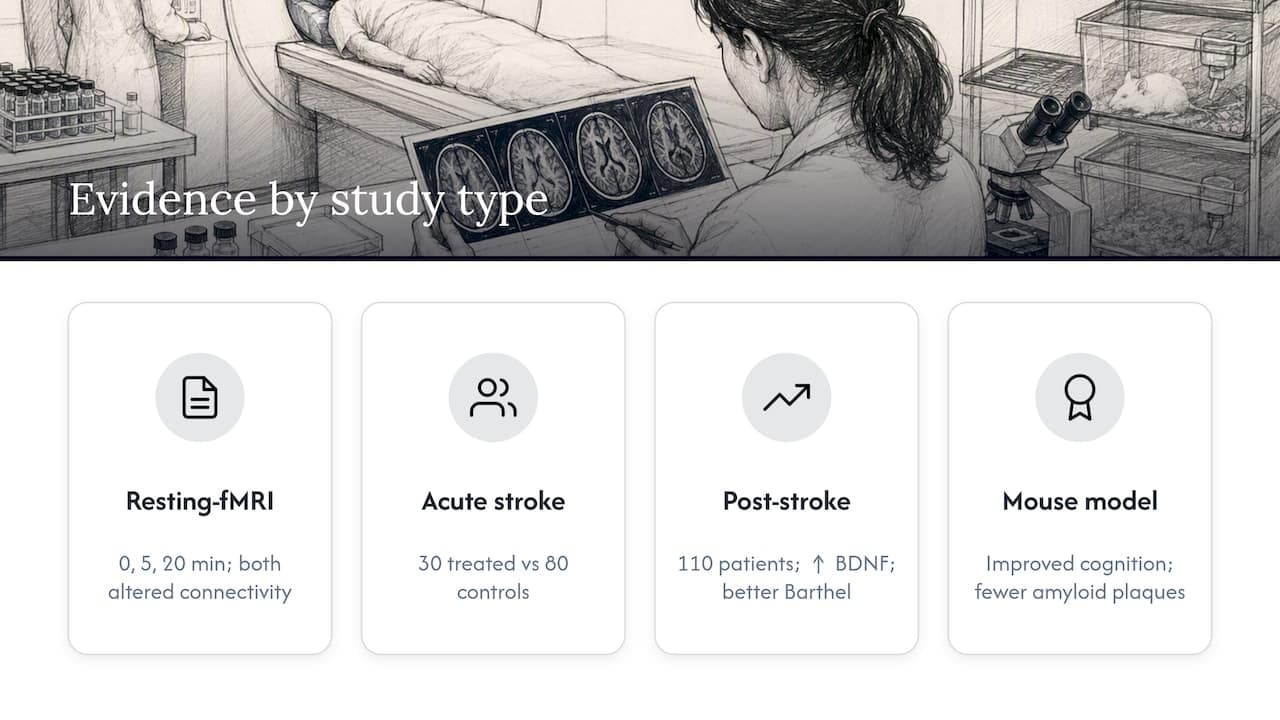
The strongest piece of human evidence directly comparing the two peptides is a functional connectomic study using resting-state fMRI, which measured brain connectivity in healthy participants before treatment and again at 5 and 20 minutes after injection. Both Selank and Semax altered functional connectivity, with distinct effects on the connection between the right amygdala and temporal cortex that differed between the two peptides. That’s a meaningful signal of acute neural network modulation, though it doesn’t on its own prove a sustained clinical benefit.
Semax has the deeper clinical trail, mostly in stroke recovery. One trial on Semax in acute hemispheric ischemic stroke compared 30 treated patients against 80 controls, using moderate and higher daily doses over several days, and found improved neurological recovery indicators measured by EEG mapping and somatosensory evoked potentials. A later study of 110 post-ischemic stroke patients found that Semax administration raised plasma BDNF levels and tracked with faster functional recovery and better Barthel index scores, using a regimen of several thousand micrograms per day across a multi-day course in some protocols.
More recent preclinical work looked at Semax and a derivative in an Alzheimer’s disease mouse model, reporting improved cognitive performance on behavioural tests and fewer amyloid plaques in treated animals, with effects persisting for weeks. That’s encouraging for neuroprotection research, but it’s a mouse model, not a human trial.
Taken together, the evidence is genuinely promising but narrow: strong signals from stroke rehabilitation and acute imaging work, with few large, independently replicated randomized controlled trials conducted outside Russia.
Dosing patterns, safety signals, and regulatory status
Clinical literature on Semax has used intranasal doses in the range of 12 to 18 mg per day in stroke recovery trials, administered over 5 to 10 day courses, with some protocols running closer to 6,000 mcg per day across two-course regimens. These figures describe what researchers used in controlled trials, not a recommendation for self-directed dosing. Selank dosing in published research is less standardized, and neither peptide has an established dose-response profile for healthy, non-clinical populations.
Commonly reported adverse effects in the literature and community reports include mild nasal irritation, transient headache, and occasional drowsiness or restlessness, though long-term safety data in humans remains limited for both peptides.
Neither Semax nor Selank carries approval as a therapeutic drug in most jurisdictions. Both are marketed almost exclusively as research-use compounds, and there’s no indication of inclusion in mainstream drug databases. Anyone checking current status should consult Health Canada’s official resources directly rather than relying on marketplace claims.
Before using either peptide, a short checklist helps:
- Talk to a clinician familiar with peptide research, especially if you take other medications.
- Verify the certificate of analysis (COA) for the specific batch you’re considering.
- Avoid combining peptides with other compounds without monitoring for interactions.
Pro Tip: Request the lot-specific COA before you buy, not after, so you know exactly what purity and identity testing back the product.
Stacking Selank and Semax: what’s known and what isn’t
Communities researching these peptides often combine them on the logic that Semax covers cognitive stamina while Selank covers stress reactivity, two different problems addressed at once. The mechanistic rationale, such as it is, points to both peptides potentially up regulating hippocampal BDNF through different pathways, which is why they’re frequently discussed as complementary rather than redundant.
What’s missing is any published pharmacokinetic or pharmacodynamic interaction data for the combination. No controlled study has measured how the two behave together in the body, which means claims about synergy or enhanced safety when stacked are not supported by current evidence.
- Track subjective effects (focus, mood, sleep) consistently if you’re evaluating either peptide, alone or together.
- Avoid combining either peptide with unverified or unregulated compounds.
- Loop in a clinician or arrange laboratory monitoring if you notice any unexpected physical or mood changes.
Treat the absence of interaction studies as a reason for caution, not as a gap to fill with anecdote.
Side effects and who should be cautious with each peptide
Semax’s reported side effects in clinical and community use skew toward mild nasal irritation from intranasal delivery, occasional headache, and transient jitteriness tied to its stimulating, cognition-focused profile. Because much of its clinical history involves stroke patients under medical supervision, data on healthy adults using it for cognitive enhancement is comparatively thin, and anyone with a seizure disorder or cardiovascular instability should treat that gap as a reason for medical oversight rather than self-experimentation.
Selank’s reported effects lean toward drowsiness or a sense of calm that can tip into sedation at higher exposure, along with occasional nasal irritation from the delivery route. Its interaction with GABAergic and immune pathways means it warrants particular caution for anyone on anti-anxiety medication, immunosuppressants, or other drugs that modulate the same systems, since no interaction studies exist to rule out additive effects.
Neither peptide has long-term human safety data outside the specific clinical populations studied, which means contraindications for pregnancy, pediatric use, or chronic illness are effectively undefined rather than confirmed safe. The responsible position is the same for both compounds: treat them as research tools with an incomplete safety record, not as over-the-counter supplements, and involve a clinician if you have any pre-existing neurological, psychiatric, or immune condition.
What users report: cognition gains versus calm, and where accounts diverge
Across online research communities, the split in user reports tracks closely with the clinical framing: people using Semax tend to describe sharper focus, improved verbal recall, and a subjective sense of mental stamina during demanding tasks. People using Selank more often describe a calmer baseline, less reactivity to stress, and improved sleep onset when anxiety was the primary complaint. That pattern lines up with the amygdala-temporal cortex connectivity differences observed in the fMRI study comparing the two compounds.
Reported onset also differs by account: Semax effects are often described as showing up within an hour of intranasal use, while Selank’s calming effect is more often described as building over repeated daily doses rather than appearing immediately. These are self-reported patterns, not controlled trial endpoints, and individual response varies with dose, formulation, and baseline physiology.
What’s consistent across accounts is that neither peptide is described as a dramatic, instant transformation. People who report the clearest benefits tend to be the ones using a verified, high-purity product and tracking their own response systematically rather than relying on a single use to judge effect.
Our approach to Selank and Semax at Pure Peptide
We treat Semax and Selank as research tools with distinct, specific use cases rather than universal solutions, focusing on matching the peptide to the actual research goal rather than popularity.
That COA-first standard is also why we encourage reviewing the evidence, not just the marketing, before deciding which peptide fits your goal.
— Pure Peptide
Sourcing Selank, Semax, and the ancillaries that support safe handling
Purity is the variable most likely to make or break a research outcome, which is why our formulations are verified against third-party certificates of analysis showing purity above 99%. That standard applies across our Weight Loss, Muscle Growth, Recovery, Anti-Aging, and Libido categories, so whichever research direction you’re pursuing, you’re working from a documented baseline rather than a guess.
Responsible handling matters as much as the compound itself. Ancillaries that support correct reconstitution and administration, including bacteriostatic water and syringes, can help ensure workflows match the standards used in the studies cited above. For a closer look at verification practices and handling basics, our peptide safety guide walks through what to check before you inject anything.
If purity documentation is part of your decision process, request the COA for any specific batch before ordering and compare it against the testing standards described on our product science pages. Start there, confirm the paperwork matches the product, and order with that baseline in hand.
This article is general information, not a substitute for advice from a qualified doctor. Consult a qualified healthcare professional about your own circumstances before acting on anything here.
FAQ
Can Selank and Semax be used together?
Some researchers combine them because Semax targets cognitive endpoints while Selank targets anxiety and stress, but no published pharmacokinetic or interaction studies confirm how the two behave together. Anyone considering this combination should treat it as unverified and monitor closely rather than assuming added benefit or safety.
Can I take Selank every day?
Published Selank research doesn’t establish a standardized daily regimen for ongoing use outside controlled study settings. Daily use should only be considered with clinician input, given the limited long-term human safety data available for the peptide.
What’s better than Semax for cognitive goals?
“Better” depends on the specific outcome you’re targeting, since Semax’s strongest evidence comes from stroke recovery and BDNF-linked endpoints rather than general cognitive enhancement in healthy adults. Comparing any alternative against Semax means checking whether it has similar human trial data, like the BDNF and recovery findings reported in stroke patients.
Which peptide is better for brain fog, Semax or Selank?
Semax’s research profile, centred on BDNF upregulation and cognitive and motor recovery endpoints, aligns more closely with concerns like brain fog or mental fatigue than Selank’s anxiety-focused profile. That said, if the brain fog is stress-driven, Selank’s anxiolytic research may be more relevant, since the two peptides act on different underlying pathways.
Are Semax and Selank legal to buy?
Both are sold as research-use peptides rather than approved therapeutic drugs in most jurisdictions, and there’s no indication either appears in mainstream drug approval databases. Checking current status directly through Health Canada is the most reliable way to confirm where things stand before purchasing.
Sources
- Functional connectomic approach to studying Selank and Semax effects
- Effectiveness of Semax in acute period of hemispheric ischemic stroke
- The efficacy of Semax in the treatment of patients at different stages of ischemic stroke
- The potential of the peptide drug Semax and its derivative for correcting pathological impairments in the animal model of Alzheimer’s disease